THE CLASSIC COLLECTION✦Some Notes on Early Woodcut Books, with a Chapter on Illuminated ManuscriptsCLASSIC FREE BOOKS
Some Notes on Early Woodcut Books, with a Chapter on Illuminated Manuscripts
William Morris
THE CLASSIC COLLECTION · 1906
"The World of Romance" by William Morris is a collection of imaginative tales written during the mid-19th century. Set against a backdrop of medieval customs and architecture, these stories transport readers to a mythical realm steeped in romance and nostalgia. The opening stories introduce characters like Walter, a master-mason reflecting on the church he constructed, and explore themes of love, loss, and artistic creation within the confines of a romanticized medieval landscape. At the start of the collection, the narrative centers on the reflections of Walter, who recalls the beauty of his surroundings while constructing a grand church alongside his sister Margaret. As autumn approaches, Walter becomes lost in memories, weaving vivid imagery of the landscape and the bustling life around the abbey. Amid his thoughts, he yearns for his friend Amyot, who has been away fighting in the holy wars. Their reunion is anticipated, yet a sense of foreboding looms as the story unfolds, hinting at deeper emotional currents and inevitable loss. Through rich, lyrical prose, the opening sets the stage for a journey into a world that blends history and fantasy, exploring the complexities of human yearning amidst the passage of time.
Introduction adapted from the source catalogue; source summaries may be automatically generated.
Free to read · English · 35,468 words · No account needed
MAKE TIME FOR A GOOD BOOK
On by default. Untick to stop anonymous reading totals. Each page counts after 10 seconds in view. How this works.
Anonymous counting is on unless you have switched it off.
Now the great Church, and the buildings of the Abbey where the monks lived, were about three miles from the town, and the town stood on a hill overlooking the rich autumn country: it was girt about with great walls that had overhanging battlements, and towers at certain places all along the walls, and often we could see from the churchyard or the Abbey garden, the flash of helmets and spears, and the dim shadowy waving of banners, as the knights and lords and men-at-arms passed to and fro along the battlements; and we could see too in the town the three spires of the three churches; and the spire of the Cathedral, which was the tallest of the three, was gilt all over with gold, and always at night-time a great lamp shone from it that hung in the spire midway between the roof of the church and the cross at the top of the spire. The Abbey where we built the Church was not girt by stone walls, but by a circle of poplar trees, and whenever a wind passed over them, were it ever so little a breath, it set them all a-ripple; and when the wind was high, they bowed and swayed very low, and the wind, as it lifted the leaves, and showed their silvery white sides, or as again in the lulls of it, it let them drop, kept on changing the trees from green to white, and white to green; moreover, through the boughs and trunks of the poplars, we caught glimpses of the great golden corn sea, waving, waving, waving for leagues and leagues; and among the corn grew burning scarlet poppies, and blue corn-flowers; and the corn-flowers were so blue, that they gleamed, and seemed to burn with a steady light, as they grew beside the poppies among the gold of the wheat. Through the corn sea ran a blue river, and always green meadows and lines of tall poplars followed its windings. The old Church had been burned, and that was the reason why the monks caused me to build the new one; the buildings of the Abbey were built at the same time as the burned-down Church, more than a hundred years before I was born, and they were on the north side of the Church, and joined to it by a cloister of round arches, and in the midst of the cloister was a lawn, and in the midst of that lawn, a fountain of marble, carved round about with flowers and strange beasts, and at the edge of the lawn, near the round arches, were a great many sun-flowers that were all in blossom on that autumn day, and up many of the pillars of the cloister crept passion-flowers and roses. Then farther from the Church, and past the cloister and its buildings, were many detached buildings, and a great garden round them, all within the circle of the poplar trees; in the garden were trellises covered over with roses, and convolvolus, and the great-leaved fiery nasturium; and specially all along by the poplar trees were there trellises, but on these grew nothing but deep crimson roses; the hollyhocks too were all out in blossom at that time, great spires of pink, and orange, and red, and white, with their soft, downy leaves. I said that nothing grew on the trellises by the poplars but crimson roses, but I was not quite right, for in many places the wild flowers had crept into the garden from without; lush green briony, with green-white blossoms, that grows so fast, one could almost think that we see it grow, and deadly nightshade, La bella donna, O! so beautiful; red berry, and purple, yellow-spiked flower, and deadly, cruel-looking, dark green leaf, all growing together in the glorious days of early autumn. And in the midst of the great garden was a conduit, with its sides carved with histories from the Bible, and there was on it too, as on the fountain in the cloister, much carving of flowers and strange beasts. Now the Church itself was surrounded on every side but the north by the cemetery, and there were many graves there, both of monks and of laymen, and often the friends of those, whose bodies lay there, had planted flowers about the graves of those they loved. I remember one such particularly, for at the head of it was a cross of carved wood, and at the foot of it, facing the cross, three tall sun-flowers; then in the midst of the cemetery was a cross of stone, carved on one side with the Crucifixion of our Lord Jesus Christ, and on the other with our Lady holding the Divine Child. So that day, that I specially remember, in autumn-tide, when the Church was nearly finished, I was carving in the central porch of the west front; (for I carved all those bas-reliefs in the west front with my own hand;) beneath me my sister Margaret was carving at the flower-work, and the little quatrefoils that carry the signs of the zodiac and emblems of the months: now my sister Margaret was rather more than twenty years old at that time, and she was very beautiful, with dark brown hair and deep calm violet eyes. I had lived with her all my life, lived with her almost alone latterly, for our father and mother died when she was quite young, and I loved her very much, though I was not thinking of her just then, as she stood beneath me carving. Now the central porch was carved with a bas-relief of the Last Judgment, and it was divided into three parts by horizontal bands of deep flower-work. In the lowest division, just over the doors, was carved The Rising of the Dead; above were angels blowing long trumpets, and Michael the Archangel weighing the souls, and the blessed led into heaven by angels, and the lost into hell by the devil; and in the topmost division was the Judge of the world.
Your reading position is saved on this browser. Take it to another device with a library code. Reading pages adapt to text, rather than matching a printed edition.
William Morris
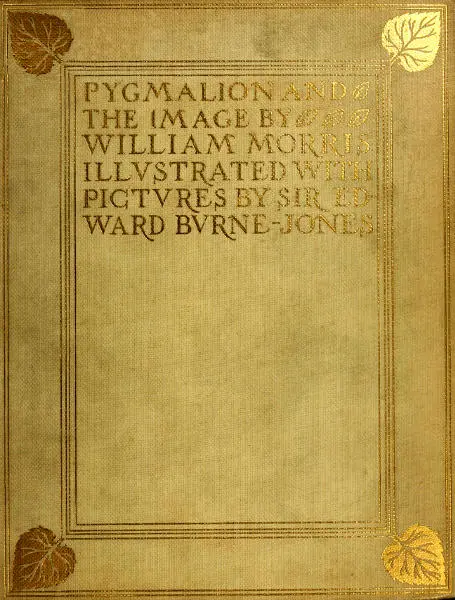
William Morris
William Morris
William Morris
BEHIND THE BOOK
This eBook is for the use of anyone anywhere in the United States and most other parts of the world at no cost and with almost no restrictions whatsoever. You may copy it, give it away or re-use it under the terms of the Project Gutenberg License included with this eBook or online at www.gutenberg.org. If you are not located in the United States, you will have to check the laws of the country where you are located before using this eBook. Read the source licence.
The original source file, including credits and licence, is retained by this library. Request an original-format copy at no charge. Please include the book title and Project Gutenberg identifier #17973.
KEEP YOUR CURIOSITY GOING
Cécile Tormay

Moritz Busch
Coulson Kernahan
John L. Ransom

Maurice Baring
Frances Wright