
The gospel of freedom
Robert Herrick
THE CLASSIC COLLECTION · 1916
"The World Decision" by Robert Herrick is a historical account written during the early 20th century. This work delves into the complexities of Italy's political landscape during the tumultuous period leading up to its decision to enter World War I, exploring the psychological and social forces that influenced national sentiment amid external pressures and internal rivalries. The opening of the text sets the stage for the profound hesitation and deliberation within Italy as the country teeters on the brink of war. Herrick provides a vivid account of public sentiment in Naples and Rome, capturing the anxiety and quietude permeating Italian society as citizens grapple with their national identity amidst rampant rumors and impatient political maneuvering. As Italy's leaders engage in secret negotiations with Austria and the Allies, external events like the sinking of the Lusitania ignite national fervor, leading to a dramatic shift in public opinion and culminating in the rallying cry against perceived Teutonic aggressions. The narrative reveals the intricate interplay between political figures, renowned activists like the poet D’Annunzio, and the general populace’s evolving outlook toward war, all while highlighting the underlying themes of duty, nationalism, and the human struggle for civilization.
Introduction adapted from the source catalogue; source summaries may be automatically generated.
Free to read · English · 56,127 words · No account needed
MAKE TIME FOR A GOOD BOOK
On by default. Untick to stop anonymous reading totals. Each page counts after 10 seconds in view. How this works.
Anonymous counting is on unless you have switched it off.
So much for the sentimental and the strategical threads in the Consulta negotiations. It was neither for sentiment nor for strategical advantage solely that Italy finally entered the war. Nevertheless, if the German Powers had frankly and freely from the start recognized Italy's position, and surrendered to her immediate possession--as they were ready to do at the last moment--sufficient of those national aspirations to safeguard national security, with hands off in the Adriatic, Italy most probably would have preferred to remain neutral. I cannot believe that Salandra or the King really wanted war. They were sincerely struggling to keep their nation out of the European melting-pot as long as they could. But they were both shrewd and patriotic enough not to content themselves with present security at the price of ultimate danger. And if they had been as weak as the King of Greece, as subservient as the King of Bulgaria, they would have had to reckon with a very different people from the Bulgars and the Greeks--a nation that might quite conceivably have turned Italy into a republic and ranged her beside her Latin sister on the north in the world struggle. The path of peace was in no way the path of prudence for the House of Savoy.
Lack of imagination is surely one of the prominent characteristics of the modern German, at least in statecraft. Imagination applied to the practical matters of daily living is nothing more than the ability to project one's own personality beneath the skin of another, to look around at the world through that other person's eyes and to realize what values the world holds for him. The Prince von Bülow, able diplomat though they call him, could not look upon the world through Italian eyes in spite of his Italian wife, his long residence in Rome, his professed love for Italy. It must have been with his consent if not by his suggestion that Erzburger, the leader of the Catholic party in the Reichstag, was sent to Rome at this critical juncture. The German mind probably said,--"Here is a notable Catholic, political leader of German Catholics, and so he must be especially agreeable to Italians, who, as all the world knows, are Catholics." The reasoning of a stupid child! Outwardly Italy is Catholic, but modern Italy has shown herself very restive at any papal meddling in national affairs. To have an alien--one of the "barbari"--seat himself at the Vatican and try to use the papal power in determining the policy of the nation in a matter of such magnitude, was a fatal blunder of tactless diplomacy. Nor could Herr Erzburger's presence at the Vatican these tense days be kept secret from the curious journalists, who lived on such meager items of news. No more tactful was it for Prince von Bülow to meet the Italian politician Giolitti at the Palace Hotel on the Pincian. There is no harm in one gentleman's meeting another in the rooms of a public hotel so respectable as the Palace, but when the two are playing the international chess game and one is regarded as an enemy and the other as a possible traitor, the popular mind is likely to take a heated and prejudiced view of the small incident. Less obvious to the public, but none the less untactful, was the manner in which the German Ambassador tried to use his social connection in Rome, his family relationships in the aristocracy of Italy, to influence the King and his ministers. He might have taken warning from the royal speech attributed to the Queen Mother in reply to the Kaiser: "The House of Savoy rules one at a time." He should have kept away from the back stairs. He should have known Italy well enough to realize that the elements of Roman society with which he was affiliated do not represent either power or public opinion in Italy any more than good society does in most modern states. Roman aristocracy, like all aristocracies, whether of blood or of money, is international in its sympathies, skeptic in its soul. And its influence, in a decisive question of life and death to the nation, is nil. The Prince von Bülow was wasting his time with people who could not decide anything. As Salandra said, with dignified restraint in answer to the vulgar attack upon him made by the German Chancellor,--"The Prince was a sincere lover of Italy, but he was ill-advised by persons who no longer had any weight in the nation"--as his colleague in London seems to have been ill-advised when he assured his master that Englishmen would not fight under any circumstances! The trouble with diplomacy would seem to be that its ranks are still recruited from "the upper classes," whose gifts are social and whose sympathies reflect the views and the prejudices of a very small element in the state. Good society in Rome was still out on the Pincian for the afternoon promenade, was still exchanging calls and dinners these golden spring days, but its views and sympathies could not count in the enormous complex of beliefs and emotions that make the mind of a nation in a crisis. Prince von Bülow's motor was busily running about the narrow streets of old Rome, the gates of the pretty Villa Malta were hospitably open,--guarded by carabinieri,--but if the German Ambassador had put on an old coat and strolled through the Trastevere, or had sat at a little marble-topped table in some obscure café, or had traveled second or third class between Rome and Naples, he might have heard things that would have brought the negotiations at the Consulta to an abrupter close one way or the other. For Italy was making up its mind against his master.
Your reading position is saved on this browser. Take it to another device with a library code. Reading pages adapt to text, rather than matching a printed edition.
Robert Herrick

Robert Herrick
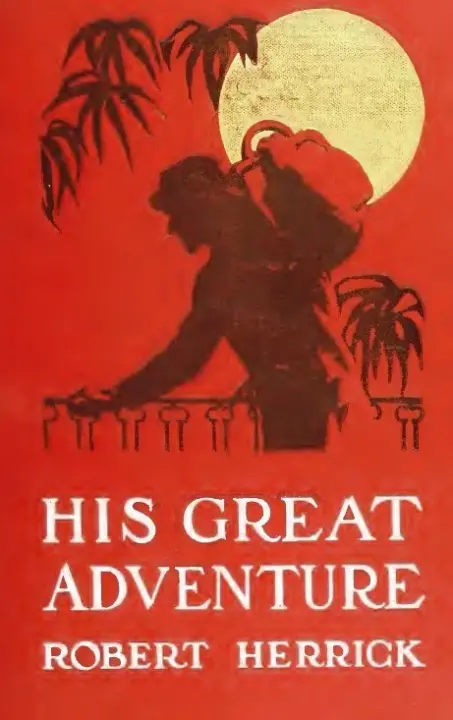
Robert Herrick

Robert Herrick
BEHIND THE BOOK
This eBook is for the use of anyone anywhere in the United States and most other parts of the world at no cost and with almost no restrictions whatsoever. You may copy it, give it away or re-use it under the terms of the Project Gutenberg License included with this eBook or online at www.gutenberg.org. If you are not located in the United States, you will have to check the laws of the country where you are located before using this eBook. Read the source licence.
The original source file, including credits and licence, is retained by this library. Request an original-format copy at no charge. Please include the book title and Project Gutenberg identifier #8529.
KEEP YOUR CURIOSITY GOING
Cécile Tormay

Moritz Busch
John L. Ransom
Frances Wright
Cécile Tormay

Mabel Potter Daggett