
The poetical works of Edgar Allan Poe
Edgar Allan Poe
THE CLASSIC COLLECTION · 1845
"The Works of Edgar Allan Poe — Volume 1" by Edgar Allan Poe is a collection of various literary works, likely written in the mid-19th century. This volume presents a comprehensive look at Poe’s contributions to the genres of horror, mystery, and poetry, showcasing his unique ability to navigate themes of melancholy and the supernatural. This collection includes not only the celebrated tales such as "The Murders in the Rue Morgue" and "The Tell-Tale Heart," but also illuminating prefaces and analyses of his life and works, inviting readers to delve into the mind of one of America's most iconic writers. The beginning of this volume contains a preface, touching upon Poe's life, struggles, and literary achievements, and it sets the tone for the exploration of his works. Notably, it includes reflections on his early life, detailing his adoption by John Allan, his education, and his tumultuous relationships, as well as mentions of his formative experiences and the challenges he faced in his literary career. The opening gives readers insight into the origins of works that blend the macabre with the poetic, suggesting that Poe's life experiences deeply influenced his storytelling. Moreover, it serves as an introduction to the themes of despair, beauty, and complexity that define his body of work, preparing readers for the profound explorations ahead.
Introduction adapted from the source catalogue; source summaries may be automatically generated.
Free to read · English · 91,336 words · No account needed
MAKE TIME FOR A GOOD BOOK
On by default. Untick to stop anonymous reading totals. Each page counts after 10 seconds in view. How this works.
Anonymous counting is on unless you have switched it off.
“The pigeons about this time seeming to undergo much suffering, I determined upon giving them their liberty. I first untied one of them, a beautiful gray-mottled pigeon, and placed him upon the rim of the wicker-work. He appeared extremely uneasy, looking anxiously around him, fluttering his wings, and making a loud cooing noise, but could not be persuaded to trust himself from off the car. I took him up at last, and threw him to about half a dozen yards from the balloon. He made, however, no attempt to descend as I had expected, but struggled with great vehemence to get back, uttering at the same time very shrill and piercing cries. He at length succeeded in regaining his former station on the rim, but had hardly done so when his head dropped upon his breast, and he fell dead within the car. The other one did not prove so unfortunate. To prevent his following the example of his companion, and accomplishing a return, I threw him downward with all my force, and was pleased to find him continue his descent, with great velocity, making use of his wings with ease, and in a perfectly natural manner. In a very short time he was out of sight, and I have no doubt he reached home in safety. Puss, who seemed in a great measure recovered from her illness, now made a hearty meal of the dead bird and then went to sleep with much apparent satisfaction. Her kittens were quite lively, and so far evinced not the slightest sign of any uneasiness whatever.
“At a quarter-past eight, being no longer able to draw breath without the most intolerable pain, I proceeded forthwith to adjust around the car the apparatus belonging to the condenser. This apparatus will require some little explanation, and your Excellencies will please to bear in mind that my object, in the first place, was to surround myself and cat entirely with a barricade against the highly rarefied atmosphere in which I was existing, with the intention of introducing within this barricade, by means of my condenser, a quantity of this same atmosphere sufficiently condensed for the purposes of respiration. With this object in view I had prepared a very strong perfectly air-tight, but flexible gum-elastic bag. In this bag, which was of sufficient dimensions, the entire car was in a manner placed. That is to say, it (the bag) was drawn over the whole bottom of the car, up its sides, and so on, along the outside of the ropes, to the upper rim or hoop where the net-work is attached. Having pulled the bag up in this way, and formed a complete enclosure on all sides, and at bottom, it was now necessary to fasten up its top or mouth, by passing its material over the hoop of the net-work—in other words, between the net-work and the hoop. But if the net-work were separated from the hoop to admit this passage, what was to sustain the car in the meantime? Now the net-work was not permanently fastened to the hoop, but attached by a series of running loops or nooses. I therefore undid only a few of these loops at one time, leaving the car suspended by the remainder. Having thus inserted a portion of the cloth forming the upper part of the bag, I refastened the loops—not to the hoop, for that would have been impossible, since the cloth now intervened—but to a series of large buttons, affixed to the cloth itself, about three feet below the mouth of the bag, the intervals between the buttons having been made to correspond to the intervals between the loops. This done, a few more of the loops were unfastened from the rim, a farther portion of the cloth introduced, and the disengaged loops then connected with their proper buttons. In this way it was possible to insert the whole upper part of the bag between the net-work and the hoop. It is evident that the hoop would now drop down within the car, while the whole weight of the car itself, with all its contents, would be held up merely by the strength of the buttons. This, at first sight, would seem an inadequate dependence; but it was by no means so, for the buttons were not only very strong in themselves, but so close together that a very slight portion of the whole weight was supported by any one of them. Indeed, had the car and contents been three times heavier than they were, I should not have been at all uneasy. I now raised up the hoop again within the covering of gum-elastic, and propped it at nearly its former height by means of three light poles prepared for the occasion. This was done, of course, to keep the bag distended at the top, and to preserve the lower part of the net-work in its proper situation. All that now remained was to fasten up the mouth of the enclosure; and this was readily accomplished by gathering the folds of the material together, and twisting them up very tightly on the inside by means of a kind of stationary tourniquet.
Your reading position is saved on this browser. Take it to another device with a library code. Reading pages adapt to text, rather than matching a printed edition.
Edgar Allan Poe

Rebecca Harding Davis & Thomas De Quincey & Charles Dickens & Nathaniel Hawthorne & Edward Bulwer Lytton, Baron Lytton & Edgar Allan Poe & Harriet Elizabeth Prescott Spofford
Edgar Allan Poe
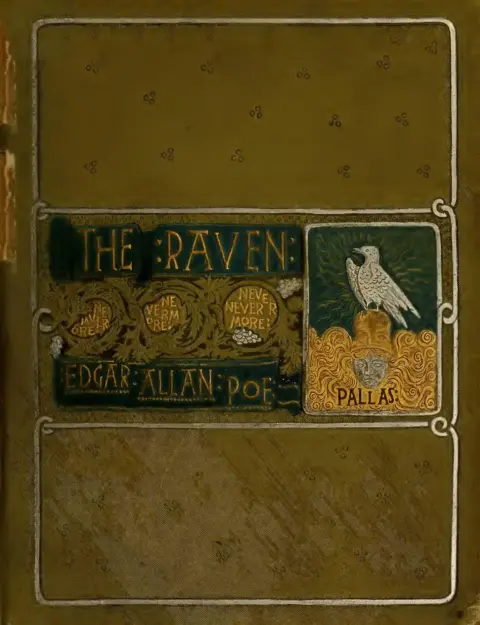
Edgar Allan Poe
BEHIND THE BOOK
This eBook is for the use of anyone anywhere in the United States and most other parts of the world at no cost and with almost no restrictions whatsoever. You may copy it, give it away or re-use it under the terms of the Project Gutenberg License included with this eBook or online at www.gutenberg.org. If you are not located in the United States, you will have to check the laws of the country where you are located before using this eBook. Read the source licence.
The original source file, including credits and licence, is retained by this library. Request an original-format copy at no charge. Please include the book title and Project Gutenberg identifier #2147.
KEEP YOUR CURIOSITY GOING
Coulson Kernahan

Maurice Baring
Frances Wright
Cécile Tormay
Francis Greenleaf Allinson & Anne C. E. (Anne Crosby Emery) Allinson

Frederic Jesup Stimson