
The poetical works of Edgar Allan Poe
Edgar Allan Poe
THE CLASSIC COLLECTION · 1845
"The Works of Edgar Allan Poe — Volume 1" by Edgar Allan Poe is a collection of various literary works, likely written in the mid-19th century. This volume presents a comprehensive look at Poe’s contributions to the genres of horror, mystery, and poetry, showcasing his unique ability to navigate themes of melancholy and the supernatural. This collection includes not only the celebrated tales such as "The Murders in the Rue Morgue" and "The Tell-Tale Heart," but also illuminating prefaces and analyses of his life and works, inviting readers to delve into the mind of one of America's most iconic writers. The beginning of this volume contains a preface, touching upon Poe's life, struggles, and literary achievements, and it sets the tone for the exploration of his works. Notably, it includes reflections on his early life, detailing his adoption by John Allan, his education, and his tumultuous relationships, as well as mentions of his formative experiences and the challenges he faced in his literary career. The opening gives readers insight into the origins of works that blend the macabre with the poetic, suggesting that Poe's life experiences deeply influenced his storytelling. Moreover, it serves as an introduction to the themes of despair, beauty, and complexity that define his body of work, preparing readers for the profound explorations ahead.
Introduction adapted from the source catalogue; source summaries may be automatically generated.
Free to read · English · 91,336 words · No account needed
MAKE TIME FOR A GOOD BOOK
On by default. Untick to stop anonymous reading totals. Each page counts after 10 seconds in view. How this works.
Anonymous counting is on unless you have switched it off.
“I was now rising rapidly, and by seven o’clock the barometer indicated an altitude of no less than nine miles and a half. I began to find great difficulty in drawing my breath. My head, too, was excessively painful; and, having felt for some time a moisture about my cheeks, I at length discovered it to be blood, which was oozing quite fast from the drums of my ears. My eyes, also, gave me great uneasiness. Upon passing the hand over them they seemed to have protruded from their sockets in no inconsiderable degree; and all objects in the car, and even the balloon itself, appeared distorted to my vision. These symptoms were more than I had expected, and occasioned me some alarm. At this juncture, very imprudently, and without consideration, I threw out from the car three five-pound pieces of ballast. The accelerated rate of ascent thus obtained, carried me too rapidly, and without sufficient gradation, into a highly rarefied stratum of the atmosphere, and the result had nearly proved fatal to my expedition and to myself. I was suddenly seized with a spasm which lasted for more than five minutes, and even when this, in a measure, ceased, I could catch my breath only at long intervals, and in a gasping manner—bleeding all the while copiously at the nose and ears, and even slightly at the eyes. The pigeons appeared distressed in the extreme, and struggled to escape; while the cat mewed piteously, and, with her tongue hanging out of her mouth, staggered to and fro in the car as if under the influence of poison. I now too late discovered the great rashness of which I had been guilty in discharging the ballast, and my agitation was excessive. I anticipated nothing less than death, and death in a few minutes. The physical suffering I underwent contributed also to render me nearly incapable of making any exertion for the preservation of my life. I had, indeed, little power of reflection left, and the violence of the pain in my head seemed to be greatly on the increase. Thus I found that my senses would shortly give way altogether, and I had already clutched one of the valve ropes with the view of attempting a descent, when the recollection of the trick I had played the three creditors, and the possible consequences to myself, should I return, operated to deter me for the moment. I lay down in the bottom of the car, and endeavored to collect my faculties. In this I so far succeeded as to determine upon the experiment of losing blood. Having no lancet, however, I was constrained to perform the operation in the best manner I was able, and finally succeeded in opening a vein in my right arm, with the blade of my penknife. The blood had hardly commenced flowing when I experienced a sensible relief, and by the time I had lost about half a moderate basin full, most of the worst symptoms had abandoned me entirely. I nevertheless did not think it expedient to attempt getting on my feet immediately; but, having tied up my arm as well as I could, I lay still for about a quarter of an hour. At the end of this time I arose, and found myself freer from absolute pain of any kind than I had been during the last hour and a quarter of my ascension. The difficulty of breathing, however, was diminished in a very slight degree, and I found that it would soon be positively necessary to make use of my condenser. In the meantime, looking toward the cat, who was again snugly stowed away upon my coat, I discovered to my infinite surprise, that she had taken the opportunity of my indisposition to bring into light a litter of three little kittens. This was an addition to the number of passengers on my part altogether unexpected; but I was pleased at the occurrence. It would afford me a chance of bringing to a kind of test the truth of a surmise, which, more than anything else, had influenced me in attempting this ascension. I had imagined that the habitual endurance of the atmospheric pressure at the surface of the earth was the cause, or nearly so, of the pain attending animal existence at a distance above the surface. Should the kittens be found to suffer uneasiness in an equal degree with their mother, I must consider my theory in fault, but a failure to do so I should look upon as a strong confirmation of my idea.
Your reading position is saved on this browser. Take it to another device with a library code. Reading pages adapt to text, rather than matching a printed edition.
Edgar Allan Poe

Rebecca Harding Davis & Thomas De Quincey & Charles Dickens & Nathaniel Hawthorne & Edward Bulwer Lytton, Baron Lytton & Edgar Allan Poe & Harriet Elizabeth Prescott Spofford
Edgar Allan Poe
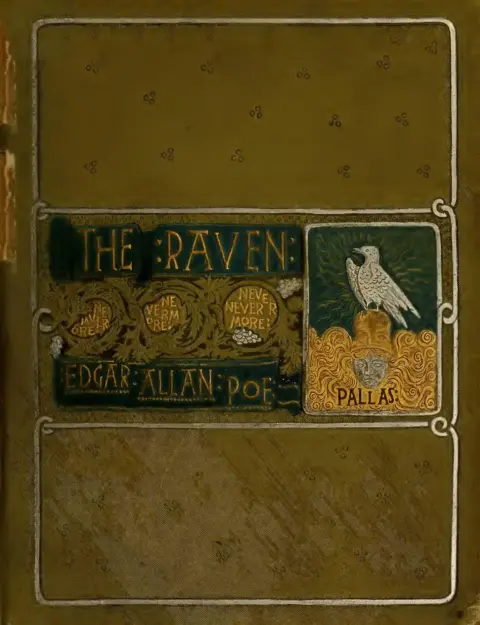
Edgar Allan Poe
BEHIND THE BOOK
This eBook is for the use of anyone anywhere in the United States and most other parts of the world at no cost and with almost no restrictions whatsoever. You may copy it, give it away or re-use it under the terms of the Project Gutenberg License included with this eBook or online at www.gutenberg.org. If you are not located in the United States, you will have to check the laws of the country where you are located before using this eBook. Read the source licence.
The original source file, including credits and licence, is retained by this library. Request an original-format copy at no charge. Please include the book title and Project Gutenberg identifier #2147.
KEEP YOUR CURIOSITY GOING
Coulson Kernahan

Maurice Baring
Frances Wright
Cécile Tormay
Francis Greenleaf Allinson & Anne C. E. (Anne Crosby Emery) Allinson

Frederic Jesup Stimson