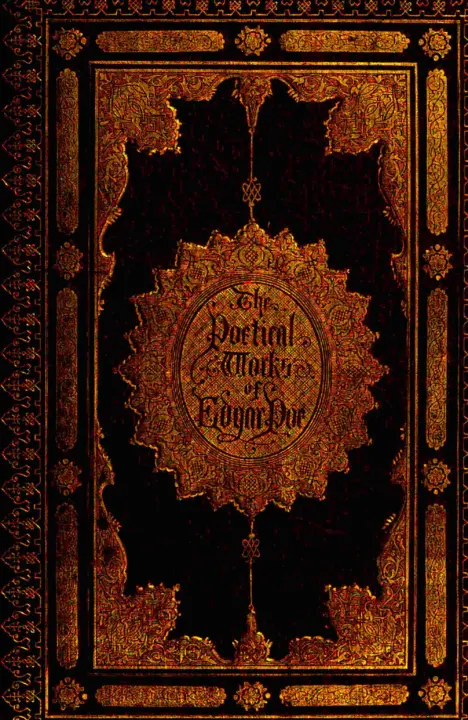
The poetical works of Edgar Allan Poe
Edgar Allan Poe
THE CLASSIC COLLECTION · 1845
"The Works of Edgar Allan Poe — Volume 1" by Edgar Allan Poe is a collection of various literary works, likely written in the mid-19th century. This volume presents a comprehensive look at Poe’s contributions to the genres of horror, mystery, and poetry, showcasing his unique ability to navigate themes of melancholy and the supernatural. This collection includes not only the celebrated tales such as "The Murders in the Rue Morgue" and "The Tell-Tale Heart," but also illuminating prefaces and analyses of his life and works, inviting readers to delve into the mind of one of America's most iconic writers. The beginning of this volume contains a preface, touching upon Poe's life, struggles, and literary achievements, and it sets the tone for the exploration of his works. Notably, it includes reflections on his early life, detailing his adoption by John Allan, his education, and his tumultuous relationships, as well as mentions of his formative experiences and the challenges he faced in his literary career. The opening gives readers insight into the origins of works that blend the macabre with the poetic, suggesting that Poe's life experiences deeply influenced his storytelling. Moreover, it serves as an introduction to the themes of despair, beauty, and complexity that define his body of work, preparing readers for the profound explorations ahead.
Introduction adapted from the source catalogue; source summaries may be automatically generated.
Free to read · English · 91,336 words · No account needed
MAKE TIME FOR A GOOD BOOK
On by default. Untick to stop anonymous reading totals. Each page counts after 10 seconds in view. How this works.
Anonymous counting is on unless you have switched it off.
In the meantime the balloon arose like a lark, and, soaring far away above the city, at length drifted quietly behind a cloud similar to that from which it had so oddly emerged, and was thus lost forever to the wondering eyes of the good citizens of Rotterdam. All attention was now directed to the letter, the descent of which, and the consequences attending thereupon, had proved so fatally subversive of both person and personal dignity to his Excellency, the illustrious Burgomaster Mynheer Superbus Von Underduk. That functionary, however, had not failed, during his circumgyratory movements, to bestow a thought upon the important subject of securing the packet in question, which was seen, upon inspection, to have fallen into the most proper hands, being actually addressed to himself and Professor Rub-a-dub, in their official capacities of President and Vice-President of the Rotterdam College of Astronomy. It was accordingly opened by those dignitaries upon the spot, and found to contain the following extraordinary, and indeed very serious, communication:
“To their Excellencies Von Underduk and Rub-a-dub, President and Vice-President of the States’ College of Astronomers, in the city of Rotterdam.
“Your Excellencies may perhaps be able to remember an humble artizan, by name Hans Pfaall, and by occupation a mender of bellows, who, with three others, disappeared from Rotterdam, about five years ago, in a manner which must have been considered by all parties at once sudden, and extremely unaccountable. If, however, it so please your Excellencies, I, the writer of this communication, am the identical Hans Pfaall himself. It is well known to most of my fellow citizens, that for the period of forty years I continued to occupy the little square brick building, at the head of the alley called Sauerkraut, in which I resided at the time of my disappearance. My ancestors have also resided therein time out of mind—they, as well as myself, steadily following the respectable and indeed lucrative profession of mending of bellows. For, to speak the truth, until of late years, that the heads of all the people have been set agog with politics, no better business than my own could an honest citizen of Rotterdam either desire or deserve. Credit was good, employment was never wanting, and on all hands there was no lack of either money or good-will. But, as I was saying, we soon began to feel the effects of liberty and long speeches, and radicalism, and all that sort of thing. People who were formerly, the very best customers in the world, had now not a moment of time to think of us at all. They had, so they said, as much as they could do to read about the revolutions, and keep up with the march of intellect and the spirit of the age. If a fire wanted fanning, it could readily be fanned with a newspaper, and as the government grew weaker, I have no doubt that leather and iron acquired durability in proportion, for, in a very short time, there was not a pair of bellows in all Rotterdam that ever stood in need of a stitch or required the assistance of a hammer. This was a state of things not to be endured. I soon grew as poor as a rat, and, having a wife and children to provide for, my burdens at length became intolerable, and I spent hour after hour in reflecting upon the most convenient method of putting an end to my life. Duns, in the meantime, left me little leisure for contemplation. My house was literally besieged from morning till night, so that I began to rave, and foam, and fret like a caged tiger against the bars of his enclosure. There were three fellows in particular who worried me beyond endurance, keeping watch continually about my door, and threatening me with the law. Upon these three I internally vowed the bitterest revenge, if ever I should be so happy as to get them within my clutches; and I believe nothing in the world but the pleasure of this anticipation prevented me from putting my plan of suicide into immediate execution, by blowing my brains out with a blunderbuss. I thought it best, however, to dissemble my wrath, and to treat them with promises and fair words, until, by some good turn of fate, an opportunity of vengeance should be afforded me.
Your reading position is saved on this browser. Take it to another device with a library code. Reading pages adapt to text, rather than matching a printed edition.
Edgar Allan Poe

Rebecca Harding Davis & Thomas De Quincey & Charles Dickens & Nathaniel Hawthorne & Edward Bulwer Lytton, Baron Lytton & Edgar Allan Poe & Harriet Elizabeth Prescott Spofford
Edgar Allan Poe
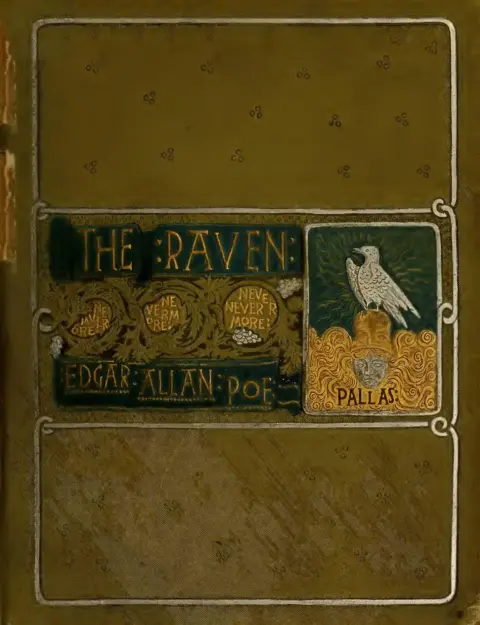
Edgar Allan Poe
BEHIND THE BOOK
This eBook is for the use of anyone anywhere in the United States and most other parts of the world at no cost and with almost no restrictions whatsoever. You may copy it, give it away or re-use it under the terms of the Project Gutenberg License included with this eBook or online at www.gutenberg.org. If you are not located in the United States, you will have to check the laws of the country where you are located before using this eBook. Read the source licence.
The original source file, including credits and licence, is retained by this library. Request an original-format copy at no charge. Please include the book title and Project Gutenberg identifier #2147.
KEEP YOUR CURIOSITY GOING
Coulson Kernahan

Maurice Baring
Frances Wright
Cécile Tormay
Francis Greenleaf Allinson & Anne C. E. (Anne Crosby Emery) Allinson

Frederic Jesup Stimson