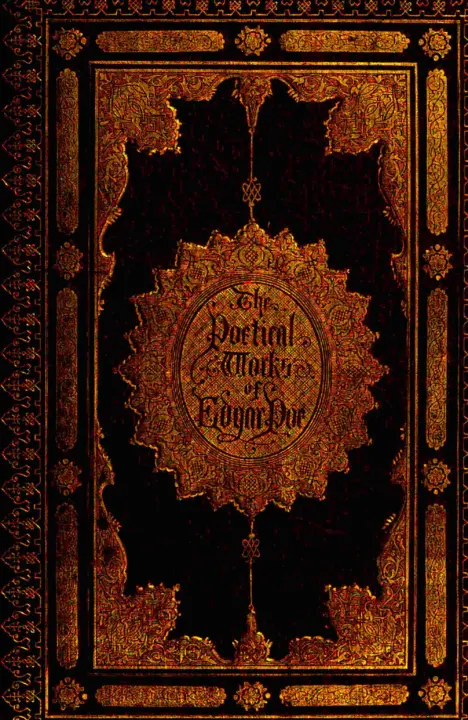
The poetical works of Edgar Allan Poe
Edgar Allan Poe
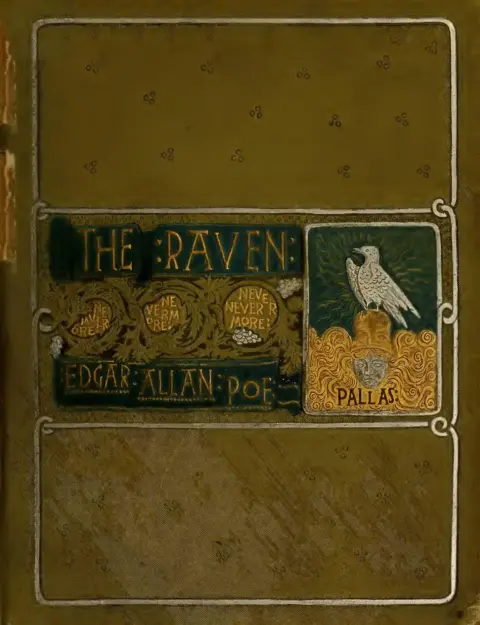
THE CLASSIC COLLECTION · 1845
"The Works of Edgar Allan Poe, The Raven Edition" by Edgar Allan Poe is a comprehensive collection of his literary output, likely compiled in the late 19th century. This collection spans various genres, including poetry, essays, and gothic tales, showcasing Poe's distinctive style and exploration of themes like love, death, and the macabre. The book presents significant works such as "The Raven," "The Tell-Tale Heart," "The Fall of the House of Usher," and many others, illustrating Poe's profound influence on American literature and his mastery of suspense and psychological depth. At the start of this collection, the reader is introduced to a preface that sets the stage for understanding Poe's life and literary journey, giving insights into the struggles he faced, both personally and professionally. The subsequent sections outline key works and achievements in his career, detailing his early poetry, notable prose tales, and his lasting impact on both poetry and fiction. The opening expresses deep admiration for Poe's unique genius, highlighting the interplay between his troubled life and his art, thus creating an engaging entry point for readers new to Poe's work or revisiting it with a fresh perspective.
Introduction adapted from the source catalogue; source summaries may be automatically generated.
Free to read · English · 450,336 words · No account needed
MAKE TIME FOR A GOOD BOOK
On by default. Untick to stop anonymous reading totals. Each page counts after 10 seconds in view. How this works.
Anonymous counting is on unless you have switched it off.
Once upon a midnight dreary, while I pondered, weak and weary, Over many a quaint and curious volume of forgotten lore, While I nodded, nearly napping, suddenly there came a tapping, As of some one gently rapping, rapping at my chamber door. “’Tis some visitor,” I muttered, “tapping at my chamber door— Only this, and nothing more.” Ah, distinctly I remember it was in the bleak December, And each separate dying ember wrought its ghost upon the floor. Eagerly I wished the morrow;—vainly I had sought to borrow From my books surcease of sorrow—sorrow for the lost Lenore— For the rare and radiant maiden whom the angels name Lenore— Nameless here for evermore. And the silken sad uncertain rustling of each purple curtain Thrilled me—filled me with fantastic terrors never felt before; So that now, to still the beating of my heart, I stood repeating “’Tis some visitor entreating entrance at my chamber door— Some late visitor entreating entrance at my chamber door;— This it is, and nothing more.” Presently my soul grew stronger; hesitating then no longer, “Sir,” said I, “or Madam, truly your forgiveness I implore; But the fact is I was napping, and so gently you came rapping, And so faintly you came tapping, tapping at my chamber door, That I scarce was sure I heard you “—here I opened wide the door;—— Darkness there and nothing more. Deep into that darkness peering, long I stood there wondering, fearing, Doubting, dreaming dreams no mortal ever dared to dream before; But the silence was unbroken, and the darkness gave no token, And the only word there spoken was the whispered word, “Lenore!” This I whispered, and an echo murmured back the word, “Lenore!”— Merely this, and nothing more. Back into the chamber turning, all my soul within me burning, Soon I heard again a tapping somewhat louder than before. “Surely,” said I, “surely that is something at my window lattice; Let me see, then, what thereat is, and this mystery explore— Let my heart be still a moment and this mystery explore;— ’Tis the wind and nothing more!” Open here I flung the shutter, when, with many a flirt and flutter, In there stepped a stately raven of the saintly days of yore; Not the least obeisance made he; not an instant stopped or stayed he; But, with mien of lord or lady, perched above my chamber door— Perched upon a bust of Pallas just above my chamber door— Perched, and sat, and nothing more. Then this ebony bird beguiling my sad fancy into smiling, By the grave and stern decorum of the countenance it wore, “Though thy crest be shorn and shaven, thou,” I said, “art sure no craven, Ghastly grim and ancient raven wandering from the Nightly shore— Tell me what thy lordly name is on the Night’s Plutonian shore!” Quoth the raven “Nevermore.” Much I marvelled this ungainly fowl to hear discourse so plainly, Though its answer little meaning—little relevancy bore; For we cannot help agreeing that no living human being Ever yet was blessed with seeing bird above his chamber door— Bird or beast upon the sculptured bust above his chamber door, With such name as “Nevermore.” But the raven, sitting lonely on the placid bust, spoke only That one word, as if his soul in that one word he did outpour. Nothing farther then he uttered—not a feather then he fluttered— Till I scarcely more than muttered “Other friends have flown before— On the morrow he will leave me, as my hopes have flown before.” Then the bird said “Nevermore.” Startled at the stillness broken by reply so aptly spoken, “Doubtless,” said I, “what it utters is its only stock and store Caught from some unhappy master whom unmerciful Disaster Followed fast and followed faster till his songs one burden bore— Till the dirges of his Hope that melancholy burden bore Of “Never—nevermore.” But the raven still beguiling all my sad soul into smiling, Straight I wheeled a cushioned seat in front of bird, and bust and door; Then, upon the velvet sinking, I betook myself to linking Fancy unto fancy, thinking what this ominous bird of yore— What this grim, ungainly, ghastly, gaunt and ominous bird of yore Meant in croaking “Nevermore.” This I sat engaged in guessing, but no syllable expressing To the fowl whose fiery eyes now burned into my bosom’s core; This and more I sat divining, with my head at ease reclining On the cushion’s velvet lining that the lamplght gloated o’er, But whose velvet violet lining with the lamplight gloating o’er, She shall press, ah, nevermore! Then, methought, the air grew denser, perfumed from an unseen censer Swung by Angels whose faint foot-falls tinkled on the tufted floor. “Wretch,” I cried, “thy God hath lent thee—by these angels he hath sent thee Respite—respite and nepenthe from thy memories of Lenore; Quaff, oh quaff this kind nepenthe and forget this lost Lenore!” Quoth the raven, “Nevermore.” “Prophet!” said I, “thing of evil!—prophet still, if bird or devil!— Whether Tempter sent, or whether tempest tossed thee here ashore, Desolate yet all undaunted, on this desert land enchanted— On this home by Horror haunted—tell me truly, I implore— Is there—is there balm in Gilead?—tell me—tell me, I implore!” Quoth the raven, “Nevermore.” “Prophet!” said I, “thing of evil—prophet still, if bird or devil! By that Heaven that bends above us—by that God we both adore— Tell this soul with sorrow laden if, within the distant Aidenn, It shall clasp a sainted maiden whom the angels name Lenore— Clasp a rare and radiant maiden whom the angels name Lenore.” Quoth the raven, “Nevermore.” “Be that word our sign of parting, bird or fiend!” I shrieked, upstarting— “Get thee back into the tempest and the Night’s Plutonian shore! Leave no black plume as a token of that lie thy soul hath spoken! Leave my loneliness unbroken!—quit the bust above my door! Take thy beak from out my heart, and take thy form from off my door!” Quoth the raven, “Nevermore.” And the raven, never flitting, still is sitting, still is sitting On the pallid bust of Pallas just above my chamber door; And his eyes have all the seeming of a demon’s that is dreaming, And the lamp-light o’er him streaming throws his shadow on the floor; And my soul from out that shadow that lies floating on the floor Shall be lifted—nevermore!
Your reading position is saved on this browser. Take it to another device with a library code. Reading pages adapt to text, rather than matching a printed edition.
Edgar Allan Poe

Rebecca Harding Davis & Thomas De Quincey & Charles Dickens & Nathaniel Hawthorne & Edward Bulwer Lytton, Baron Lytton & Edgar Allan Poe & Harriet Elizabeth Prescott Spofford
Edgar Allan Poe
Edgar Allan Poe
BEHIND THE BOOK
This eBook is for the use of anyone anywhere in the United States and most other parts of the world at no cost and with almost no restrictions whatsoever. You may copy it, give it away or re-use it under the terms of the Project Gutenberg License included with this eBook or online at www.gutenberg.org. If you are not located in the United States, you will have to check the laws of the country where you are located before using this eBook. Read the source licence.
The original source file, including credits and licence, is retained by this library. Request an original-format copy at no charge. Please include the book title and Project Gutenberg identifier #25525.
KEEP YOUR CURIOSITY GOING

David Patterson (Spirit) Hatch

David Patterson (Spirit) Hatch

David Patterson (Spirit) Hatch
Coulson Kernahan

Ralph Waldo Emerson

Maurice Baring