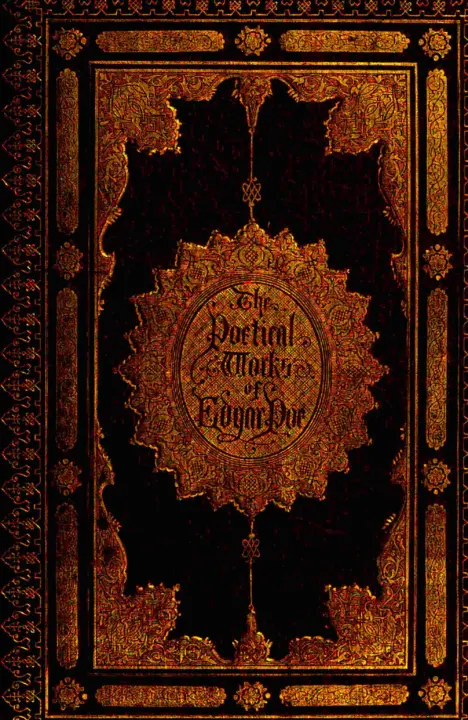
The poetical works of Edgar Allan Poe
Edgar Allan Poe
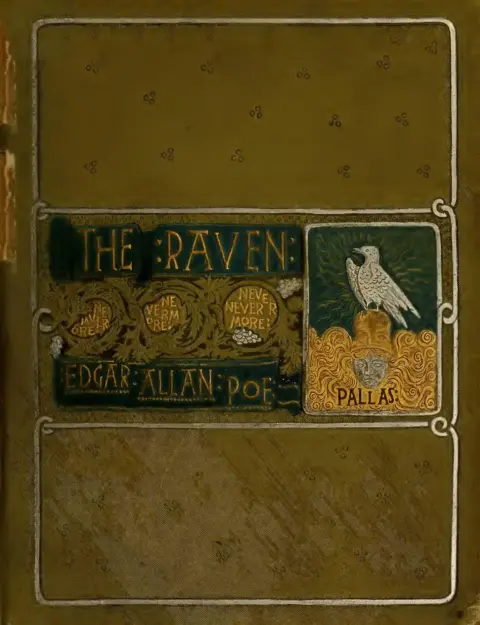
THE CLASSIC COLLECTION · 1845
"The Works of Edgar Allan Poe, The Raven Edition" by Edgar Allan Poe is a comprehensive collection of his literary output, likely compiled in the late 19th century. This collection spans various genres, including poetry, essays, and gothic tales, showcasing Poe's distinctive style and exploration of themes like love, death, and the macabre. The book presents significant works such as "The Raven," "The Tell-Tale Heart," "The Fall of the House of Usher," and many others, illustrating Poe's profound influence on American literature and his mastery of suspense and psychological depth. At the start of this collection, the reader is introduced to a preface that sets the stage for understanding Poe's life and literary journey, giving insights into the struggles he faced, both personally and professionally. The subsequent sections outline key works and achievements in his career, detailing his early poetry, notable prose tales, and his lasting impact on both poetry and fiction. The opening expresses deep admiration for Poe's unique genius, highlighting the interplay between his troubled life and his art, thus creating an engaging entry point for readers new to Poe's work or revisiting it with a fresh perspective.
Introduction adapted from the source catalogue; source summaries may be automatically generated.
Free to read · English · 450,336 words · No account needed
MAKE TIME FOR A GOOD BOOK
On by default. Untick to stop anonymous reading totals. Each page counts after 10 seconds in view. How this works.
Anonymous counting is on unless you have switched it off.
Let me conclude by—the recitation of yet another brief poem—one very different in character from any that I have before quoted. It is by Motherwell, and is called “The Song of the Cavalier.” With our modern and altogether rational ideas of the absurdity and impiety of warfare, we are not precisely in that frame of mind best adapted to sympathize with the sentiments, and thus to appreciate the real excellence of the poem. To do this fully we must identify ourselves in fancy with the soul of the old cavalier:—
Then mounte! then mounte, brave gallants all,
And don your helmes amaine:
Deathe’s couriers. Fame and Honor call
No shrewish teares shall fill your eye
When the sword-hilt’s in our hand,—
Heart-whole we’ll part, and no whit sighe
For the fayrest of the land;
Let piping swaine, and craven wight,
Thus weepe and poling crye,
Our business is like men to fight.
It should not be doubted that at least one-third of the affection with which we regard the elder poets of Great Britain should be-attributed to what is, in itself, a thing apart from poetry-we mean to the simple love of the antique-and that, again, a third of even the proper poetic sentiment inspiredby their writings should be ascribed to a fact which, while it has strict connection with poetry in the abstract, and with the old British poems themselves, should not be looked upon as a merit appertaining to the authors of the poems. Almost every devout admirer of the old bards, if demanded his opinion of their productions, would mention vaguely, yet with perfect sincerity, a sense of dreamy, wild, indefinite, and he would perhaps say, indefinable delight; on being required to point out the source of this so shadowy pleasure, he would be apt to speak of the quaint in phraseology and in general handling. This quaintness is, in fact, a very powerful adjunct to ideality, but in the case in question it arises independently of the author’s will, and is altogether apart from his intention. Words and their rhythm have varied. Verses which affect us to-day with a vivid delight, and which delight, in many instances, may be traced to the one source, quaintness, must have worn in the days of their construction, a very commonplace air. This is, of course, no argument against the poems now-we mean it only as against the poets thew. There is a growing desire to overrate them. The old English muse was frank, guileless, sincere, and although very learned, still learned without art. No general error evinces a more thorough confusion of ideas than the error of supposing Donne and Cowley metaphysical in the sense wherein Wordsworth and Coleridge are so. With the two former ethics were the end-with the two latter the means. The poet of the “Creation” wished, by highly artificial verse, to inculcate what he supposed to be moral truth-the poet of the “Ancient Mariner” to infuse the Poetic Sentiment through channels suggested by analysis. The one finished by complete failure what he commenced in the grossest misconception; the other, by a path which could not possibly lead him astray, arrived at a triumph which is not the less glorious because hidden from the profane eyes of the multitude. But in this view even the “metaphysical verse” of Cowley is but evidence of the simplicity and single-heartedness of the man. And he was in this but a type of his school-for we may as well designate in this way the entire class of writers whose poems are bound up in the volume before us, and throughout all of whom there runs a very perceptible general character. They used little art in composition. Their writings sprang immediately from the soul-and partook intensely of that soul’s nature. Nor is it difficult to perceive the tendency of this abandon-to elevate immeasurably all the energies of mind-but, again, so to mingle the greatest possible fire, force, delicacy, and all good things, with the lowest possible bathos, baldness, and imbecility, as to render it not a matter of doubt that the average results of mind in such a school will be found inferior to those results in one (ceteris paribus) more artificial.
Your reading position is saved on this browser. Take it to another device with a library code. Reading pages adapt to text, rather than matching a printed edition.
Edgar Allan Poe

Rebecca Harding Davis & Thomas De Quincey & Charles Dickens & Nathaniel Hawthorne & Edward Bulwer Lytton, Baron Lytton & Edgar Allan Poe & Harriet Elizabeth Prescott Spofford
Edgar Allan Poe
Edgar Allan Poe
BEHIND THE BOOK
This eBook is for the use of anyone anywhere in the United States and most other parts of the world at no cost and with almost no restrictions whatsoever. You may copy it, give it away or re-use it under the terms of the Project Gutenberg License included with this eBook or online at www.gutenberg.org. If you are not located in the United States, you will have to check the laws of the country where you are located before using this eBook. Read the source licence.
The original source file, including credits and licence, is retained by this library. Request an original-format copy at no charge. Please include the book title and Project Gutenberg identifier #25525.
KEEP YOUR CURIOSITY GOING

David Patterson (Spirit) Hatch

David Patterson (Spirit) Hatch

David Patterson (Spirit) Hatch
Coulson Kernahan

Ralph Waldo Emerson

Maurice Baring