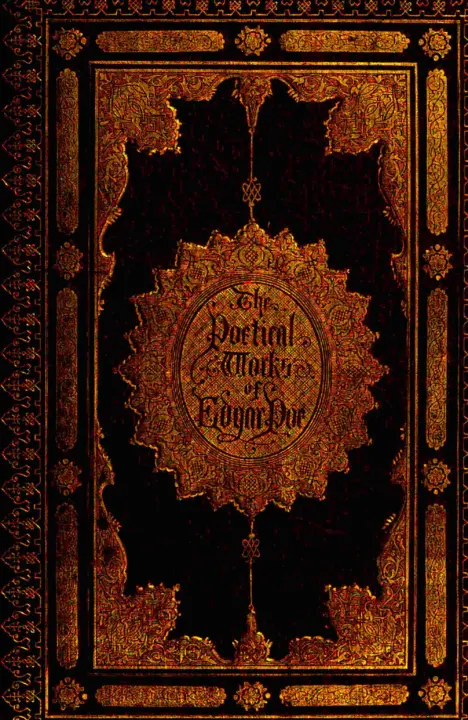
The poetical works of Edgar Allan Poe
Edgar Allan Poe
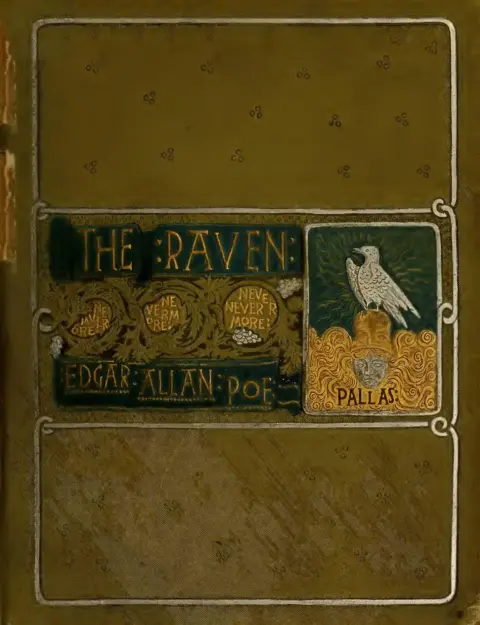
THE CLASSIC COLLECTION · 1845
"The Works of Edgar Allan Poe, The Raven Edition" by Edgar Allan Poe is a comprehensive collection of his literary output, likely compiled in the late 19th century. This collection spans various genres, including poetry, essays, and gothic tales, showcasing Poe's distinctive style and exploration of themes like love, death, and the macabre. The book presents significant works such as "The Raven," "The Tell-Tale Heart," "The Fall of the House of Usher," and many others, illustrating Poe's profound influence on American literature and his mastery of suspense and psychological depth. At the start of this collection, the reader is introduced to a preface that sets the stage for understanding Poe's life and literary journey, giving insights into the struggles he faced, both personally and professionally. The subsequent sections outline key works and achievements in his career, detailing his early poetry, notable prose tales, and his lasting impact on both poetry and fiction. The opening expresses deep admiration for Poe's unique genius, highlighting the interplay between his troubled life and his art, thus creating an engaging entry point for readers new to Poe's work or revisiting it with a fresh perspective.
Introduction adapted from the source catalogue; source summaries may be automatically generated.
Free to read · English · 450,336 words · No account needed
MAKE TIME FOR A GOOD BOOK
On by default. Untick to stop anonymous reading totals. Each page counts after 10 seconds in view. How this works.
Anonymous counting is on unless you have switched it off.
“Which is—hiccup!—undoubtedly the case,” said the metaphysician, while he poured out for himself another bumper of Mousseux, and offered his snuff-box to the fingers of his visitor.
“There was Plato, too,” continued his Majesty, modestly declining the snuff-box and the compliment it implied—“there was Plato, too, for whom I, at one time, felt all the affection of a friend. You knew Plato, Bon-Bon?—ah, no, I beg a thousand pardons. He met me at Athens, one day, in the Parthenon, and told me he was distressed for an idea. I bade him write, down that δ υοῦς εστιν αυλος. He said that he would do so, and went home, while I stepped over to the pyramids. But my conscience smote me for having uttered a truth, even to aid a friend, and hastening back to Athens, I arrived behind the philosopher’s chair as he was inditing the ‘αυλος.’
“Giving the lambda a fillip with my finger, I turned it upside down. So
the sentence now read ‘δ
υοῦς εστιν
αυγος’, and is, you perceive, the
fundamental doctrines in his metaphysics.”
“Were you ever at Rome?” asked the restaurateur, as he finished his second bottle of Mousseux, and drew from the closet a larger supply of Chambertin.
“But once, Monsieur Bon-Bon, but once. There was a time,” said the devil, as if reciting some passage from a book—“there was a time when occurred an anarchy of five years, during which the republic, bereft of all its officers, had no magistracy besides the tribunes of the people, and these were not legally vested with any degree of executive power—at that time, Monsieur Bon-Bon—at that time only I was in Rome, and I have no earthly acquaintance, consequently, with any of its philosophy.” (*2)
{*2} Ils ecrivaient sur la Philosophie (Cicero, Lucretius, Seneca) mais c’etait la Philosophie Grecque.—Condorcet.
“What do you think of—what do you think of—hiccup!—Epicurus?”
“What do I think of whom?” said the devil, in astonishment, “you cannot surely mean to find any fault with Epicurus! What do I think of Epicurus! Do you mean me, sir?—I am Epicurus! I am the same philosopher who wrote each of the three hundred treatises commemorated by Diogenes Laertes.”
“That’s a lie!” said the metaphysician, for the wine had gotten a little into his head.
“Very well!—very well, sir!—very well, indeed, sir!” said his Majesty, apparently much flattered.
“That’s a lie!” repeated the restaurateur, dogmatically; “that’s a—hiccup!—a lie!”
“Well, well, have it your own way!” said the devil, pacifically, and Bon-Bon, having beaten his Majesty at argument, thought it his duty to conclude a second bottle of Chambertin.
Your reading position is saved on this browser. Take it to another device with a library code. Reading pages adapt to text, rather than matching a printed edition.
Edgar Allan Poe

Rebecca Harding Davis & Thomas De Quincey & Charles Dickens & Nathaniel Hawthorne & Edward Bulwer Lytton, Baron Lytton & Edgar Allan Poe & Harriet Elizabeth Prescott Spofford
Edgar Allan Poe
Edgar Allan Poe
BEHIND THE BOOK
This eBook is for the use of anyone anywhere in the United States and most other parts of the world at no cost and with almost no restrictions whatsoever. You may copy it, give it away or re-use it under the terms of the Project Gutenberg License included with this eBook or online at www.gutenberg.org. If you are not located in the United States, you will have to check the laws of the country where you are located before using this eBook. Read the source licence.
The original source file, including credits and licence, is retained by this library. Request an original-format copy at no charge. Please include the book title and Project Gutenberg identifier #25525.
KEEP YOUR CURIOSITY GOING

David Patterson (Spirit) Hatch

David Patterson (Spirit) Hatch

David Patterson (Spirit) Hatch
Coulson Kernahan

Ralph Waldo Emerson

Maurice Baring