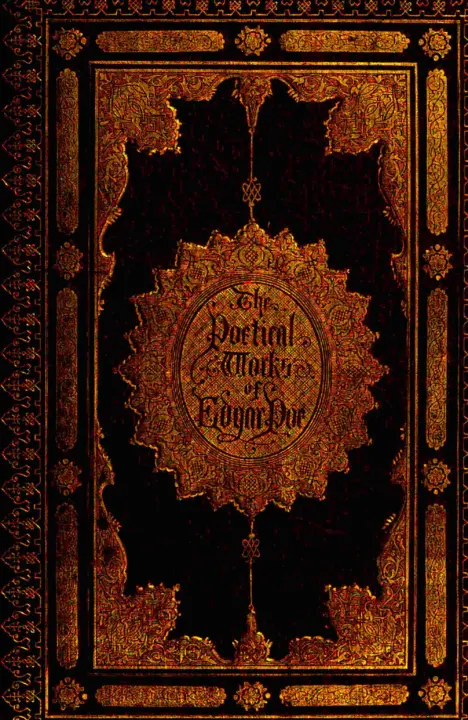
The poetical works of Edgar Allan Poe
Edgar Allan Poe
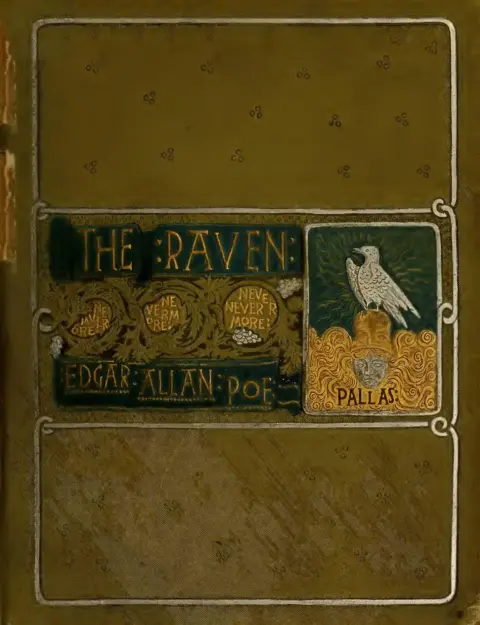
THE CLASSIC COLLECTION · 1845
"The Works of Edgar Allan Poe, The Raven Edition" by Edgar Allan Poe is a comprehensive collection of his literary output, likely compiled in the late 19th century. This collection spans various genres, including poetry, essays, and gothic tales, showcasing Poe's distinctive style and exploration of themes like love, death, and the macabre. The book presents significant works such as "The Raven," "The Tell-Tale Heart," "The Fall of the House of Usher," and many others, illustrating Poe's profound influence on American literature and his mastery of suspense and psychological depth. At the start of this collection, the reader is introduced to a preface that sets the stage for understanding Poe's life and literary journey, giving insights into the struggles he faced, both personally and professionally. The subsequent sections outline key works and achievements in his career, detailing his early poetry, notable prose tales, and his lasting impact on both poetry and fiction. The opening expresses deep admiration for Poe's unique genius, highlighting the interplay between his troubled life and his art, thus creating an engaging entry point for readers new to Poe's work or revisiting it with a fresh perspective.
Introduction adapted from the source catalogue; source summaries may be automatically generated.
Free to read · English · 450,336 words · No account needed
MAKE TIME FOR A GOOD BOOK
On by default. Untick to stop anonymous reading totals. Each page counts after 10 seconds in view. How this works.
Anonymous counting is on unless you have switched it off.
Ye who read are still among the living; but I who write shall have long since gone my way into the region of shadows. For indeed strange things shall happen, and secret things be known, and many centuries shall pass away, ere these memorials be seen of men. And, when seen, there will be some to disbelieve, and some to doubt, and yet a few who will find much to ponder upon in the characters here graven with a stylus of iron.
The year had been a year of terror, and of feelings more intense than terror for which there is no name upon the earth. For many prodigies and signs had taken place, and far and wide, over sea and land, the black wings of the Pestilence were spread abroad. To those, nevertheless, cunning in the stars, it was not unknown that the heavens wore an aspect of ill; and to me, the Greek Oinos, among others, it was evident that now had arrived the alternation of that seven hundred and ninety-fourth year when, at the entrance of Aries, the planet Jupiter is conjoined with the red ring of the terrible Saturnus. The peculiar spirit of the skies, if I mistake not greatly, made itself manifest, not only in the physical orb of the earth, but in the souls, imaginations, and meditations of mankind.
Over some flasks of the red Chian wine, within the walls of a noble hall, in a dim city called Ptolemais, we sat, at night, a company of seven. And to our chamber there was no entrance save by a lofty door of brass: and the door was fashioned by the artisan Corinnos, and, being of rare workmanship, was fastened from within. Black draperies, likewise, in the gloomy room, shut out from our view the moon, the lurid stars, and the peopleless streets—but the boding and the memory of Evil, they would not be so excluded. There were things around us and about of which I can render no distinct account—things material and spiritual—heaviness in the atmosphere—a sense of suffocation—anxiety—and, above all, that terrible state of existence which the nervous experience when the senses are keenly living and awake, and meanwhile the powers of thought lie dormant. A dead weight hung upon us. It hung upon our limbs—upon the household furniture—upon the goblets from which we drank; and all things were depressed, and borne down thereby—all things save only the flames of the seven lamps which illumined our revel. Uprearing themselves in tall slender lines of light, they thus remained burning all pallid and motionless; and in the mirror which their lustre formed upon the round table of ebony at which we sat, each of us there assembled beheld the pallor of his own countenance, and the unquiet glare in the downcast eyes of his companions. Yet we laughed and were merry in our proper way—which was hysterical; and sang the songs of Anacreon—which are madness; and drank deeply—although the purple wine reminded us of blood. For there was yet another tenant of our chamber in the person of young Zoilus. Dead, and at full length he lay, enshrouded; the genius and the demon of the scene. Alas! he bore no portion in our mirth, save that his countenance, distorted with the plague, and his eyes, in which Death had but half extinguished the fire of the pestilence, seemed to take such interest in our merriment as the dead may haply take in the merriment of those who are to die. But although I, Oinos, felt that the eyes of the departed were upon me, still I forced myself not to perceive the bitterness of their expression, and gazing down steadily into the depths of the ebony mirror, sang with a loud and sonorous voice the songs of the son of Teios. But gradually my songs they ceased, and their echoes, rolling afar off among the sable draperies of the chamber, became weak, and undistinguishable, and so faded away. And lo! from among those sable draperies where the sounds of the song departed, there came forth a dark and undefined shadow—a shadow such as the moon, when low in heaven, might fashion from the figure of a man: but it was the shadow neither of man nor of God, nor of any familiar thing. And quivering awhile among the draperies of the room, it at length rested in full view upon the surface of the door of brass. But the shadow was vague, and formless, and indefinite, and was the shadow neither of man nor of God—neither God of Greece, nor God of Chaldaea, nor any Egyptian God. And the shadow rested upon the brazen doorway, and under the arch of the entablature of the door, and moved not, nor spoke any word, but there became stationary and remained. And the door whereupon the shadow rested was, if I remember aright, over against the feet of the young Zoilus enshrouded. But we, the seven there assembled, having seen the shadow as it came out from among the draperies, dared not steadily behold it, but cast down our eyes, and gazed continually into the depths of the mirror of ebony. And at length I, Oinos, speaking some low words, demanded of the shadow its dwelling and its appellation. And the shadow answered, “I am SHADOW, and my dwelling is near to the Catacombs of Ptolemais, and hard by those dim plains of Helusion which border upon the foul Charonian canal.” And then did we, the seven, start from our seats in horror, and stand trembling, and shuddering, and aghast, for the tones in the voice of the shadow were not the tones of any one being, but of a multitude of beings, and, varying in their cadences from syllable to syllable fell duskly upon our ears in the well-remembered and familiar accents of many thousand departed friends.
Your reading position is saved on this browser. Take it to another device with a library code. Reading pages adapt to text, rather than matching a printed edition.
Edgar Allan Poe

Rebecca Harding Davis & Thomas De Quincey & Charles Dickens & Nathaniel Hawthorne & Edward Bulwer Lytton, Baron Lytton & Edgar Allan Poe & Harriet Elizabeth Prescott Spofford
Edgar Allan Poe
Edgar Allan Poe
BEHIND THE BOOK
This eBook is for the use of anyone anywhere in the United States and most other parts of the world at no cost and with almost no restrictions whatsoever. You may copy it, give it away or re-use it under the terms of the Project Gutenberg License included with this eBook or online at www.gutenberg.org. If you are not located in the United States, you will have to check the laws of the country where you are located before using this eBook. Read the source licence.
The original source file, including credits and licence, is retained by this library. Request an original-format copy at no charge. Please include the book title and Project Gutenberg identifier #25525.
KEEP YOUR CURIOSITY GOING

David Patterson (Spirit) Hatch

David Patterson (Spirit) Hatch

David Patterson (Spirit) Hatch
Coulson Kernahan

Ralph Waldo Emerson

Maurice Baring