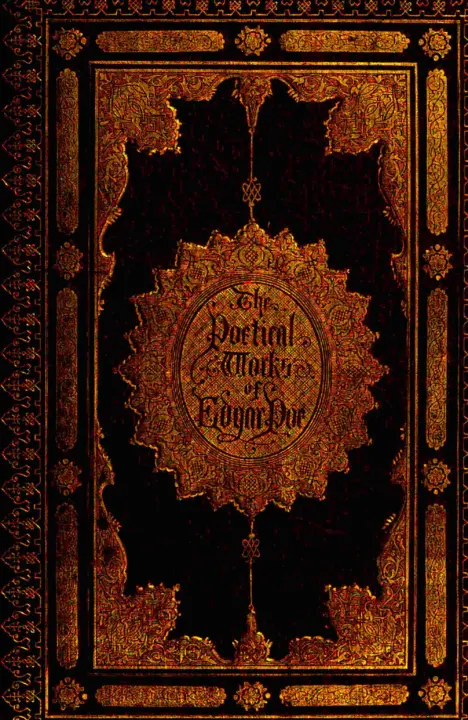
The poetical works of Edgar Allan Poe
Edgar Allan Poe
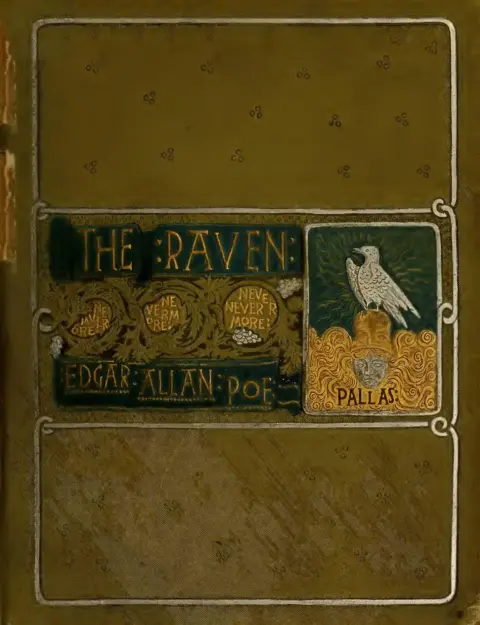
THE CLASSIC COLLECTION · 1845
"The Works of Edgar Allan Poe, The Raven Edition" by Edgar Allan Poe is a comprehensive collection of his literary output, likely compiled in the late 19th century. This collection spans various genres, including poetry, essays, and gothic tales, showcasing Poe's distinctive style and exploration of themes like love, death, and the macabre. The book presents significant works such as "The Raven," "The Tell-Tale Heart," "The Fall of the House of Usher," and many others, illustrating Poe's profound influence on American literature and his mastery of suspense and psychological depth. At the start of this collection, the reader is introduced to a preface that sets the stage for understanding Poe's life and literary journey, giving insights into the struggles he faced, both personally and professionally. The subsequent sections outline key works and achievements in his career, detailing his early poetry, notable prose tales, and his lasting impact on both poetry and fiction. The opening expresses deep admiration for Poe's unique genius, highlighting the interplay between his troubled life and his art, thus creating an engaging entry point for readers new to Poe's work or revisiting it with a fresh perspective.
Introduction adapted from the source catalogue; source summaries may be automatically generated.
Free to read · English · 450,336 words · No account needed
MAKE TIME FOR A GOOD BOOK
On by default. Untick to stop anonymous reading totals. Each page counts after 10 seconds in view. How this works.
Anonymous counting is on unless you have switched it off.
It became necessary, at last, that I should arouse both master and valet to the expediency of removing the treasure. It was growing late, and it behooved us to make exertion, that we might get every thing housed before daylight. It was difficult to say what should be done, and much time was spent in deliberation—so confused were the ideas of all. We, finally, lightened the box by removing two thirds of its contents, when we were enabled, with some trouble, to raise it from the hole. The articles taken out were deposited among the brambles, and the dog left to guard them, with strict orders from Jupiter neither, upon any pretence, to stir from the spot, nor to open his mouth until our return. We then hurriedly made for home with the chest; reaching the hut in safety, but after excessive toil, at one o’clock in the morning. Worn out as we were, it was not in human nature to do more immediately. We rested until two, and had supper; starting for the hills immediately afterwards, armed with three stout sacks, which, by good luck, were upon the premises. A little before four we arrived at the pit, divided the remainder of the booty, as equally as might be, among us, and, leaving the holes unfilled, again set out for the hut, at which, for the second time, we deposited our golden burthens, just as the first faint streaks of the dawn gleamed from over the tree-tops in the East.
We were now thoroughly broken down; but the intense excitement of the time denied us repose. After an unquiet slumber of some three or four hours’ duration, we arose, as if by preconcert, to make examination of our treasure.
The chest had been full to the brim, and we spent the whole day, and the greater part of the next night, in a scrutiny of its contents. There had been nothing like order or arrangement. Every thing had been heaped in promiscuously. Having assorted all with care, we found ourselves possessed of even vaster wealth than we had at first supposed. In coin there was rather more than four hundred and fifty thousand dollars—estimating the value of the pieces, as accurately as we could, by the tables of the period. There was not a particle of silver. All was gold of antique date and of great variety—French, Spanish, and German money, with a few English guineas, and some counters, of which we had never seen specimens before. There were several very large and heavy coins, so worn that we could make nothing of their inscriptions. There was no American money. The value of the jewels we found more difficulty in estimating. There were diamonds—some of them exceedingly large and fine—a hundred and ten in all, and not one of them small; eighteen rubies of remarkable brilliancy;—three hundred and ten emeralds, all very beautiful; and twenty-one sapphires, with an opal. These stones had all been broken from their settings and thrown loose in the chest. The settings themselves, which we picked out from among the other gold, appeared to have been beaten up with hammers, as if to prevent identification. Besides all this, there was a vast quantity of solid gold ornaments; nearly two hundred massive finger and earrings; rich chains—thirty of these, if I remember; eighty-three very large and heavy crucifixes; five gold censers of great value; a prodigious golden punch bowl, ornamented with richly chased vine-leaves and Bacchanalian figures; with two sword-handles exquisitely embossed, and many other smaller articles which I cannot recollect. The weight of these valuables exceeded three hundred and fifty pounds avoirdupois; and in this estimate I have not included one hundred and ninety-seven superb gold watches; three of the number being worth each five hundred dollars, if one. Many of them were very old, and as timekeepers valueless; the works having suffered, more or less, from corrosion—but all were richly jewelled and in cases of great worth. We estimated the entire contents of the chest, that night, at a million and a half of dollars; and upon the subsequent disposal of the trinkets and jewels (a few being retained for our own use), it was found that we had greatly undervalued the treasure.
Your reading position is saved on this browser. Take it to another device with a library code. Reading pages adapt to text, rather than matching a printed edition.
Edgar Allan Poe

Rebecca Harding Davis & Thomas De Quincey & Charles Dickens & Nathaniel Hawthorne & Edward Bulwer Lytton, Baron Lytton & Edgar Allan Poe & Harriet Elizabeth Prescott Spofford
Edgar Allan Poe
Edgar Allan Poe
BEHIND THE BOOK
This eBook is for the use of anyone anywhere in the United States and most other parts of the world at no cost and with almost no restrictions whatsoever. You may copy it, give it away or re-use it under the terms of the Project Gutenberg License included with this eBook or online at www.gutenberg.org. If you are not located in the United States, you will have to check the laws of the country where you are located before using this eBook. Read the source licence.
The original source file, including credits and licence, is retained by this library. Request an original-format copy at no charge. Please include the book title and Project Gutenberg identifier #25525.
KEEP YOUR CURIOSITY GOING

David Patterson (Spirit) Hatch

David Patterson (Spirit) Hatch

David Patterson (Spirit) Hatch
Coulson Kernahan

Ralph Waldo Emerson

Maurice Baring