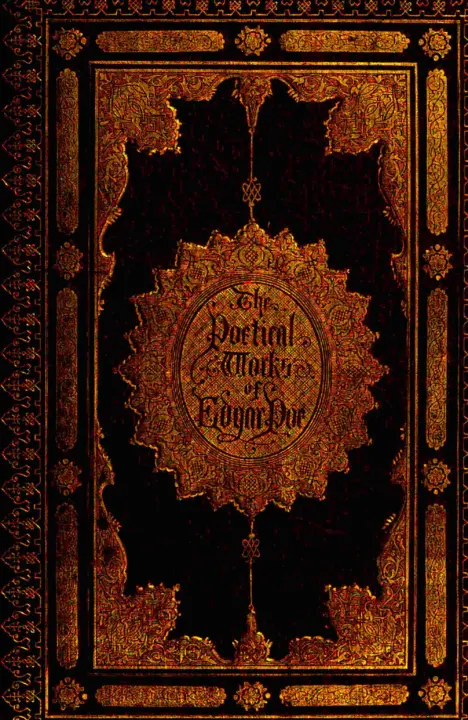
The poetical works of Edgar Allan Poe
Edgar Allan Poe
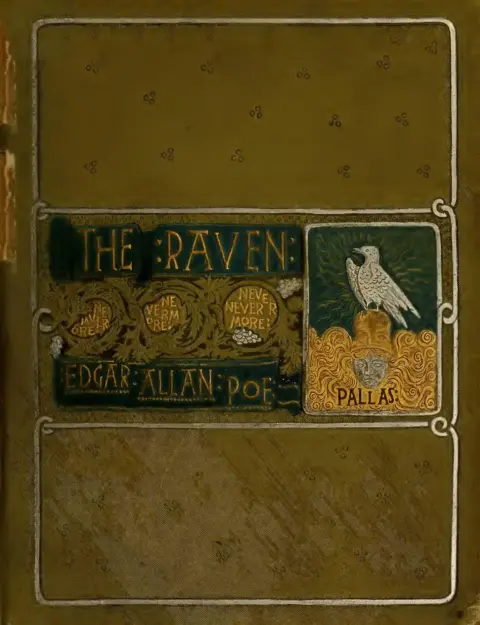
THE CLASSIC COLLECTION · 1845
"The Works of Edgar Allan Poe, The Raven Edition" by Edgar Allan Poe is a comprehensive collection of his literary output, likely compiled in the late 19th century. This collection spans various genres, including poetry, essays, and gothic tales, showcasing Poe's distinctive style and exploration of themes like love, death, and the macabre. The book presents significant works such as "The Raven," "The Tell-Tale Heart," "The Fall of the House of Usher," and many others, illustrating Poe's profound influence on American literature and his mastery of suspense and psychological depth. At the start of this collection, the reader is introduced to a preface that sets the stage for understanding Poe's life and literary journey, giving insights into the struggles he faced, both personally and professionally. The subsequent sections outline key works and achievements in his career, detailing his early poetry, notable prose tales, and his lasting impact on both poetry and fiction. The opening expresses deep admiration for Poe's unique genius, highlighting the interplay between his troubled life and his art, thus creating an engaging entry point for readers new to Poe's work or revisiting it with a fresh perspective.
Introduction adapted from the source catalogue; source summaries may be automatically generated.
Free to read · English · 450,336 words · No account needed
MAKE TIME FOR A GOOD BOOK
On by default. Untick to stop anonymous reading totals. Each page counts after 10 seconds in view. How this works.
Anonymous counting is on unless you have switched it off.
“Now, Jup,” cried Legrand, evidently much excited, “I want you to work your way out upon that limb as far as you can. If you see anything strange, let me know.” By this time what little doubt I might have entertained of my poor friend’s insanity, was put finally at rest. I had no alternative but to conclude him stricken with lunacy, and I became seriously anxious about getting him home. While I was pondering upon what was best to be done, Jupiter’s voice was again heard.
“Mos feerd for to ventur pon dis limb berry far—’tis dead limb putty much all de way.”
“Did you say it was a dead limb, Jupiter?” cried Legrand in a
quavering voice.
“Yes, massa, him dead as de door-nail—done up for sartain—done departed dis here life.”
“What in the name heaven shall I do?” asked Legrand, seemingly in the greatest distress.
“Do!” said I, glad of an opportunity to interpose a word, “why come home and go to bed. Come now!—that’s a fine fellow. It’s getting late, and, besides, you remember your promise.”
“Jupiter,” cried he, without heeding me in the least, “do you
hear me?”
“Yes, Massa Will, hear you ebber so plain.”
“Try the wood well, then, with your knife, and see if you think
it very rotten.”
“Him rotten, massa, sure nuff,” replied the negro in a few moments, “but not so berry rotten as mought be. Mought ventur out leetle way pon de limb by myself, dat’s true.”
“By yourself!—what do you mean?”
“Why I mean de bug. ’Tis berry hebby bug. Spose I drop him down fuss, and den de limb won’t break wid just de weight ob one nigger.”
“You infernal scoundrel!” cried Legrand, apparently much relieved, “what do you mean by telling me such nonsense as that? As sure as you drop that beetle I’ll break your neck. Look here, Jupiter, do you hear me?”
“Yes, massa, needn’t hollo at poor nigger dat style.”
“Well! now listen!—if you will venture out on the limb as far as you think safe, and not let go the beetle, I’ll make you a present of a silver dollar as soon as you get down.”
“I’m gwine, Massa Will—deed I is,” replied the negro very promptly—“mos out to the eend now.”
“Out to the end!” here fairly screamed Legrand, “do you say you are out to the end of that limb?”
“Soon be to de eend, massa,—o-o-o-o-oh! Lor-gol-a-marcy! what is dis here pon de tree?”
“Well!” cried Legrand, highly delighted, “what is it?”
Your reading position is saved on this browser. Take it to another device with a library code. Reading pages adapt to text, rather than matching a printed edition.
Edgar Allan Poe

Rebecca Harding Davis & Thomas De Quincey & Charles Dickens & Nathaniel Hawthorne & Edward Bulwer Lytton, Baron Lytton & Edgar Allan Poe & Harriet Elizabeth Prescott Spofford
Edgar Allan Poe
Edgar Allan Poe
BEHIND THE BOOK
This eBook is for the use of anyone anywhere in the United States and most other parts of the world at no cost and with almost no restrictions whatsoever. You may copy it, give it away or re-use it under the terms of the Project Gutenberg License included with this eBook or online at www.gutenberg.org. If you are not located in the United States, you will have to check the laws of the country where you are located before using this eBook. Read the source licence.
The original source file, including credits and licence, is retained by this library. Request an original-format copy at no charge. Please include the book title and Project Gutenberg identifier #25525.
KEEP YOUR CURIOSITY GOING

David Patterson (Spirit) Hatch

David Patterson (Spirit) Hatch

David Patterson (Spirit) Hatch
Coulson Kernahan

Ralph Waldo Emerson

Maurice Baring