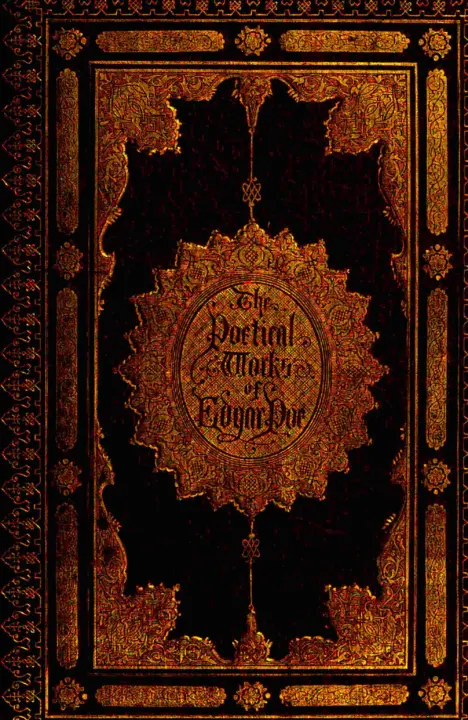
The poetical works of Edgar Allan Poe
Edgar Allan Poe
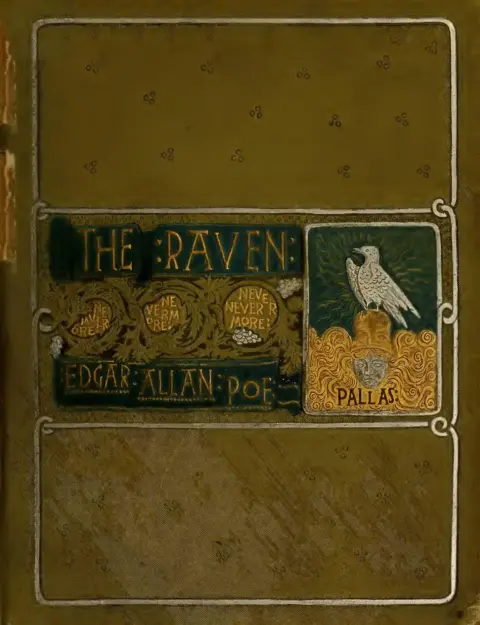
THE CLASSIC COLLECTION · 1845
"The Works of Edgar Allan Poe, The Raven Edition" by Edgar Allan Poe is a comprehensive collection of his literary output, likely compiled in the late 19th century. This collection spans various genres, including poetry, essays, and gothic tales, showcasing Poe's distinctive style and exploration of themes like love, death, and the macabre. The book presents significant works such as "The Raven," "The Tell-Tale Heart," "The Fall of the House of Usher," and many others, illustrating Poe's profound influence on American literature and his mastery of suspense and psychological depth. At the start of this collection, the reader is introduced to a preface that sets the stage for understanding Poe's life and literary journey, giving insights into the struggles he faced, both personally and professionally. The subsequent sections outline key works and achievements in his career, detailing his early poetry, notable prose tales, and his lasting impact on both poetry and fiction. The opening expresses deep admiration for Poe's unique genius, highlighting the interplay between his troubled life and his art, thus creating an engaging entry point for readers new to Poe's work or revisiting it with a fresh perspective.
Introduction adapted from the source catalogue; source summaries may be automatically generated.
Free to read · English · 450,336 words · No account needed
MAKE TIME FOR A GOOD BOOK
On by default. Untick to stop anonymous reading totals. Each page counts after 10 seconds in view. How this works.
Anonymous counting is on unless you have switched it off.
One thing, however, annoyed me not a little. The box did not go into the extra state-room. It was deposited in Wyatt’s own; and there, too, it remained, occupying very nearly the whole of the floor—no doubt to the exceeding discomfort of the artist and his wife;—this the more especially as the tar or paint with which it was lettered in sprawling capitals, emitted a strong, disagreeable, and, to my fancy, a peculiarly disgusting odor. On the lid were painted the words—“Mrs. Adelaide Curtis, Albany, New York. Charge of Cornelius Wyatt, Esq. This side up. To be handled with care.”
Now, I was aware that Mrs. Adelaide Curtis, of Albany, was the artist’s wife’s mother,—but then I looked upon the whole address as a mystification, intended especially for myself. I made up my mind, of course, that the box and contents would never get farther north than the studio of my misanthropic friend, in Chambers Street, New York.
For the first three or four days we had fine weather, although the wind was dead ahead; having chopped round to the northward, immediately upon our losing sight of the coast. The passengers were, consequently, in high spirits and disposed to be social. I must except, however, Wyatt and his sisters, who behaved stiffly, and, I could not help thinking, uncourteously to the rest of the party. Wyatt’s conduct I did not so much regard. He was gloomy, even beyond his usual habit—in fact he was morose—but in him I was prepared for eccentricity. For the sisters, however, I could make no excuse. They secluded themselves in their staterooms during the greater part of the passage, and absolutely refused, although I repeatedly urged them, to hold communication with any person on board.
Mrs. Wyatt herself was far more agreeable. That is to say, she was chatty; and to be chatty is no slight recommendation at sea. She became excessively intimate with most of the ladies; and, to my profound astonishment, evinced no equivocal disposition to coquet with the men. She amused us all very much. I say “amused”—and scarcely know how to explain myself. The truth is, I soon found that Mrs. W. was far oftener laughed at than with. The gentlemen said little about her; but the ladies, in a little while, pronounced her “a good-hearted thing, rather indifferent looking, totally uneducated, and decidedly vulgar.” The great wonder was, how Wyatt had been entrapped into such a match. Wealth was the general solution—but this I knew to be no solution at all; for Wyatt had told me that she neither brought him a dollar nor had any expectations from any source whatever. “He had married,” he said, “for love, and for love only; and his bride was far more than worthy of his love.” When I thought of these expressions, on the part of my friend, I confess that I felt indescribably puzzled. Could it be possible that he was taking leave of his senses? What else could I think? He, so refined, so intellectual, so fastidious, with so exquisite a perception of the faulty, and so keen an appreciation of the beautiful! To be sure, the lady seemed especially fond of him—particularly so in his absence—when she made herself ridiculous by frequent quotations of what had been said by her “beloved husband, Mr. Wyatt.” The word “husband” seemed forever—to use one of her own delicate expressions—forever “on the tip of her tongue.” In the meantime, it was observed by all on board, that he avoided her in the most pointed manner, and, for the most part, shut himself up alone in his state-room, where, in fact, he might have been said to live altogether, leaving his wife at full liberty to amuse herself as she thought best, in the public society of the main cabin.
Your reading position is saved on this browser. Take it to another device with a library code. Reading pages adapt to text, rather than matching a printed edition.
Edgar Allan Poe

Rebecca Harding Davis & Thomas De Quincey & Charles Dickens & Nathaniel Hawthorne & Edward Bulwer Lytton, Baron Lytton & Edgar Allan Poe & Harriet Elizabeth Prescott Spofford
Edgar Allan Poe
Edgar Allan Poe
BEHIND THE BOOK
This eBook is for the use of anyone anywhere in the United States and most other parts of the world at no cost and with almost no restrictions whatsoever. You may copy it, give it away or re-use it under the terms of the Project Gutenberg License included with this eBook or online at www.gutenberg.org. If you are not located in the United States, you will have to check the laws of the country where you are located before using this eBook. Read the source licence.
The original source file, including credits and licence, is retained by this library. Request an original-format copy at no charge. Please include the book title and Project Gutenberg identifier #25525.
KEEP YOUR CURIOSITY GOING

David Patterson (Spirit) Hatch

David Patterson (Spirit) Hatch

David Patterson (Spirit) Hatch
Coulson Kernahan

Ralph Waldo Emerson

Maurice Baring