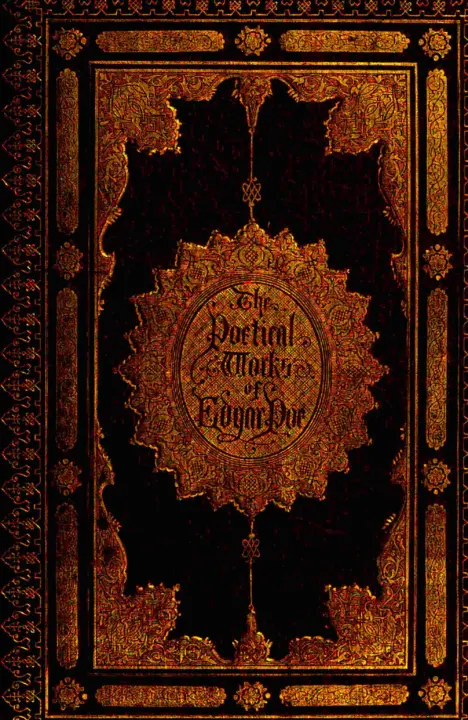
The poetical works of Edgar Allan Poe
Edgar Allan Poe
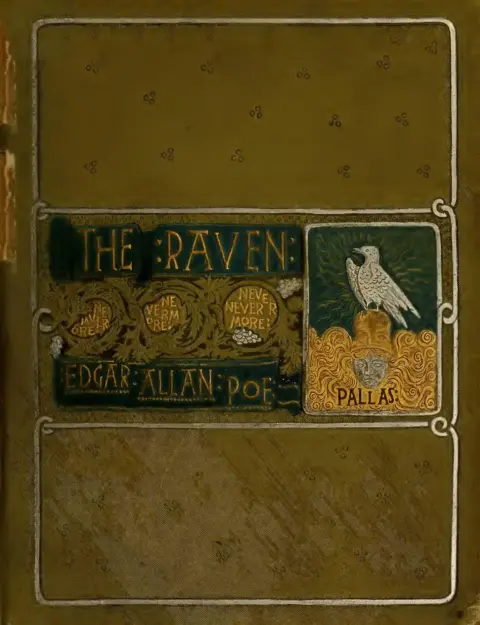
THE CLASSIC COLLECTION · 1845
"The Works of Edgar Allan Poe, The Raven Edition" by Edgar Allan Poe is a comprehensive collection of his literary output, likely compiled in the late 19th century. This collection spans various genres, including poetry, essays, and gothic tales, showcasing Poe's distinctive style and exploration of themes like love, death, and the macabre. The book presents significant works such as "The Raven," "The Tell-Tale Heart," "The Fall of the House of Usher," and many others, illustrating Poe's profound influence on American literature and his mastery of suspense and psychological depth. At the start of this collection, the reader is introduced to a preface that sets the stage for understanding Poe's life and literary journey, giving insights into the struggles he faced, both personally and professionally. The subsequent sections outline key works and achievements in his career, detailing his early poetry, notable prose tales, and his lasting impact on both poetry and fiction. The opening expresses deep admiration for Poe's unique genius, highlighting the interplay between his troubled life and his art, thus creating an engaging entry point for readers new to Poe's work or revisiting it with a fresh perspective.
Introduction adapted from the source catalogue; source summaries may be automatically generated.
Free to read · English · 450,336 words · No account needed
MAKE TIME FOR A GOOD BOOK
On by default. Untick to stop anonymous reading totals. Each page counts after 10 seconds in view. How this works.
Anonymous counting is on unless you have switched it off.
“Hold your tongues, every one of you!” said my host, in a great rage. Whereupon the whole company maintained a dead silence for nearly a minute. As for one lady, she obeyed Monsieur Maillard to the letter, and thrusting out her tongue, which was an excessively long one, held it very resignedly, with both hands, until the end of the entertainment.
“And this gentlewoman,” said I, to Monsieur Maillard, bending over and addressing him in a whisper—“this good lady who has just spoken, and who gives us the cock-a-doodle-de-doo—she, I presume, is harmless—quite harmless, eh?”
“Harmless!” ejaculated he, in unfeigned surprise, “why—why, what
can you mean?”
“Only slightly touched?” said I, touching my head. “I take it for granted that she is not particularly not dangerously affected, eh?”
“Mon dieu! what is it you imagine? This lady, my particular old friend Madame Joyeuse, is as absolutely sane as myself. She has her little eccentricities, to be sure—but then, you know, all old women—all very old women—are more or less eccentric!”
“To be sure,” said I,—“to be sure—and then the rest of these ladies and gentlemen—”
“Are my friends and keepers,” interupted Monsieur Maillard, drawing himself up with hauteur,—“my very good friends and assistants.”
“What! all of them?” I asked,—“the women and all?”
“Assuredly,” he said,—“we could not do at all without the women; they are the best lunatic nurses in the world; they have a way of their own, you know; their bright eyes have a marvellous effect—something like the fascination of the snake, you know.”
“To be sure,” said I,—“to be sure! They behave a little odd, eh?—they are a little queer, eh?—don’t you think so?”
“Odd!—queer!—why, do you really think so? We are not very prudish, to be sure, here in the South—do pretty much as we please—enjoy life, and all that sort of thing, you know—”
“To be sure,” said I,—“to be sure.”
“And then, perhaps, this Clos de Vougeot is a little heady, you know—a little strong—you understand, eh?”
“To be sure,” said I,—“to be sure. By the bye, Monsieur, did I understand you to say that the system you have adopted, in place of the celebrated soothing system, was one of very rigorous severity?”
“By no means. Our confinement is necessarily close; but the treatment—the medical treatment, I mean—is rather agreeable to the patients than otherwise.”
“And the new system is one of your own invention?”
Your reading position is saved on this browser. Take it to another device with a library code. Reading pages adapt to text, rather than matching a printed edition.
Edgar Allan Poe

Rebecca Harding Davis & Thomas De Quincey & Charles Dickens & Nathaniel Hawthorne & Edward Bulwer Lytton, Baron Lytton & Edgar Allan Poe & Harriet Elizabeth Prescott Spofford
Edgar Allan Poe
Edgar Allan Poe
BEHIND THE BOOK
This eBook is for the use of anyone anywhere in the United States and most other parts of the world at no cost and with almost no restrictions whatsoever. You may copy it, give it away or re-use it under the terms of the Project Gutenberg License included with this eBook or online at www.gutenberg.org. If you are not located in the United States, you will have to check the laws of the country where you are located before using this eBook. Read the source licence.
The original source file, including credits and licence, is retained by this library. Request an original-format copy at no charge. Please include the book title and Project Gutenberg identifier #25525.
KEEP YOUR CURIOSITY GOING

David Patterson (Spirit) Hatch

David Patterson (Spirit) Hatch

David Patterson (Spirit) Hatch
Coulson Kernahan

Ralph Waldo Emerson

Maurice Baring