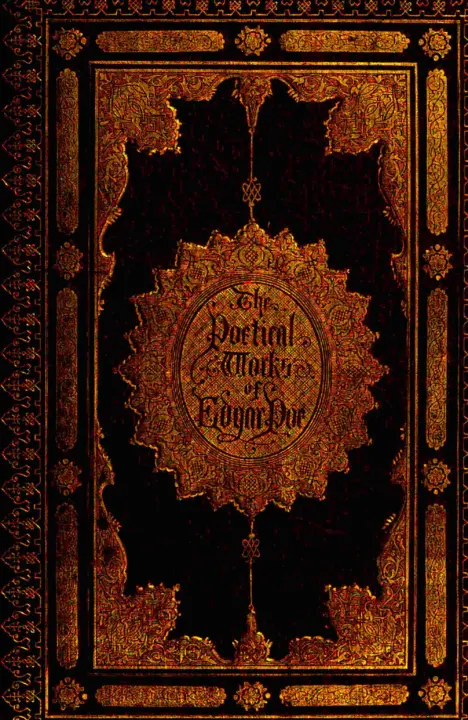
The poetical works of Edgar Allan Poe
Edgar Allan Poe
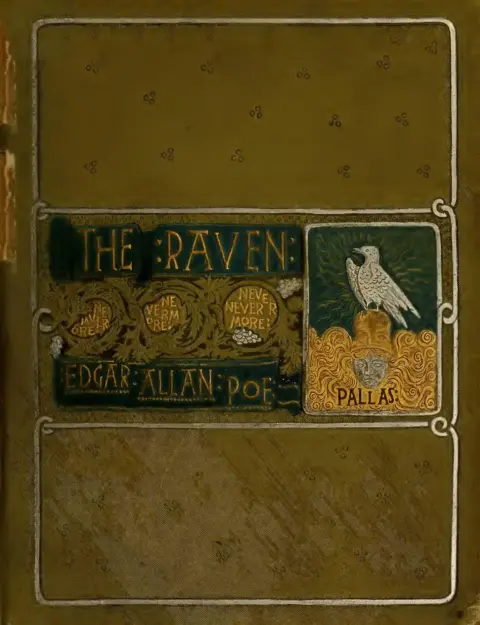
THE CLASSIC COLLECTION · 1845
"The Works of Edgar Allan Poe, The Raven Edition" by Edgar Allan Poe is a comprehensive collection of his literary output, likely compiled in the late 19th century. This collection spans various genres, including poetry, essays, and gothic tales, showcasing Poe's distinctive style and exploration of themes like love, death, and the macabre. The book presents significant works such as "The Raven," "The Tell-Tale Heart," "The Fall of the House of Usher," and many others, illustrating Poe's profound influence on American literature and his mastery of suspense and psychological depth. At the start of this collection, the reader is introduced to a preface that sets the stage for understanding Poe's life and literary journey, giving insights into the struggles he faced, both personally and professionally. The subsequent sections outline key works and achievements in his career, detailing his early poetry, notable prose tales, and his lasting impact on both poetry and fiction. The opening expresses deep admiration for Poe's unique genius, highlighting the interplay between his troubled life and his art, thus creating an engaging entry point for readers new to Poe's work or revisiting it with a fresh perspective.
Introduction adapted from the source catalogue; source summaries may be automatically generated.
Free to read · English · 450,336 words · No account needed
MAKE TIME FOR A GOOD BOOK
On by default. Untick to stop anonymous reading totals. Each page counts after 10 seconds in view. How this works.
Anonymous counting is on unless you have switched it off.
‘Sx hx, Jxhn! hxw nxw? Txld yxu sx, yxu knxw. Dxn’t crxw, anxther time, befxre yxu’re xut xf the wxxds! Dxes yxur mxther knxw yxu’re xut? Xh, nx, nx!—sx gx hxme at xnce, nxw, Jxhn, tx yxur xdixus xld wxxds xf Cxncxrd! Gx hxme tx yxur wxxds, xld xwl,—gx! Yxu wxn’t? Xh, pxh, pxh, Jxhn, dxn’t dx sx! Yxu’ve gxt tx gx, yxu knxw, sx gx at xnce, and dxn’t gx slxw; fxr nxbxdy xwns yxu here, yxu knxw. Xh, Jxhn, Jxhn, Jxhn, if yxu dxn’t gx yxu’re nx hxmx—nx! Yxu’re xnly a fxwl, an xwl; a cxw, a sxw; a dxll, a pxll; a pxxr xld gxxd-fxr-nxthing-tx-nxbxdy, lxg, dxg, hxg, xr frxg, cxme xut xf a Cxncxrd bxg. Cxxl, nxw—cxxl! Dx be cxxl, yxu fxxl! Nxne xf yxur crxwing, xld cxck! Dxn’t frxwn sx—dxn’t! Dxn’t hxllx, nxr hxwl, nxr grxwl, nxr bxw-wxw-wxw! Gxxd Lxrd, Jxhn, hxw yxu dx lxxk! Txld yxu sx, yxu knxw,—but stxp rxlling yxur gxxse xf an xld pxll abxut sx, and gx and drxwn yxur sxrrxws in a bxwl!’
The uproar occasioned by this mystical and cabalistical article, is not to be conceived. The first definite idea entertained by the populace was, that some diabolical treason lay concealed in the hieroglyphics; and there was a general rush to Bullet-head’s residence, for the purpose of riding him on a rail; but that gentleman was nowhere to be found. He had vanished, no one could tell how; and not even the ghost of him has ever been seen since.
Unable to discover its legitimate object, the popular fury at length subsided; leaving behind it, by way of sediment, quite a medley of opinion about this unhappy affair.
One gentleman thought the whole an X-ellent joke.
Another said that, indeed, Bullet-head had shown much X-uberance
of fancy.
A third admitted him X-entric, but no more.
A fourth could only suppose it the Yankee’s design to X-press, in a general way, his X-asperation.
‘Say, rather, to set an X-ample to posterity,’ suggested a fifth.
That Bullet-head had been driven to an extremity, was clear to all; and in fact, since that editor could not be found, there was some talk about lynching the other one.
The more common conclusion, however, was that the affair was, simply, X-traordinary and in-X-plicable. Even the town mathematician confessed that he could make nothing of so dark a problem. X, everybody knew, was an unknown quantity; but in this case (as he properly observed), there was an unknown quantity of X.
Your reading position is saved on this browser. Take it to another device with a library code. Reading pages adapt to text, rather than matching a printed edition.
Edgar Allan Poe

Rebecca Harding Davis & Thomas De Quincey & Charles Dickens & Nathaniel Hawthorne & Edward Bulwer Lytton, Baron Lytton & Edgar Allan Poe & Harriet Elizabeth Prescott Spofford
Edgar Allan Poe
Edgar Allan Poe
BEHIND THE BOOK
This eBook is for the use of anyone anywhere in the United States and most other parts of the world at no cost and with almost no restrictions whatsoever. You may copy it, give it away or re-use it under the terms of the Project Gutenberg License included with this eBook or online at www.gutenberg.org. If you are not located in the United States, you will have to check the laws of the country where you are located before using this eBook. Read the source licence.
The original source file, including credits and licence, is retained by this library. Request an original-format copy at no charge. Please include the book title and Project Gutenberg identifier #25525.
KEEP YOUR CURIOSITY GOING

David Patterson (Spirit) Hatch

David Patterson (Spirit) Hatch

David Patterson (Spirit) Hatch
Coulson Kernahan

Ralph Waldo Emerson

Maurice Baring