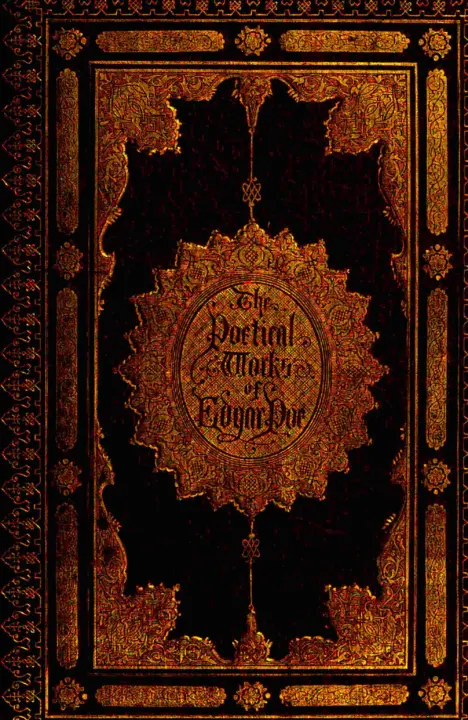
The poetical works of Edgar Allan Poe
Edgar Allan Poe
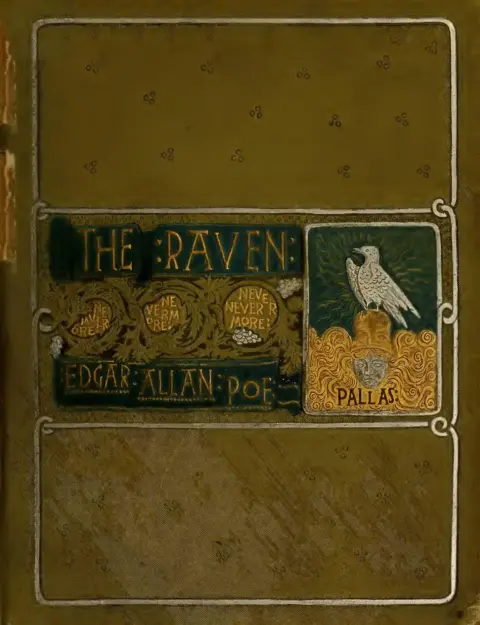
THE CLASSIC COLLECTION · 1845
"The Works of Edgar Allan Poe, The Raven Edition" by Edgar Allan Poe is a comprehensive collection of his literary output, likely compiled in the late 19th century. This collection spans various genres, including poetry, essays, and gothic tales, showcasing Poe's distinctive style and exploration of themes like love, death, and the macabre. The book presents significant works such as "The Raven," "The Tell-Tale Heart," "The Fall of the House of Usher," and many others, illustrating Poe's profound influence on American literature and his mastery of suspense and psychological depth. At the start of this collection, the reader is introduced to a preface that sets the stage for understanding Poe's life and literary journey, giving insights into the struggles he faced, both personally and professionally. The subsequent sections outline key works and achievements in his career, detailing his early poetry, notable prose tales, and his lasting impact on both poetry and fiction. The opening expresses deep admiration for Poe's unique genius, highlighting the interplay between his troubled life and his art, thus creating an engaging entry point for readers new to Poe's work or revisiting it with a fresh perspective.
Introduction adapted from the source catalogue; source summaries may be automatically generated.
Free to read · English · 450,336 words · No account needed
MAKE TIME FOR A GOOD BOOK
On by default. Untick to stop anonymous reading totals. Each page counts after 10 seconds in view. How this works.
Anonymous counting is on unless you have switched it off.
Exhausted, very naturally, by so stupendous an effort, the great Touch-and-go could attend to nothing farther that night. Firmly, composedly, yet with an air of conscious power, he handed his MS. to the devil in waiting, and then, walking leisurely home, retired, with ineffable dignity to bed.
Meantime the devil, to whom the copy was entrusted, ran up stairs to his ‘case,’ in an unutterable hurry, and forthwith made a commencement at ‘setting’ the MS. ‘up.’
In the first place, of course,—as the opening word was ‘So,’—he made a plunge into the capital S hole and came out in triumph with a capital S. Elated by this success, he immediately threw himself upon the little-o box with a blindfold impetuosity—but who shall describe his horror when his fingers came up without the anticipated letter in their clutch? who shall paint his astonishment and rage at perceiving, as he rubbed his knuckles, that he had been only thumping them to no purpose, against the bottom of an empty box. Not a single little-o was in the little-o hole; and, glancing fearfully at the capital-O partition, he found that, to his extreme terror, in a precisely similar predicament. Awe-stricken, his first impulse was to rush to the foreman.
‘Sir!’ said he, gasping for breath, ‘I can’t never set up nothing without no o’s.’
‘What do you mean by that?’ growled the foreman, who was in a very ill humor at being kept so late.
‘Why, sir, there beant an o in the office, neither a big un nor a
little un!’
‘What—what the d—l has become of all that were in the case?’
‘I don’t know, sir,’ said the boy, ‘but one of them ere “G’zette” devils is bin prowling ’bout here all night, and I spect he’s gone and cabbaged ‘em every one.’
‘Dod rot him! I haven’t a doubt of it,’ replied the foreman, getting purple with rage ‘but I tell you what you do, Bob, that’s a good boy—you go over the first chance you get and hook every one of their i’s and (d——n them!) their izzards.’
‘Jist so,’ replied Bob, with a wink and a frown—‘I’ll be into ‘em, I’ll let ‘em know a thing or two; but in de meantime, that ere paragrab? Mus go in to-night, you know—else there’ll be the d—l to pay, and—’
‘And not a bit of pitch hot,’ interrupted the foreman, with a deep sigh, and an emphasis on the ‘bit.’ ‘Is it a long paragraph, Bob?’
‘Shouldn’t call it a wery long paragrab,’ said Bob.
Your reading position is saved on this browser. Take it to another device with a library code. Reading pages adapt to text, rather than matching a printed edition.
Edgar Allan Poe

Rebecca Harding Davis & Thomas De Quincey & Charles Dickens & Nathaniel Hawthorne & Edward Bulwer Lytton, Baron Lytton & Edgar Allan Poe & Harriet Elizabeth Prescott Spofford
Edgar Allan Poe
Edgar Allan Poe
BEHIND THE BOOK
This eBook is for the use of anyone anywhere in the United States and most other parts of the world at no cost and with almost no restrictions whatsoever. You may copy it, give it away or re-use it under the terms of the Project Gutenberg License included with this eBook or online at www.gutenberg.org. If you are not located in the United States, you will have to check the laws of the country where you are located before using this eBook. Read the source licence.
The original source file, including credits and licence, is retained by this library. Request an original-format copy at no charge. Please include the book title and Project Gutenberg identifier #25525.
KEEP YOUR CURIOSITY GOING

David Patterson (Spirit) Hatch

David Patterson (Spirit) Hatch

David Patterson (Spirit) Hatch
Coulson Kernahan

Ralph Waldo Emerson

Maurice Baring