
The poetical works of Edgar Allan Poe
Edgar Allan Poe
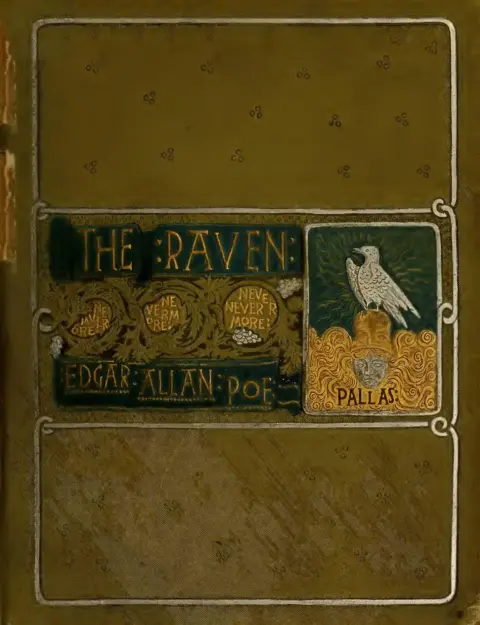
THE CLASSIC COLLECTION · 1845
"The Works of Edgar Allan Poe, The Raven Edition" by Edgar Allan Poe is a comprehensive collection of his literary output, likely compiled in the late 19th century. This collection spans various genres, including poetry, essays, and gothic tales, showcasing Poe's distinctive style and exploration of themes like love, death, and the macabre. The book presents significant works such as "The Raven," "The Tell-Tale Heart," "The Fall of the House of Usher," and many others, illustrating Poe's profound influence on American literature and his mastery of suspense and psychological depth. At the start of this collection, the reader is introduced to a preface that sets the stage for understanding Poe's life and literary journey, giving insights into the struggles he faced, both personally and professionally. The subsequent sections outline key works and achievements in his career, detailing his early poetry, notable prose tales, and his lasting impact on both poetry and fiction. The opening expresses deep admiration for Poe's unique genius, highlighting the interplay between his troubled life and his art, thus creating an engaging entry point for readers new to Poe's work or revisiting it with a fresh perspective.
Introduction adapted from the source catalogue; source summaries may be automatically generated.
Free to read · English · 450,336 words · No account needed
MAKE TIME FOR A GOOD BOOK
On by default. Untick to stop anonymous reading totals. Each page counts after 10 seconds in view. How this works.
Anonymous counting is on unless you have switched it off.
It is when a partial cargo is received that danger is chiefly to be apprehended from shifting, and that precautions should be always taken to guard against such misfortune. Only those who have encountered a violent gale of wind, or rather who have experienced the rolling of a vessel in a sudden calm after the gale, can form an idea of the tremendous force of the plunges, and of the consequent terrible impetus given to all loose articles in the vessel. It is then that the necessity of a cautious stowage, when there is a partial cargo, becomes obvious. When lying-to (especially with a small head sail), a vessel which is not properly modelled in the bows is frequently thrown upon her beam-ends; this occurring even every fifteen or twenty minutes upon an average, yet without any serious consequences resulting, provided there be a proper stowage. If this, however, has not been strictly attended to, in the first of these heavy lurches the whole of the cargo tumbles over to the side of the vessel which lies upon the water, and, being thus prevented from regaining her equilibrium, as she would otherwise necessarily do, she is certain to fill in a few seconds and go down. It is not too much to say that at least one-half of the instances in which vessels have foundered in heavy gales at sea may be attributed to a shifting of cargo or of ballast.
When a partial cargo of any kind is taken on board, the whole, after being first stowed as compactly as may be, should be covered with a layer of stout shifting-boards, extending completely across the vessel. Upon these boards strong temporary stanchions should be erected, reaching to the timbers above, and thus securing every thing in its place. In cargoes consisting of grain, or any similar matter, additional precautions are requisite. A hold filled entirely with grain upon leaving port will be found not more than three fourths full upon reaching its destination—this, too, although the freight, when measured bushel by bushel by the consignee, will overrun by a vast deal (on account of the swelling of the grain) the quantity consigned. This result is occasioned by settling during the voyage, and is the more perceptible in proportion to the roughness of the weather experienced. If grain loosely thrown in a vessel, then, is ever so well secured by shifting-boards and stanchions, it will be liable to shift in a long passage so greatly as to bring about the most distressing calamities. To prevent these, every method should be employed before leaving port to settle the cargo as much as possible; and for this there are many contrivances, among which may be mentioned the driving of wedges into the grain. Even after all this is done, and unusual pains taken to secure the shifting-boards, no seaman who knows what he is about will feel altogether secure in a gale of any violence with a cargo of grain on board, and, least of all, with a partial cargo. Yet there are hundreds of our coasting vessels, and, it is likely, many more from the ports of Europe, which sail daily with partial cargoes, even of the most dangerous species, and without any precaution whatever. The wonder is that no more accidents occur than do actually happen. A lamentable instance of this heedlessness occurred to my knowledge in the case of Captain Joel Rice of the schooner Firefly, which sailed from Richmond, Virginia, to Madeira, with a cargo of corn, in the year 1825. The captain had gone many voyages without serious accident, although he was in the habit of paying no attention whatever to his stowage, more than to secure it in the ordinary manner. He had never before sailed with a cargo of grain, and on this occasion had the corn thrown on board loosely, when it did not much more than half fill the vessel. For the first portion of the voyage he met with nothing more than light breezes; but when within a day’s sail of Madeira there came on a strong gale from the N. N. E. which forced him to lie-to. He brought the schooner to the wind under a double-reefed foresail alone, when she rode as well as any vessel could be expected to do, and shipped not a drop of water. Toward night the gale somewhat abated, and she rolled with more unsteadiness than before, but still did very well, until a heavy lurch threw her upon her beam-ends to starboard. The corn was then heard to shift bodily, the force of the movement bursting open the main hatchway. The vessel went down like a shot. This happened within hail of a small sloop from Madeira, which picked up one of the crew (the only person saved), and which rode out the gale in perfect security, as indeed a jolly boat might have done under proper management.
Your reading position is saved on this browser. Take it to another device with a library code. Reading pages adapt to text, rather than matching a printed edition.
Edgar Allan Poe

Rebecca Harding Davis & Thomas De Quincey & Charles Dickens & Nathaniel Hawthorne & Edward Bulwer Lytton, Baron Lytton & Edgar Allan Poe & Harriet Elizabeth Prescott Spofford
Edgar Allan Poe
Edgar Allan Poe
BEHIND THE BOOK
This eBook is for the use of anyone anywhere in the United States and most other parts of the world at no cost and with almost no restrictions whatsoever. You may copy it, give it away or re-use it under the terms of the Project Gutenberg License included with this eBook or online at www.gutenberg.org. If you are not located in the United States, you will have to check the laws of the country where you are located before using this eBook. Read the source licence.
The original source file, including credits and licence, is retained by this library. Request an original-format copy at no charge. Please include the book title and Project Gutenberg identifier #25525.
KEEP YOUR CURIOSITY GOING

David Patterson (Spirit) Hatch

David Patterson (Spirit) Hatch

David Patterson (Spirit) Hatch
Coulson Kernahan

Ralph Waldo Emerson

Maurice Baring