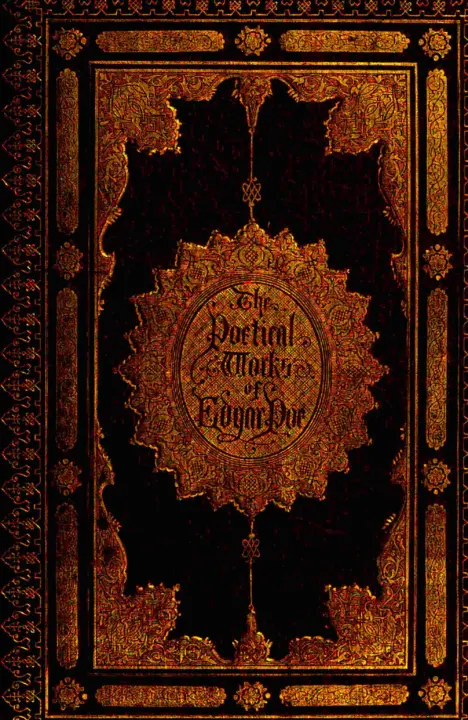
The poetical works of Edgar Allan Poe
Edgar Allan Poe
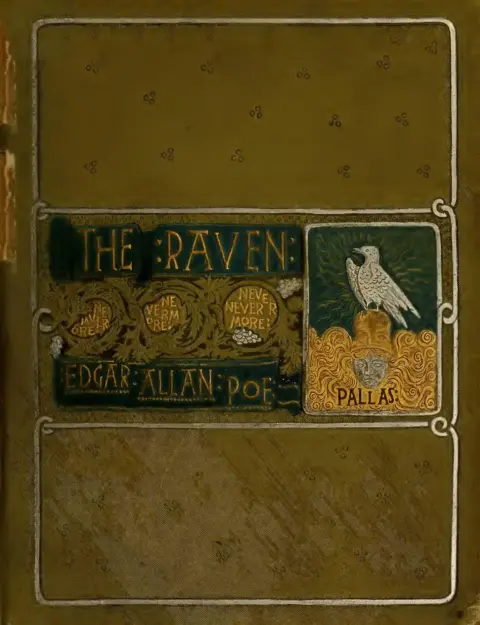
THE CLASSIC COLLECTION · 1845
"The Works of Edgar Allan Poe, The Raven Edition" by Edgar Allan Poe is a comprehensive collection of his literary output, likely compiled in the late 19th century. This collection spans various genres, including poetry, essays, and gothic tales, showcasing Poe's distinctive style and exploration of themes like love, death, and the macabre. The book presents significant works such as "The Raven," "The Tell-Tale Heart," "The Fall of the House of Usher," and many others, illustrating Poe's profound influence on American literature and his mastery of suspense and psychological depth. At the start of this collection, the reader is introduced to a preface that sets the stage for understanding Poe's life and literary journey, giving insights into the struggles he faced, both personally and professionally. The subsequent sections outline key works and achievements in his career, detailing his early poetry, notable prose tales, and his lasting impact on both poetry and fiction. The opening expresses deep admiration for Poe's unique genius, highlighting the interplay between his troubled life and his art, thus creating an engaging entry point for readers new to Poe's work or revisiting it with a fresh perspective.
Introduction adapted from the source catalogue; source summaries may be automatically generated.
Free to read · English · 450,336 words · No account needed
MAKE TIME FOR A GOOD BOOK
On by default. Untick to stop anonymous reading totals. Each page counts after 10 seconds in view. How this works.
Anonymous counting is on unless you have switched it off.
A scene of the most horrible butchery ensued. The bound seamen were dragged to the gangway. Here the cook stood with an axe, striking each victim on the head as he was forced over the side of the vessel by the other mutineers. In this manner twenty-two perished, and Augustus had given himself up for lost, expecting every moment his own turn to come next. But it seemed that the villains were now either weary, or in some measure disgusted with their bloody labour; for the four remaining prisoners, together with my friend, who had been thrown on the deck with the rest, were respited while the mate sent below for rum, and the whole murderous party held a drunken carouse, which lasted until sunset. They now fell to disputing in regard to the fate of the survivors, who lay not more than four paces off, and could distinguish every word said. Upon some of the mutineers the liquor appeared to have a softening effect, for several voices were heard in favor of releasing the captives altogether, on condition of joining the mutiny and sharing the profits. The black cook, however (who in all respects was a perfect demon, and who seemed to exert as much influence, if not more, than the mate himself), would listen to no proposition of the kind, and rose repeatedly for the purpose of resuming his work at the gangway. Fortunately he was so far overcome by intoxication as to be easily restrained by the less bloodthirsty of the party, among whom was a line-manager, who went by the name of Dirk Peters. This man was the son of an Indian squaw of the tribe of Upsarokas, who live among the fastnesses of the Black Hills, near the source of the Missouri. His father was a fur-trader, I believe, or at least connected in some manner with the Indian trading-posts on Lewis river. Peters himself was one of the most ferocious-looking men I ever beheld. He was short in stature, not more than four feet eight inches high, but his limbs were of Herculean mould. His hands, especially, were so enormously thick and broad as hardly to retain a human shape. His arms, as well as legs, were bowed in the most singular manner, and appeared to possess no flexibility whatever. His head was equally deformed, being of immense size, with an indentation on the crown (like that on the head of most negroes), and entirely bald. To conceal this latter deficiency, which did not proceed from old age, he usually wore a wig formed of any hair-like material which presented itself—occasionally the skin of a Spanish dog or American grizzly bear. At the time spoken of, he had on a portion of one of these bearskins; and it added no little to the natural ferocity of his countenance, which betook of the Upsaroka character. The mouth extended nearly from ear to ear, the lips were thin, and seemed, like some other portions of his frame, to be devoid of natural pliancy, so that the ruling expression never varied under the influence of any emotion whatever. This ruling expression may be conceived when it is considered that the teeth were exceedingly long and protruding, and never even partially covered, in any instance, by the lips. To pass this man with a casual glance, one might imagine him to be convulsed with laughter, but a second look would induce a shuddering acknowledgment, that if such an expression were indicative of merriment, the merriment must be that of a demon. Of this singular being many anecdotes were prevalent among the seafaring men of Nantucket. These anecdotes went to prove his prodigious strength when under excitement, and some of them had given rise to a doubt of his sanity. But on board the Grampus, it seems, he was regarded, at the time of the mutiny, with feelings more of derision than of anything else. I have been thus particular in speaking of Dirk Peters, because, ferocious as he appeared, he proved the main instrument in preserving the life of Augustus, and because I shall have frequent occasion to mention him hereafter in the course of my narrative—a narrative, let me here say, which, in its latter portions, will be found to include incidents of a nature so entirely out of the range of human experience, and for this reason so far beyond the limits of human credulity, that I proceed in utter hopelessness of obtaining credence for all that I shall tell, yet confidently trusting in time and progressing science to verify some of the most important and most improbable of my statements.
Your reading position is saved on this browser. Take it to another device with a library code. Reading pages adapt to text, rather than matching a printed edition.
Edgar Allan Poe

Rebecca Harding Davis & Thomas De Quincey & Charles Dickens & Nathaniel Hawthorne & Edward Bulwer Lytton, Baron Lytton & Edgar Allan Poe & Harriet Elizabeth Prescott Spofford
Edgar Allan Poe
Edgar Allan Poe
BEHIND THE BOOK
This eBook is for the use of anyone anywhere in the United States and most other parts of the world at no cost and with almost no restrictions whatsoever. You may copy it, give it away or re-use it under the terms of the Project Gutenberg License included with this eBook or online at www.gutenberg.org. If you are not located in the United States, you will have to check the laws of the country where you are located before using this eBook. Read the source licence.
The original source file, including credits and licence, is retained by this library. Request an original-format copy at no charge. Please include the book title and Project Gutenberg identifier #25525.
KEEP YOUR CURIOSITY GOING

David Patterson (Spirit) Hatch

David Patterson (Spirit) Hatch

David Patterson (Spirit) Hatch
Coulson Kernahan

Ralph Waldo Emerson

Maurice Baring