
The poetical works of Edgar Allan Poe
Edgar Allan Poe
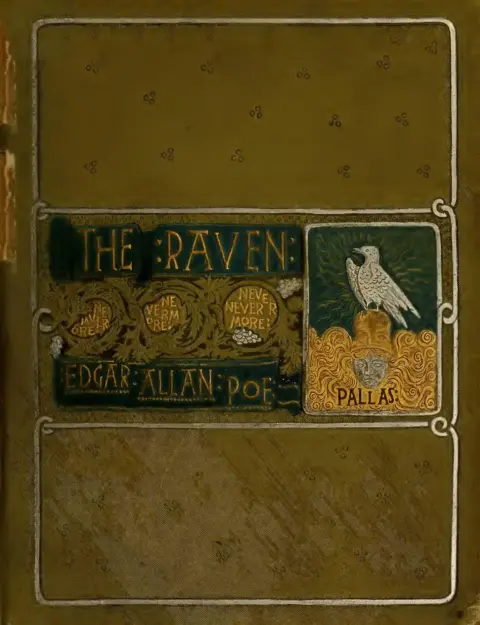
THE CLASSIC COLLECTION · 1845
"The Works of Edgar Allan Poe, The Raven Edition" by Edgar Allan Poe is a comprehensive collection of his literary output, likely compiled in the late 19th century. This collection spans various genres, including poetry, essays, and gothic tales, showcasing Poe's distinctive style and exploration of themes like love, death, and the macabre. The book presents significant works such as "The Raven," "The Tell-Tale Heart," "The Fall of the House of Usher," and many others, illustrating Poe's profound influence on American literature and his mastery of suspense and psychological depth. At the start of this collection, the reader is introduced to a preface that sets the stage for understanding Poe's life and literary journey, giving insights into the struggles he faced, both personally and professionally. The subsequent sections outline key works and achievements in his career, detailing his early poetry, notable prose tales, and his lasting impact on both poetry and fiction. The opening expresses deep admiration for Poe's unique genius, highlighting the interplay between his troubled life and his art, thus creating an engaging entry point for readers new to Poe's work or revisiting it with a fresh perspective.
Introduction adapted from the source catalogue; source summaries may be automatically generated.
Free to read · English · 450,336 words · No account needed
MAKE TIME FOR A GOOD BOOK
On by default. Untick to stop anonymous reading totals. Each page counts after 10 seconds in view. How this works.
Anonymous counting is on unless you have switched it off.
At length I once more arose, and busied myself in reflection upon the horrors which encompassed me. For another twenty-four hours it was barely possible that I might exist without water—for a longer time I could not do so. During the first portion of my imprisonment I had made free use of the cordials with which Augustus had supplied me, but they only served to excite fever, without in the least degree assuaging thirst. I had now only about a gill left, and this was of a species of strong peach liqueur at which my stomach revolted. The sausages were entirely consumed; of the ham nothing remained but a small piece of the skin; and all the biscuit, except a few fragments of one, had been eaten by Tiger. To add to my troubles, I found that my headache was increasing momentarily, and with it the species of delirium which had distressed me more or less since my first falling asleep. For some hours past it had been with the greatest difficulty I could breathe at all, and now each attempt at so doing was attended with the most depressing spasmodic action of the chest. But there was still another and very different source of disquietude, and one, indeed, whose harassing terrors had been the chief means of arousing me to exertion from my stupor on the mattress. It arose from the demeanor of the dog.
I first observed an alteration in his conduct while rubbing in the phosphorus on the paper in my last attempt. As I rubbed, he ran his nose against my hand with a slight snarl; but I was too greatly excited at the time to pay much attention to the circumstance. Soon afterward, it will be remembered, I threw myself on the mattress, and fell into a species of lethargy. Presently I became aware of a singular hissing sound close at my ears, and discovered it to proceed from Tiger, who was panting and wheezing in a state of the greatest apparent excitement, his eyeballs flashing fiercely through the gloom. I spoke to him, when he replied with a low growl, and then remained quiet. Presently I relapsed into my stupor, from which I was again awakened in a similar manner. This was repeated three or four times, until finally his behaviour inspired me with so great a degree of fear, that I became fully aroused. He was now lying close by the door of the box, snarling fearfully, although in a kind of undertone, and grinding his teeth as if strongly convulsed. I had no doubt whatever that the want of water or the confined atmosphere of the hold had driven him mad, and I was at a loss what course to pursue. I could not endure the thought of killing him, yet it seemed absolutely necessary for my own safety. I could distinctly perceive his eyes fastened upon me with an expression of the most deadly animosity, and I expected every instant that he would attack me. At last I could endure my terrible situation no longer, and determined to make my way from the box at all hazards, and dispatch him, if his opposition should render it necessary for me to do so. To get out, I had to pass directly over his body, and he already seemed to anticipate my design—missing himself upon his fore-legs (as I perceived by the altered position of his eyes), and displayed the whole of his white fangs, which were easily discernible. I took the remains of the ham-skin, and the bottle containing the liqueur, and secured them about my person, together with a large carving-knife which Augustus had left me—then, folding my cloak around me as closely as possible, I made a movement toward the mouth of the box. No sooner did I do this, than the dog sprang with a loud growl toward my throat. The whole weight of his body struck me on the right shoulder, and I fell violently to the left, while the enraged animal passed entirely over me. I had fallen upon my knees, with my head buried among the blankets, and these protected me from a second furious assault, during which I felt the sharp teeth pressing vigorously upon the woollen which enveloped my neck—yet, luckily, without being able to penetrate all the folds. I was now beneath the dog, and a few moments would place me completely in his power. Despair gave me strength, and I rose boldly up, shaking him from me by main force, and dragging with me the blankets from the mattress. These I now threw over him, and before he could extricate himself, I had got through the door and closed it effectually against his pursuit. In this struggle, however, I had been forced to drop the morsel of ham-skin, and I now found my whole stock of provisions reduced to a single gill of liqueur. As this reflection crossed my mind, I felt myself actuated by one of those fits of perverseness which might be supposed to influence a spoiled child in similar circumstances, and, raising the bottle to my lips, I drained it to the last drop, and dashed it furiously upon the floor.
Your reading position is saved on this browser. Take it to another device with a library code. Reading pages adapt to text, rather than matching a printed edition.
Edgar Allan Poe

Rebecca Harding Davis & Thomas De Quincey & Charles Dickens & Nathaniel Hawthorne & Edward Bulwer Lytton, Baron Lytton & Edgar Allan Poe & Harriet Elizabeth Prescott Spofford
Edgar Allan Poe
Edgar Allan Poe
BEHIND THE BOOK
This eBook is for the use of anyone anywhere in the United States and most other parts of the world at no cost and with almost no restrictions whatsoever. You may copy it, give it away or re-use it under the terms of the Project Gutenberg License included with this eBook or online at www.gutenberg.org. If you are not located in the United States, you will have to check the laws of the country where you are located before using this eBook. Read the source licence.
The original source file, including credits and licence, is retained by this library. Request an original-format copy at no charge. Please include the book title and Project Gutenberg identifier #25525.
KEEP YOUR CURIOSITY GOING

David Patterson (Spirit) Hatch

David Patterson (Spirit) Hatch

David Patterson (Spirit) Hatch
Coulson Kernahan

Ralph Waldo Emerson

Maurice Baring