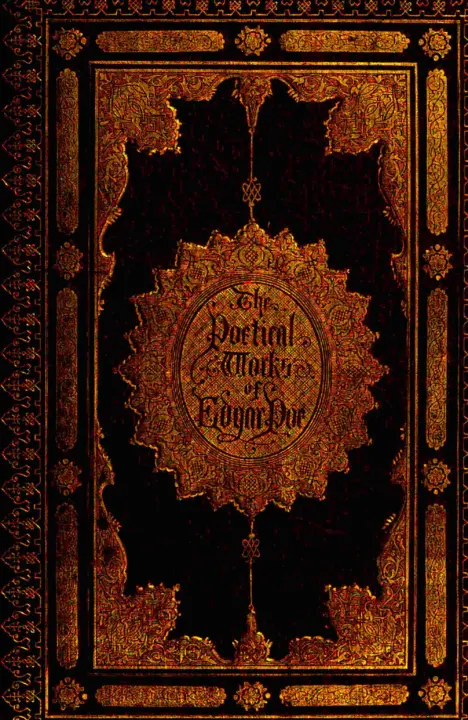
The poetical works of Edgar Allan Poe
Edgar Allan Poe
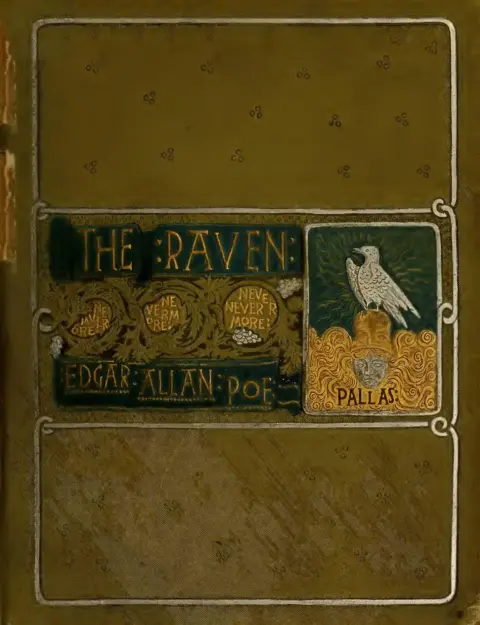
THE CLASSIC COLLECTION · 1845
"The Works of Edgar Allan Poe, The Raven Edition" by Edgar Allan Poe is a comprehensive collection of his literary output, likely compiled in the late 19th century. This collection spans various genres, including poetry, essays, and gothic tales, showcasing Poe's distinctive style and exploration of themes like love, death, and the macabre. The book presents significant works such as "The Raven," "The Tell-Tale Heart," "The Fall of the House of Usher," and many others, illustrating Poe's profound influence on American literature and his mastery of suspense and psychological depth. At the start of this collection, the reader is introduced to a preface that sets the stage for understanding Poe's life and literary journey, giving insights into the struggles he faced, both personally and professionally. The subsequent sections outline key works and achievements in his career, detailing his early poetry, notable prose tales, and his lasting impact on both poetry and fiction. The opening expresses deep admiration for Poe's unique genius, highlighting the interplay between his troubled life and his art, thus creating an engaging entry point for readers new to Poe's work or revisiting it with a fresh perspective.
Introduction adapted from the source catalogue; source summaries may be automatically generated.
Free to read · English · 450,336 words · No account needed
MAKE TIME FOR A GOOD BOOK
On by default. Untick to stop anonymous reading totals. Each page counts after 10 seconds in view. How this works.
Anonymous counting is on unless you have switched it off.
I have before stated more than once that my intellect, for some period prior to this, had been in a condition nearly bordering on idiocy. There were, to be sure, momentary intervals of perfect sanity, and, now and then, even of energy; but these were few. It must be remembered that I had been, for many days certainly, inhaling the almost pestilential atmosphere of a close hold in a whaling vessel, and for a long portion of that time but scantily supplied with water. For the last fourteen or fifteen hours I had none—nor had I slept during that time. Salt provisions of the most exciting kind had been my chief, and, indeed, since the loss of the mutton, my only supply of food, with the exception of the sea-biscuit; and these latter were utterly useless to me, as they were too dry and hard to be swallowed in the swollen and parched condition of my throat. I was now in a high state of fever, and in every respect exceedingly ill. This will account for the fact that many miserable hours of despondency elapsed after my last adventure with the phosphorus, before the thought suggested itself that I had examined only one side of the paper. I shall not attempt to describe my feelings of rage (for I believe I was more angry than any thing else) when the egregious oversight I had committed flashed suddenly upon my perception. The blunder itself would have been unimportant, had not my own folly and impetuosity rendered it otherwise—in my disappointment at not finding some words upon the slip, I had childishly torn it in pieces and thrown it away, it was impossible to say where.
From the worst part of this dilemma I was relieved by the sagacity of Tiger. Having got, after a long search, a small piece of the note, I put it to the dog’s nose, and endeavored to make him understand that he must bring me the rest of it. To my astonishment, (for I had taught him none of the usual tricks for which his breed are famous,) he seemed to enter at once into my meaning, and, rummaging about for a few moments, soon found another considerable portion. Bringing me this, he paused awhile, and, rubbing his nose against my hand, appeared to be waiting for my approval of what he had done. I patted him on the head, when he immediately made off again. It was now some minutes before he came back—but when he did come, he brought with him a large slip, which proved to be all the paper missing—it having been torn, it seems, only into three pieces. Luckily, I had no trouble in finding what few fragments of the phosphorus were left—being guided by the indistinct glow one or two of the particles still emitted. My difficulties had taught me the necessity of caution, and I now took time to reflect upon what I was about to do. It was very probable, I considered, that some words were written upon that side of the paper which had not been examined—but which side was that? Fitting the pieces together gave me no clew in this respect, although it assured me that the words (if there were any) would be found all on one side, and connected in a proper manner, as written. There was the greater necessity of ascertaining the point in question beyond a doubt, as the phosphorus remaining would be altogether insufficient for a third attempt, should I fail in the one I was now about to make. I placed the paper on a book as before, and sat for some minutes thoughtfully revolving the matter over in my mind. At last I thought it barely possible that the written side might have some unevenness on its surface, which a delicate sense of feeling might enable me to detect. I determined to make the experiment and passed my finger very carefully over the side which first presented itself. Nothing, however, was perceptible, and I turned the paper, adjusting it on the book. I now again carried my forefinger cautiously along, when I was aware of an exceedingly slight, but still discernable glow, which followed as it proceeded. This, I knew, must arise from some very minute remaining particles of the phosphorus with which I had covered the paper in my previous attempt. The other, or under side, then, was that on which lay the writing, if writing there should finally prove to be. Again I turned the note, and went to work as I had previously done. Having rubbed in the phosphorus, a brilliancy ensued as before—but this time several lines of MS. in a large hand, and apparently in red ink, became distinctly visible. The glimmer, although sufficiently bright, was but momentary. Still, had I not been too greatly excited, there would have been ample time enough for me to peruse the whole three sentences before me—for I saw there were three. In my anxiety, however, to read all at once, I succeeded only in reading the seven concluding words, which thus appeared—“blood—your life depends upon lying close.”
Your reading position is saved on this browser. Take it to another device with a library code. Reading pages adapt to text, rather than matching a printed edition.
Edgar Allan Poe

Rebecca Harding Davis & Thomas De Quincey & Charles Dickens & Nathaniel Hawthorne & Edward Bulwer Lytton, Baron Lytton & Edgar Allan Poe & Harriet Elizabeth Prescott Spofford
Edgar Allan Poe
Edgar Allan Poe
BEHIND THE BOOK
This eBook is for the use of anyone anywhere in the United States and most other parts of the world at no cost and with almost no restrictions whatsoever. You may copy it, give it away or re-use it under the terms of the Project Gutenberg License included with this eBook or online at www.gutenberg.org. If you are not located in the United States, you will have to check the laws of the country where you are located before using this eBook. Read the source licence.
The original source file, including credits and licence, is retained by this library. Request an original-format copy at no charge. Please include the book title and Project Gutenberg identifier #25525.
KEEP YOUR CURIOSITY GOING

David Patterson (Spirit) Hatch

David Patterson (Spirit) Hatch

David Patterson (Spirit) Hatch
Coulson Kernahan

Ralph Waldo Emerson

Maurice Baring