
The poetical works of Edgar Allan Poe
Edgar Allan Poe
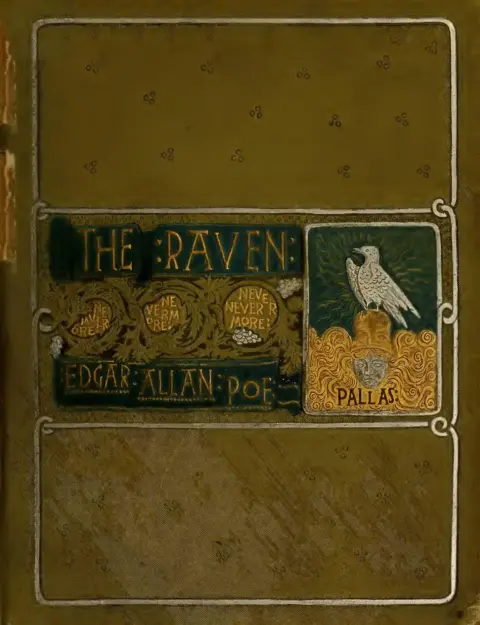
THE CLASSIC COLLECTION · 1845
"The Works of Edgar Allan Poe, The Raven Edition" by Edgar Allan Poe is a comprehensive collection of his literary output, likely compiled in the late 19th century. This collection spans various genres, including poetry, essays, and gothic tales, showcasing Poe's distinctive style and exploration of themes like love, death, and the macabre. The book presents significant works such as "The Raven," "The Tell-Tale Heart," "The Fall of the House of Usher," and many others, illustrating Poe's profound influence on American literature and his mastery of suspense and psychological depth. At the start of this collection, the reader is introduced to a preface that sets the stage for understanding Poe's life and literary journey, giving insights into the struggles he faced, both personally and professionally. The subsequent sections outline key works and achievements in his career, detailing his early poetry, notable prose tales, and his lasting impact on both poetry and fiction. The opening expresses deep admiration for Poe's unique genius, highlighting the interplay between his troubled life and his art, thus creating an engaging entry point for readers new to Poe's work or revisiting it with a fresh perspective.
Introduction adapted from the source catalogue; source summaries may be automatically generated.
Free to read · English · 450,336 words · No account needed
MAKE TIME FOR A GOOD BOOK
On by default. Untick to stop anonymous reading totals. Each page counts after 10 seconds in view. How this works.
Anonymous counting is on unless you have switched it off.
Upon awakening I felt strangely confused in mind, and some time elapsed before I could bring to recollection all the various circumstances of my situation. By degrees, however, I remembered all. Striking a light, I looked at the watch; but it was run down, and there were, consequently, no means of determining how long I slept. My limbs were greatly cramped, and I was forced to relieve them by standing between the crates. Presently feeling an almost ravenous appetite, I bethought myself of the cold mutton, some of which I had eaten just before going to sleep, and found excellent. What was my astonishment in discovering it to be in a state of absolute putrefaction! This circumstance occasioned me great disquietude; for, connecting it with the disorder of mind I experienced upon awakening, I began to suppose that I must have slept for an inordinately long period of time. The close atmosphere of the hold might have had something to do with this, and might, in the end, be productive of the most serious results. My head ached excessively; I fancied that I drew every breath with difficulty; and, in short, I was oppressed with a multitude of gloomy feelings. Still I could not venture to make any disturbance by opening the trap or otherwise, and, having wound up the watch, contented myself as well as possible.
Throughout the whole of the next tedious twenty-four hours no person came to my relief, and I could not help accusing Augustus of the grossest inattention. What alarmed me chiefly was, that the water in my jug was reduced to about half a pint, and I was suffering much from thirst, having eaten freely of the Bologna sausages after the loss of my mutton. I became very uneasy, and could no longer take any interest in my books. I was overpowered, too, with a desire to sleep, yet trembled at the thought of indulging it, lest there might exist some pernicious influence, like that of burning charcoal, in the confined air of the hold. In the meantime the roll of the brig told me that we were far in the main ocean, and a dull humming sound, which reached my ears as if from an immense distance, convinced me no ordinary gale was blowing. I could not imagine a reason for the absence of Augustus. We were surely far enough advanced on our voyage to allow of my going up. Some accident might have happened to him—but I could think of none which would account for his suffering me to remain so long a prisoner, except, indeed, his having suddenly died or fallen overboard, and upon this idea I could not dwell with any degree of patience. It was possible that we had been baffled by head winds, and were still in the near vicinity of Nantucket. This notion, however, I was forced to abandon; for such being the case, the brig must have frequently gone about; and I was entirely satisfied, from her continual inclination to the larboard, that she had been sailing all along with a steady breeze on her starboard quarter. Besides, granting that we were still in the neighborhood of the island, why should not Augustus have visited me and informed me of the circumstance? Pondering in this manner upon the difficulties of my solitary and cheerless condition, I resolved to wait yet another twenty-four hours, when, if no relief were obtained, I would make my way to the trap, and endeavour either to hold a parley with my friend, or get at least a little fresh air through the opening, and a further supply of water from the stateroom. While occupied with this thought, however, I fell in spite of every exertion to the contrary, into a state of profound sleep, or rather stupor. My dreams were of the most terrific description. Every species of calamity and horror befell me. Among other miseries I was smothered to death between huge pillows, by demons of the most ghastly and ferocious aspect. Immense serpents held me in their embrace, and looked earnestly in my face with their fearfully shining eyes. Then deserts, limitless, and of the most forlorn and awe-inspiring character, spread themselves out before me. Immensely tall trunks of trees, gray and leafless, rose up in endless succession as far as the eye could reach. Their roots were concealed in wide-spreading morasses, whose dreary water lay intensely black, still, and altogether terrible, beneath. And the strange trees seemed endowed with a human vitality, and waving to and fro their skeleton arms, were crying to the silent waters for mercy, in the shrill and piercing accents of the most acute agony and despair. The scene changed; and I stood, naked and alone, amidst the burning sand-plains of Sahara. At my feet lay crouched a fierce lion of the tropics. Suddenly his wild eyes opened and fell upon me. With a conclusive bound he sprang to his feet, and laid bare his horrible teeth. In another instant there burst from his red throat a roar like the thunder of the firmament, and I fell impetuously to the earth. Stifling in a paroxysm of terror, I at last found myself partially awake. My dream, then, was not all a dream. Now, at least, I was in possession of my senses. The paws of some huge and real monster were pressing heavily upon my bosom—his hot breath was in my ear—and his white and ghastly fangs were gleaming upon me through the gloom.
Your reading position is saved on this browser. Take it to another device with a library code. Reading pages adapt to text, rather than matching a printed edition.
Edgar Allan Poe

Rebecca Harding Davis & Thomas De Quincey & Charles Dickens & Nathaniel Hawthorne & Edward Bulwer Lytton, Baron Lytton & Edgar Allan Poe & Harriet Elizabeth Prescott Spofford
Edgar Allan Poe
Edgar Allan Poe
BEHIND THE BOOK
This eBook is for the use of anyone anywhere in the United States and most other parts of the world at no cost and with almost no restrictions whatsoever. You may copy it, give it away or re-use it under the terms of the Project Gutenberg License included with this eBook or online at www.gutenberg.org. If you are not located in the United States, you will have to check the laws of the country where you are located before using this eBook. Read the source licence.
The original source file, including credits and licence, is retained by this library. Request an original-format copy at no charge. Please include the book title and Project Gutenberg identifier #25525.
KEEP YOUR CURIOSITY GOING

David Patterson (Spirit) Hatch

David Patterson (Spirit) Hatch

David Patterson (Spirit) Hatch
Coulson Kernahan

Ralph Waldo Emerson

Maurice Baring