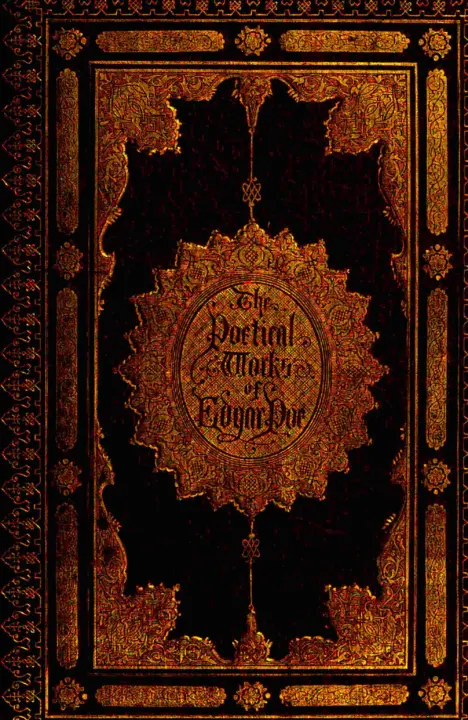
The poetical works of Edgar Allan Poe
Edgar Allan Poe
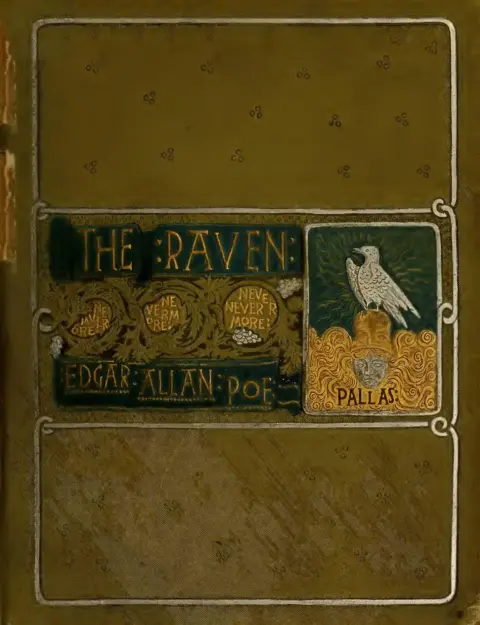
THE CLASSIC COLLECTION · 1845
"The Works of Edgar Allan Poe, The Raven Edition" by Edgar Allan Poe is a comprehensive collection of his literary output, likely compiled in the late 19th century. This collection spans various genres, including poetry, essays, and gothic tales, showcasing Poe's distinctive style and exploration of themes like love, death, and the macabre. The book presents significant works such as "The Raven," "The Tell-Tale Heart," "The Fall of the House of Usher," and many others, illustrating Poe's profound influence on American literature and his mastery of suspense and psychological depth. At the start of this collection, the reader is introduced to a preface that sets the stage for understanding Poe's life and literary journey, giving insights into the struggles he faced, both personally and professionally. The subsequent sections outline key works and achievements in his career, detailing his early poetry, notable prose tales, and his lasting impact on both poetry and fiction. The opening expresses deep admiration for Poe's unique genius, highlighting the interplay between his troubled life and his art, thus creating an engaging entry point for readers new to Poe's work or revisiting it with a fresh perspective.
Introduction adapted from the source catalogue; source summaries may be automatically generated.
Free to read · English · 450,336 words · No account needed
MAKE TIME FOR A GOOD BOOK
On by default. Untick to stop anonymous reading totals. Each page counts after 10 seconds in view. How this works.
Anonymous counting is on unless you have switched it off.
Ellison became neither musician nor poet; although no man lived more profoundly enamored of music and poetry. Under other circumstances than those which invested him, it is not impossible that he would have become a painter. Sculpture, although in its nature rigorously poetical was too limited in its extent and consequences, to have occupied, at any time, much of his attention. And I have now mentioned all the provinces in which the common understanding of the poetic sentiment has declared it capable of expatiating. But Ellison maintained that the richest, the truest, and most natural, if not altogether the most extensive province, had been unaccountably neglected. No definition had spoken of the landscape-gardener as of the poet; yet it seemed to my friend that the creation of the landscape-garden offered to the proper Muse the most magnificent of opportunities. Here, indeed, was the fairest field for the display of imagination in the endless combining of forms of novel beauty; the elements to enter into combination being, by a vast superiority, the most glorious which the earth could afford. In the multiform and multicolor of the flowers and the trees, he recognised the most direct and energetic efforts of Nature at physical loveliness. And in the direction or concentration of this effort—or, more properly, in its adaptation to the eyes which were to behold it on earth—he perceived that he should be employing the best means—laboring to the greatest advantage—in the fulfilment, not only of his own destiny as poet, but of the august purposes for which the Deity had implanted the poetic sentiment in man.
“Its adaptation to the eyes which were to behold it on earth.” In his explanation of this phraseology, Mr. Ellison did much toward solving what has always seemed to me an enigma:—I mean the fact (which none but the ignorant dispute) that no such combination of scenery exists in nature as the painter of genius may produce. No such paradises are to be found in reality as have glowed on the canvas of Claude. In the most enchanting of natural landscapes, there will always be found a defect or an excess—many excesses and defects. While the component parts may defy, individually, the highest skill of the artist, the arrangement of these parts will always be susceptible of improvement. In short, no position can be attained on the wide surface of the natural earth, from which an artistical eye, looking steadily, will not find matter of offence in what is termed the “composition” of the landscape. And yet how unintelligible is this! In all other matters we are justly instructed to regard nature as supreme. With her details we shrink from competition. Who shall presume to imitate the colors of the tulip, or to improve the proportions of the lily of the valley? The criticism which says, of sculpture or portraiture, that here nature is to be exalted or idealized rather than imitated, is in error. No pictorial or sculptural combinations of points of human liveliness do more than approach the living and breathing beauty. In landscape alone is the principle of the critic true; and, having felt its truth here, it is but the headlong spirit of generalization which has led him to pronounce it true throughout all the domains of art. Having, I say, felt its truth here; for the feeling is no affectation or chimera. The mathematics afford no more absolute demonstrations than the sentiments of his art yields the artist. He not only believes, but positively knows, that such and such apparently arbitrary arrangements of matter constitute and alone constitute the true beauty. His reasons, however, have not yet been matured into expression. It remains for a more profound analysis than the world has yet seen, fully to investigate and express them. Nevertheless he is confirmed in his instinctive opinions by the voice of all his brethren. Let a “composition” be defective; let an emendation be wrought in its mere arrangement of form; let this emendation be submitted to every artist in the world; by each will its necessity be admitted. And even far more than this; in remedy of the defective composition, each insulated member of the fraternity would have suggested the identical emendation.
Your reading position is saved on this browser. Take it to another device with a library code. Reading pages adapt to text, rather than matching a printed edition.
Edgar Allan Poe

Rebecca Harding Davis & Thomas De Quincey & Charles Dickens & Nathaniel Hawthorne & Edward Bulwer Lytton, Baron Lytton & Edgar Allan Poe & Harriet Elizabeth Prescott Spofford
Edgar Allan Poe
Edgar Allan Poe
BEHIND THE BOOK
This eBook is for the use of anyone anywhere in the United States and most other parts of the world at no cost and with almost no restrictions whatsoever. You may copy it, give it away or re-use it under the terms of the Project Gutenberg License included with this eBook or online at www.gutenberg.org. If you are not located in the United States, you will have to check the laws of the country where you are located before using this eBook. Read the source licence.
The original source file, including credits and licence, is retained by this library. Request an original-format copy at no charge. Please include the book title and Project Gutenberg identifier #25525.
KEEP YOUR CURIOSITY GOING

David Patterson (Spirit) Hatch

David Patterson (Spirit) Hatch

David Patterson (Spirit) Hatch
Coulson Kernahan

Ralph Waldo Emerson

Maurice Baring