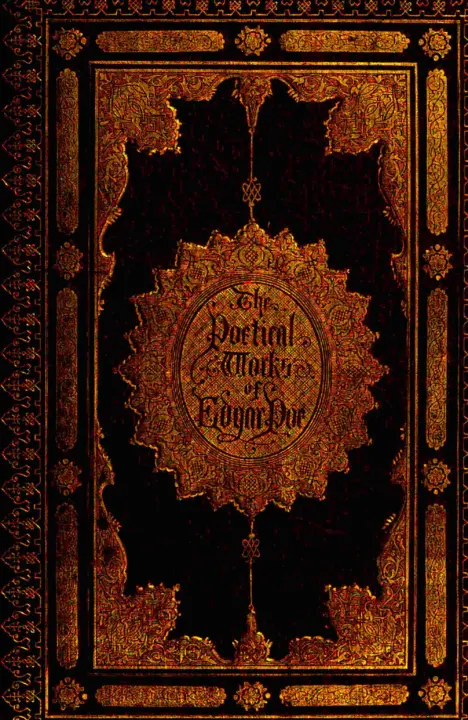
The poetical works of Edgar Allan Poe
Edgar Allan Poe
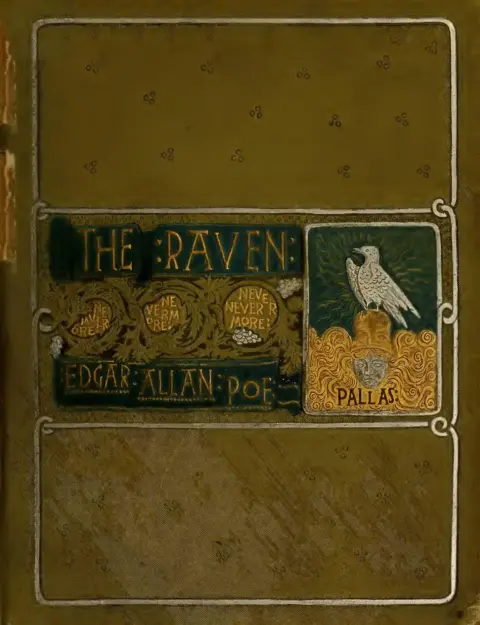
THE CLASSIC COLLECTION · 1845
"The Works of Edgar Allan Poe, The Raven Edition" by Edgar Allan Poe is a comprehensive collection of his literary output, likely compiled in the late 19th century. This collection spans various genres, including poetry, essays, and gothic tales, showcasing Poe's distinctive style and exploration of themes like love, death, and the macabre. The book presents significant works such as "The Raven," "The Tell-Tale Heart," "The Fall of the House of Usher," and many others, illustrating Poe's profound influence on American literature and his mastery of suspense and psychological depth. At the start of this collection, the reader is introduced to a preface that sets the stage for understanding Poe's life and literary journey, giving insights into the struggles he faced, both personally and professionally. The subsequent sections outline key works and achievements in his career, detailing his early poetry, notable prose tales, and his lasting impact on both poetry and fiction. The opening expresses deep admiration for Poe's unique genius, highlighting the interplay between his troubled life and his art, thus creating an engaging entry point for readers new to Poe's work or revisiting it with a fresh perspective.
Introduction adapted from the source catalogue; source summaries may be automatically generated.
Free to read · English · 450,336 words · No account needed
MAKE TIME FOR A GOOD BOOK
On by default. Untick to stop anonymous reading totals. Each page counts after 10 seconds in view. How this works.
Anonymous counting is on unless you have switched it off.
The lady was deposited in her family vault, which, for three subsequent years, was undisturbed. At the expiration of this term it was opened for the reception of a sarcophagus; but, alas! how fearful a shock awaited the husband, who, personally, threw open the door! As its portals swung outwardly back, some white-apparelled object fell rattling within his arms. It was the skeleton of his wife in her yet unmoulded shroud.
A careful investigation rendered it evident that she had revived within two days after her entombment; that her struggles within the coffin had caused it to fall from a ledge, or shelf to the floor, where it was so broken as to permit her escape. A lamp which had been accidentally left, full of oil, within the tomb, was found empty; it might have been exhausted, however, by evaporation. On the uttermost of the steps which led down into the dread chamber was a large fragment of the coffin, with which, it seemed, that she had endeavored to arrest attention by striking the iron door. While thus occupied, she probably swooned, or possibly died, through sheer terror; and, in failing, her shroud became entangled in some iron-work which projected interiorly. Thus she remained, and thus she rotted, erect.
In the year 1810, a case of living inhumation happened in France, attended with circumstances which go far to warrant the assertion that truth is, indeed, stranger than fiction. The heroine of the story was a Mademoiselle Victorine Lafourcade, a young girl of illustrious family, of wealth, and of great personal beauty. Among her numerous suitors was Julien Bossuet, a poor litterateur, or journalist of Paris. His talents and general amiability had recommended him to the notice of the heiress, by whom he seems to have been truly beloved; but her pride of birth decided her, finally, to reject him, and to wed a Monsieur Renelle, a banker and a diplomatist of some eminence. After marriage, however, this gentleman neglected, and, perhaps, even more positively ill-treated her. Having passed with him some wretched years, she died—at least her condition so closely resembled death as to deceive every one who saw her. She was buried——not in a vault, but in an ordinary grave in the village of her nativity. Filled with despair, and still inflamed by the memory of a profound attachment, the lover journeys from the capital to the remote province in which the village lies, with the romantic purpose of disinterring the corpse, and possessing himself of its luxuriant tresses. He reaches the grave. At midnight he unearths the coffin, opens it, and is in the act of detaching the hair, when he is arrested by the unclosing of the beloved eyes. In fact, the lady had been buried alive. Vitality had not altogether departed, and she was aroused by the caresses of her lover from the lethargy which had been mistaken for death. He bore her frantically to his lodgings in the village. He employed certain powerful restoratives suggested by no little medical learning. In fine, she revived. She recognized her preserver. She remained with him until, by slow degrees, she fully recovered her original health. Her woman’s heart was not adamant, and this last lesson of love sufficed to soften it. She bestowed it upon Bossuet. She returned no more to her husband, but, concealing from him her resurrection, fled with her lover to America. Twenty years afterward, the two returned to France, in the persuasion that time had so greatly altered the lady’s appearance that her friends would be unable to recognize her. They were mistaken, however, for, at the first meeting, Monsieur Renelle did actually recognize and make claim to his wife. This claim she resisted, and a judicial tribunal sustained her in her resistance, deciding that the peculiar circumstances, with the long lapse of years, had extinguished, not only equitably, but legally, the authority of the husband.
Your reading position is saved on this browser. Take it to another device with a library code. Reading pages adapt to text, rather than matching a printed edition.
Edgar Allan Poe

Rebecca Harding Davis & Thomas De Quincey & Charles Dickens & Nathaniel Hawthorne & Edward Bulwer Lytton, Baron Lytton & Edgar Allan Poe & Harriet Elizabeth Prescott Spofford
Edgar Allan Poe
Edgar Allan Poe
BEHIND THE BOOK
This eBook is for the use of anyone anywhere in the United States and most other parts of the world at no cost and with almost no restrictions whatsoever. You may copy it, give it away or re-use it under the terms of the Project Gutenberg License included with this eBook or online at www.gutenberg.org. If you are not located in the United States, you will have to check the laws of the country where you are located before using this eBook. Read the source licence.
The original source file, including credits and licence, is retained by this library. Request an original-format copy at no charge. Please include the book title and Project Gutenberg identifier #25525.
KEEP YOUR CURIOSITY GOING

David Patterson (Spirit) Hatch

David Patterson (Spirit) Hatch

David Patterson (Spirit) Hatch
Coulson Kernahan

Ralph Waldo Emerson

Maurice Baring