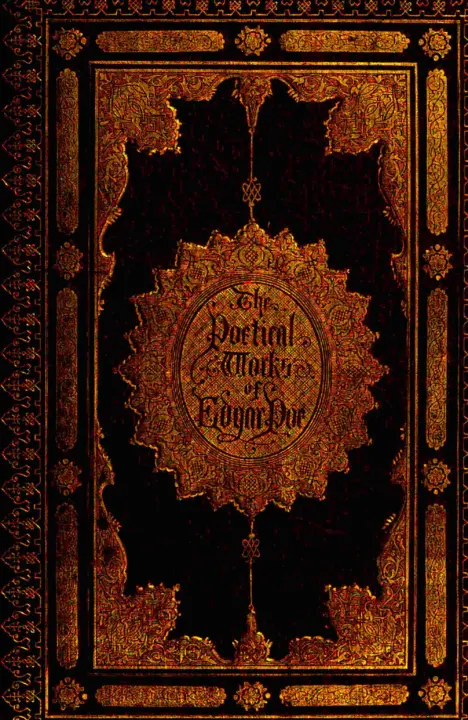
The poetical works of Edgar Allan Poe
Edgar Allan Poe
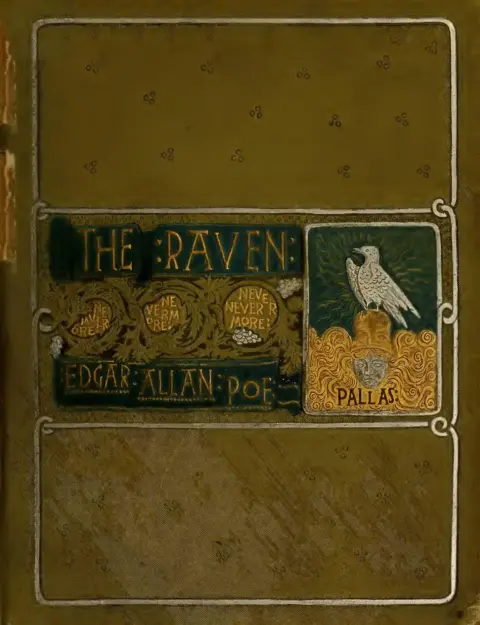
THE CLASSIC COLLECTION · 1845
"The Works of Edgar Allan Poe, The Raven Edition" by Edgar Allan Poe is a comprehensive collection of his literary output, likely compiled in the late 19th century. This collection spans various genres, including poetry, essays, and gothic tales, showcasing Poe's distinctive style and exploration of themes like love, death, and the macabre. The book presents significant works such as "The Raven," "The Tell-Tale Heart," "The Fall of the House of Usher," and many others, illustrating Poe's profound influence on American literature and his mastery of suspense and psychological depth. At the start of this collection, the reader is introduced to a preface that sets the stage for understanding Poe's life and literary journey, giving insights into the struggles he faced, both personally and professionally. The subsequent sections outline key works and achievements in his career, detailing his early poetry, notable prose tales, and his lasting impact on both poetry and fiction. The opening expresses deep admiration for Poe's unique genius, highlighting the interplay between his troubled life and his art, thus creating an engaging entry point for readers new to Poe's work or revisiting it with a fresh perspective.
Introduction adapted from the source catalogue; source summaries may be automatically generated.
Free to read · English · 450,336 words · No account needed
MAKE TIME FOR A GOOD BOOK
On by default. Untick to stop anonymous reading totals. Each page counts after 10 seconds in view. How this works.
Anonymous counting is on unless you have switched it off.
In the meantime the balloon arose like a lark, and, soaring far away above the city, at length drifted quietly behind a cloud similar to that from which it had so oddly emerged, and was thus lost forever to the wondering eyes of the good citizens of Rotterdam. All attention was now directed to the letter, the descent of which, and the consequences attending thereupon, had proved so fatally subversive of both person and personal dignity to his Excellency, the illustrious Burgomaster Mynheer Superbus Von Underduk. That functionary, however, had not failed, during his circumgyratory movements, to bestow a thought upon the important subject of securing the packet in question, which was seen, upon inspection, to have fallen into the most proper hands, being actually addressed to himself and Professor Rub-a-dub, in their official capacities of President and Vice-President of the Rotterdam College of Astronomy. It was accordingly opened by those dignitaries upon the spot, and found to contain the following extraordinary, and indeed very serious, communication:
“To their Excellencies Von Underduk and Rub-a-dub, President and Vice-President of the States’ College of Astronomers, in the city of Rotterdam.
“Your Excellencies may perhaps be able to remember an humble artizan, by name Hans Pfaall, and by occupation a mender of bellows, who, with three others, disappeared from Rotterdam, about five years ago, in a manner which must have been considered by all parties at once sudden, and extremely unaccountable. If, however, it so please your Excellencies, I, the writer of this communication, am the identical Hans Pfaall himself. It is well known to most of my fellow citizens, that for the period of forty years I continued to occupy the little square brick building, at the head of the alley called Sauerkraut, in which I resided at the time of my disappearance. My ancestors have also resided therein time out of mind—they, as well as myself, steadily following the respectable and indeed lucrative profession of mending of bellows. For, to speak the truth, until of late years, that the heads of all the people have been set agog with politics, no better business than my own could an honest citizen of Rotterdam either desire or deserve. Credit was good, employment was never wanting, and on all hands there was no lack of either money or good-will. But, as I was saying, we soon began to feel the effects of liberty and long speeches, and radicalism, and all that sort of thing. People who were formerly, the very best customers in the world, had now not a moment of time to think of us at all. They had, so they said, as much as they could do to read about the revolutions, and keep up with the march of intellect and the spirit of the age. If a fire wanted fanning, it could readily be fanned with a newspaper, and as the government grew weaker, I have no doubt that leather and iron acquired durability in proportion, for, in a very short time, there was not a pair of bellows in all Rotterdam that ever stood in need of a stitch or required the assistance of a hammer. This was a state of things not to be endured. I soon grew as poor as a rat, and, having a wife and children to provide for, my burdens at length became intolerable, and I spent hour after hour in reflecting upon the most convenient method of putting an end to my life. Duns, in the meantime, left me little leisure for contemplation. My house was literally besieged from morning till night, so that I began to rave, and foam, and fret like a caged tiger against the bars of his enclosure. There were three fellows in particular who worried me beyond endurance, keeping watch continually about my door, and threatening me with the law. Upon these three I internally vowed the bitterest revenge, if ever I should be so happy as to get them within my clutches; and I believe nothing in the world but the pleasure of this anticipation prevented me from putting my plan of suicide into immediate execution, by blowing my brains out with a blunderbuss. I thought it best, however, to dissemble my wrath, and to treat them with promises and fair words, until, by some good turn of fate, an opportunity of vengeance should be afforded me.
Your reading position is saved on this browser. Take it to another device with a library code. Reading pages adapt to text, rather than matching a printed edition.
Edgar Allan Poe

Rebecca Harding Davis & Thomas De Quincey & Charles Dickens & Nathaniel Hawthorne & Edward Bulwer Lytton, Baron Lytton & Edgar Allan Poe & Harriet Elizabeth Prescott Spofford
Edgar Allan Poe
Edgar Allan Poe
BEHIND THE BOOK
This eBook is for the use of anyone anywhere in the United States and most other parts of the world at no cost and with almost no restrictions whatsoever. You may copy it, give it away or re-use it under the terms of the Project Gutenberg License included with this eBook or online at www.gutenberg.org. If you are not located in the United States, you will have to check the laws of the country where you are located before using this eBook. Read the source licence.
The original source file, including credits and licence, is retained by this library. Request an original-format copy at no charge. Please include the book title and Project Gutenberg identifier #25525.
KEEP YOUR CURIOSITY GOING

David Patterson (Spirit) Hatch

David Patterson (Spirit) Hatch

David Patterson (Spirit) Hatch
Coulson Kernahan

Ralph Waldo Emerson

Maurice Baring