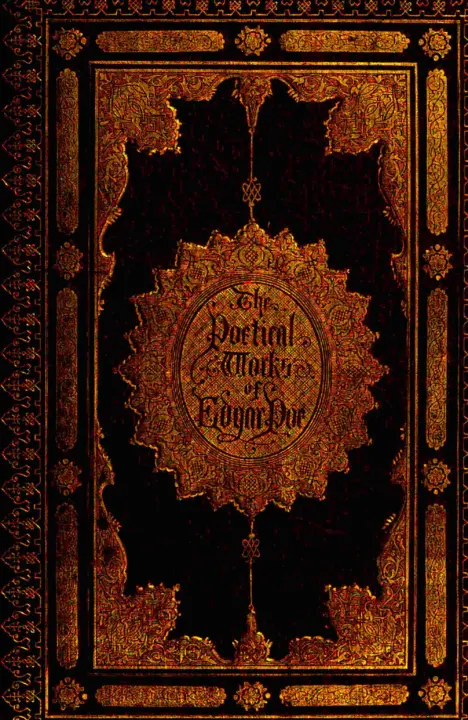
The poetical works of Edgar Allan Poe
Edgar Allan Poe
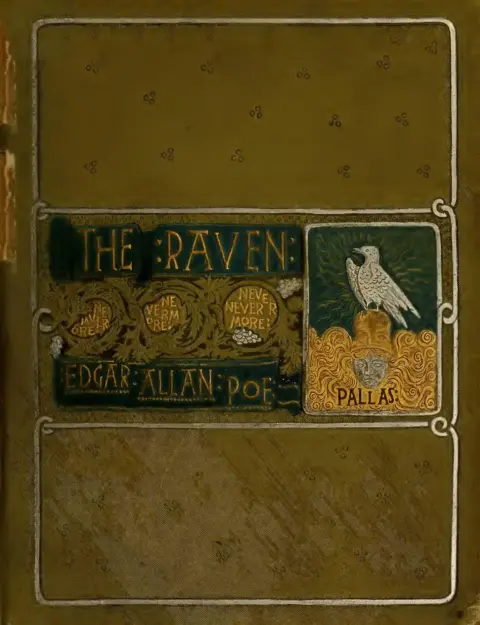
THE CLASSIC COLLECTION · 1845
"The Works of Edgar Allan Poe, The Raven Edition" by Edgar Allan Poe is a comprehensive collection of his literary output, likely compiled in the late 19th century. This collection spans various genres, including poetry, essays, and gothic tales, showcasing Poe's distinctive style and exploration of themes like love, death, and the macabre. The book presents significant works such as "The Raven," "The Tell-Tale Heart," "The Fall of the House of Usher," and many others, illustrating Poe's profound influence on American literature and his mastery of suspense and psychological depth. At the start of this collection, the reader is introduced to a preface that sets the stage for understanding Poe's life and literary journey, giving insights into the struggles he faced, both personally and professionally. The subsequent sections outline key works and achievements in his career, detailing his early poetry, notable prose tales, and his lasting impact on both poetry and fiction. The opening expresses deep admiration for Poe's unique genius, highlighting the interplay between his troubled life and his art, thus creating an engaging entry point for readers new to Poe's work or revisiting it with a fresh perspective.
Introduction adapted from the source catalogue; source summaries may be automatically generated.
Free to read · English · 450,336 words · No account needed
MAKE TIME FOR A GOOD BOOK
On by default. Untick to stop anonymous reading totals. Each page counts after 10 seconds in view. How this works.
Anonymous counting is on unless you have switched it off.
“‘Washish squashish squeak, Sinbad, hey-diddle diddle, grunt unt grumble, hiss, fiss, whiss,’ said he to me, one day after dinner—but I beg a thousand pardons, I had forgotten that your majesty is not conversant with the dialect of the Cock-neighs (so the man-animals were called; I presume because their language formed the connecting link between that of the horse and that of the rooster). With your permission, I will translate. ‘Washish squashish,’ and so forth:—that is to say, ‘I am happy to find, my dear Sinbad, that you are really a very excellent fellow; we are now about doing a thing which is called circumnavigating the globe; and since you are so desirous of seeing the world, I will strain a point and give you a free passage upon back of the beast.’”
When the Lady Scheherazade had proceeded thus far, relates the “Isitsöornot,” the king turned over from his left side to his right, and said:
“It is, in fact, very surprising, my dear queen, that you omitted, hitherto, these latter adventures of Sinbad. Do you know I think them exceedingly entertaining and strange?”
The king having thus expressed himself, we are told, the fair Scheherazade resumed her history in the following words:
“Sinbad went on in this manner with his narrative—‘I thanked the man-animal for its kindness, and soon found myself very much at home on the beast, which swam at a prodigious rate through the ocean; although the surface of the latter is, in that part of the world, by no means flat, but round like a pomegranate, so that we went—so to say—either up hill or down hill all the time.’
“That I think, was very singular,” interrupted the king.
“Nevertheless, it is quite true,” replied Scheherazade.
“I have my doubts,” rejoined the king; “but, pray, be so good as to go on with the story.”
“I will,” said the queen. “‘The beast,’ continued Sinbad to the caliph, ‘swam, as I have related, up hill and down hill until, at length, we arrived at an island, many hundreds of miles in circumference, but which, nevertheless, had been built in the middle of the sea by a colony of little things like caterpillars.’” (*1)
“Hum!” said the king.
“‘Leaving this island,’ said Sinbad—(for Scheherazade, it must be understood, took no notice of her husband’s ill-mannered ejaculation) ‘leaving this island, we came to another where the forests were of solid stone, and so hard that they shivered to pieces the finest-tempered axes with which we endeavoured to cut them down.’” (*2)
“Hum!” said the king, again; but Scheherazade, paying him no attention, continued in the language of Sinbad.
Your reading position is saved on this browser. Take it to another device with a library code. Reading pages adapt to text, rather than matching a printed edition.
Edgar Allan Poe

Rebecca Harding Davis & Thomas De Quincey & Charles Dickens & Nathaniel Hawthorne & Edward Bulwer Lytton, Baron Lytton & Edgar Allan Poe & Harriet Elizabeth Prescott Spofford
Edgar Allan Poe
Edgar Allan Poe
BEHIND THE BOOK
This eBook is for the use of anyone anywhere in the United States and most other parts of the world at no cost and with almost no restrictions whatsoever. You may copy it, give it away or re-use it under the terms of the Project Gutenberg License included with this eBook or online at www.gutenberg.org. If you are not located in the United States, you will have to check the laws of the country where you are located before using this eBook. Read the source licence.
The original source file, including credits and licence, is retained by this library. Request an original-format copy at no charge. Please include the book title and Project Gutenberg identifier #25525.
KEEP YOUR CURIOSITY GOING

David Patterson (Spirit) Hatch

David Patterson (Spirit) Hatch

David Patterson (Spirit) Hatch
Coulson Kernahan

Ralph Waldo Emerson

Maurice Baring