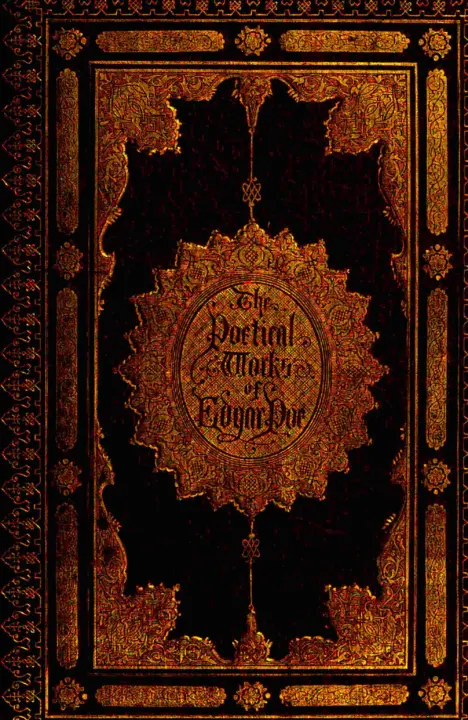
The poetical works of Edgar Allan Poe
Edgar Allan Poe
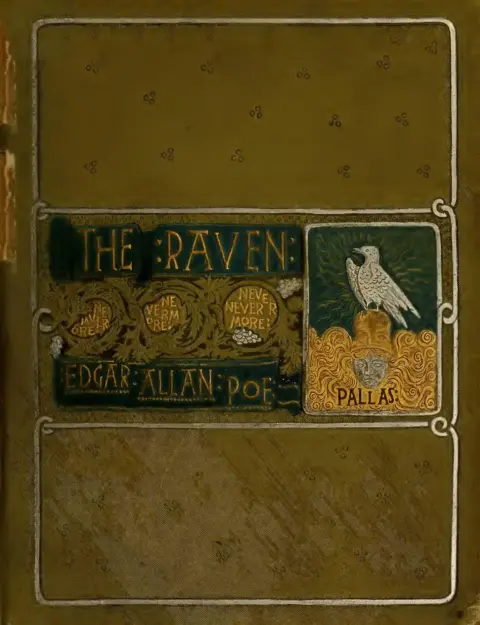
THE CLASSIC COLLECTION · 1845
"The Works of Edgar Allan Poe, The Raven Edition" by Edgar Allan Poe is a comprehensive collection of his literary output, likely compiled in the late 19th century. This collection spans various genres, including poetry, essays, and gothic tales, showcasing Poe's distinctive style and exploration of themes like love, death, and the macabre. The book presents significant works such as "The Raven," "The Tell-Tale Heart," "The Fall of the House of Usher," and many others, illustrating Poe's profound influence on American literature and his mastery of suspense and psychological depth. At the start of this collection, the reader is introduced to a preface that sets the stage for understanding Poe's life and literary journey, giving insights into the struggles he faced, both personally and professionally. The subsequent sections outline key works and achievements in his career, detailing his early poetry, notable prose tales, and his lasting impact on both poetry and fiction. The opening expresses deep admiration for Poe's unique genius, highlighting the interplay between his troubled life and his art, thus creating an engaging entry point for readers new to Poe's work or revisiting it with a fresh perspective.
Introduction adapted from the source catalogue; source summaries may be automatically generated.
Free to read · English · 450,336 words · No account needed
MAKE TIME FOR A GOOD BOOK
On by default. Untick to stop anonymous reading totals. Each page counts after 10 seconds in view. How this works.
Anonymous counting is on unless you have switched it off.
I was astounded. The Prefect appeared absolutely thunder-stricken. For some minutes he remained speechless and motionless, looking incredulously at my friend with open mouth, and eyes that seemed starting from their sockets; then, apparently recovering himself in some measure, he seized a pen, and after several pauses and vacant stares, finally filled up and signed a check for fifty thousand francs, and handed it across the table to Dupin. The latter examined it carefully and deposited it in his pocket-book; then, unlocking an escritoire, took thence a letter and gave it to the Prefect. This functionary grasped it in a perfect agony of joy, opened it with a trembling hand, cast a rapid glance at its contents, and then, scrambling and struggling to the door, rushed at length unceremoniously from the room and from the house, without having uttered a syllable since Dupin had requested him to fill up the check.
When he had gone, my friend entered into some explanations.
“The Parisian police,” he said, “are exceedingly able in their way. They are persevering, ingenious, cunning, and thoroughly versed in the knowledge which their duties seem chiefly to demand. Thus, when G—— detailed to us his mode of searching the premises at the Hotel D——, I felt entire confidence in his having made a satisfactory investigation—so far as his labors extended.”
“So far as his labors extended?” said I.
“Yes,” said Dupin. “The measures adopted were not only the best of their kind, but carried out to absolute perfection. Had the letter been deposited within the range of their search, these fellows would, beyond a question, have found it.”
I merely laughed—but he seemed quite serious in all that he said.
“The measures, then,” he continued, “were good in their kind, and well executed; their defect lay in their being inapplicable to the case, and to the man. A certain set of highly ingenious resources are, with the Prefect, a sort of Procrustean bed, to which he forcibly adapts his designs. But he perpetually errs by being too deep or too shallow for the matter in hand; and many a schoolboy is a better reasoner than he. I knew one about eight years of age, whose success at guessing in the game of ‘even and odd’ attracted universal admiration. This game is simple, and is played with marbles. One player holds in his hand a number of these toys, and demands of another whether that number is even or odd. If the guess is right, the guesser wins one; if wrong, he loses one. The boy to whom I allude won all the marbles of the school. Of course he had some principle of guessing; and this lay in mere observation and admeasurement of the astuteness of his opponents. For example, an arrant simpleton is his opponent, and, holding up his closed hand, asks, ‘are they even or odd?’ Our schoolboy replies, ‘odd,’ and loses; but upon the second trial he wins, for he then says to himself, ‘the simpleton had them even upon the first trial, and his amount of cunning is just sufficient to make him have them odd upon the second; I will therefore guess odd;’—he guesses odd, and wins. Now, with a simpleton a degree above the first, he would have reasoned thus: ‘This fellow finds that in the first instance I guessed odd, and, in the second, he will propose to himself, upon the first impulse, a simple variation from even to odd, as did the first simpleton; but then a second thought will suggest that this is too simple a variation, and finally he will decide upon putting it even as before. I will therefore guess even;’—he guesses even, and wins. Now this mode of reasoning in the schoolboy, whom his fellows termed ‘lucky,’—what, in its last analysis, is it?”
Your reading position is saved on this browser. Take it to another device with a library code. Reading pages adapt to text, rather than matching a printed edition.
Edgar Allan Poe

Rebecca Harding Davis & Thomas De Quincey & Charles Dickens & Nathaniel Hawthorne & Edward Bulwer Lytton, Baron Lytton & Edgar Allan Poe & Harriet Elizabeth Prescott Spofford
Edgar Allan Poe
Edgar Allan Poe
BEHIND THE BOOK
This eBook is for the use of anyone anywhere in the United States and most other parts of the world at no cost and with almost no restrictions whatsoever. You may copy it, give it away or re-use it under the terms of the Project Gutenberg License included with this eBook or online at www.gutenberg.org. If you are not located in the United States, you will have to check the laws of the country where you are located before using this eBook. Read the source licence.
The original source file, including credits and licence, is retained by this library. Request an original-format copy at no charge. Please include the book title and Project Gutenberg identifier #25525.
KEEP YOUR CURIOSITY GOING

David Patterson (Spirit) Hatch

David Patterson (Spirit) Hatch

David Patterson (Spirit) Hatch
Coulson Kernahan

Ralph Waldo Emerson

Maurice Baring