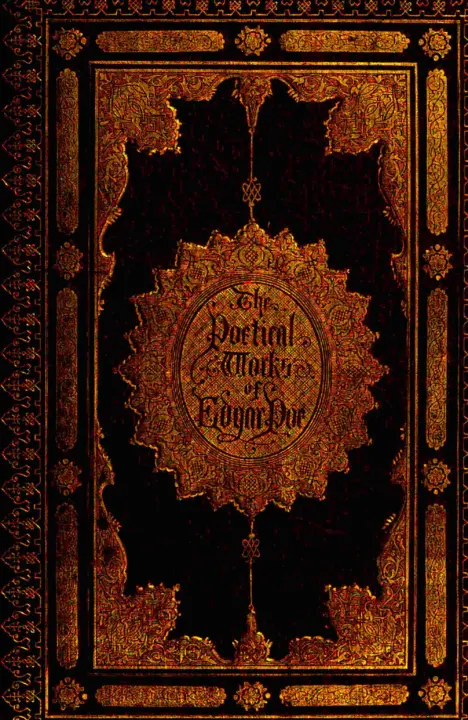
The poetical works of Edgar Allan Poe
Edgar Allan Poe
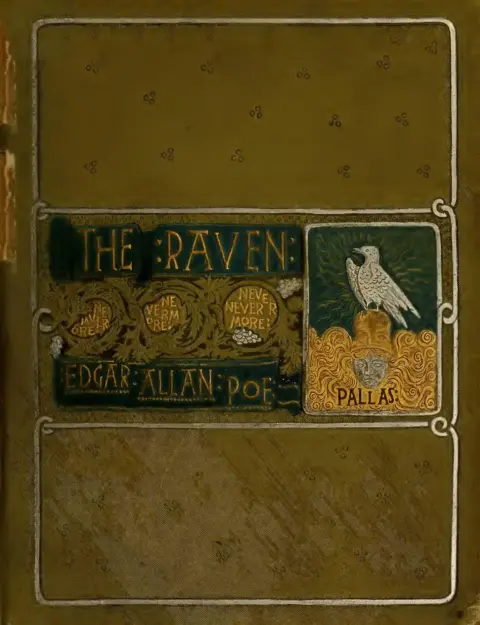
THE CLASSIC COLLECTION · 1845
"The Works of Edgar Allan Poe, The Raven Edition" by Edgar Allan Poe is a comprehensive collection of his literary output, likely compiled in the late 19th century. This collection spans various genres, including poetry, essays, and gothic tales, showcasing Poe's distinctive style and exploration of themes like love, death, and the macabre. The book presents significant works such as "The Raven," "The Tell-Tale Heart," "The Fall of the House of Usher," and many others, illustrating Poe's profound influence on American literature and his mastery of suspense and psychological depth. At the start of this collection, the reader is introduced to a preface that sets the stage for understanding Poe's life and literary journey, giving insights into the struggles he faced, both personally and professionally. The subsequent sections outline key works and achievements in his career, detailing his early poetry, notable prose tales, and his lasting impact on both poetry and fiction. The opening expresses deep admiration for Poe's unique genius, highlighting the interplay between his troubled life and his art, thus creating an engaging entry point for readers new to Poe's work or revisiting it with a fresh perspective.
Introduction adapted from the source catalogue; source summaries may be automatically generated.
Free to read · English · 450,336 words · No account needed
MAKE TIME FOR A GOOD BOOK
On by default. Untick to stop anonymous reading totals. Each page counts after 10 seconds in view. How this works.
Anonymous counting is on unless you have switched it off.
“But there are still other and stronger reasons for believing them so deposited, than any which I have as yet urged. And, now, let me beg your notice to the highly artificial arrangement of the articles. On the upper stone lay a white petticoat; on the second, a silk scarf; scattered around, were a parasol, gloves, and a pocket-handkerchief bearing the name, ‘Marie Rogêt.’ Here is just such an arrangement as would naturally be made by a not over-acute person wishing to dispose the articles naturally. But it is by no means a really natural arrangement. I should rather have looked to see the things all lying on the ground and trampled under foot. In the narrow limits of that bower, it would have been scarcely possible that the petticoat and scarf should have retained a position upon the stones, when subjected to the brushing to and fro of many struggling persons. ‘There was evidence,’ it is said, ‘of a struggle; and the earth was trampled, the bushes were broken,’—but the petticoat and the scarf are found deposited as if upon shelves. ‘The pieces of the frock torn out by the bushes were about three inches wide and six inches long. One part was the hem of the frock and it had been mended. They looked like strips torn off.’ Here, inadvertently, Le Soleil has employed an exceedingly suspicious phrase. The pieces, as described, do indeed ‘look like strips torn off;’ but purposely and by hand. It is one of the rarest of accidents that a piece is ‘torn off,’ from any garment such as is now in question, by the agency of a thorn. From the very nature of such fabrics, a thorn or nail becoming entangled in them, tears them rectangularly—divides them into two longitudinal rents, at right angles with each other, and meeting at an apex where the thorn enters—but it is scarcely possible to conceive the piece ‘torn off.’ I never so knew it, nor did you. To tear a piece off from such fabric, two distinct forces, in different directions, will be, in almost every case, required. If there be two edges to the fabric—if, for example, it be a pocket-handkerchief, and it is desired to tear from it a slip, then, and then only, will the one force serve the purpose. But in the present case the question is of a dress, presenting but one edge. To tear a piece from the interior, where no edge is presented, could only be effected by a miracle through the agency of thorns, and no one thorn could accomplish it. But, even where an edge is presented, two thorns will be necessary, operating, the one in two distinct directions, and the other in one. And this in the supposition that the edge is unhemmed. If hemmed, the matter is nearly out of the question. We thus see the numerous and great obstacles in the way of pieces being ‘torn off’ through the simple agency of ‘thorns;’ yet we are required to believe not only that one piece but that many have been so torn. ‘And one part,’ too, ‘was the hem of the frock!’ Another piece was ‘part of the skirt, not the hem,’—that is to say, was torn completely out through the agency of thorns, from the uncaged interior of the dress! These, I say, are things which one may well be pardoned for disbelieving; yet, taken collectedly, they form, perhaps, less of reasonable ground for suspicion, than the one startling circumstance of the articles’ having been left in this thicket at all, by any murderers who had enough precaution to think of removing the corpse. You will not have apprehended me rightly, however, if you suppose it my design to deny this thicket as the scene of the outrage. There might have been a wrong here, or, more possibly, an accident at Madame Deluc’s. But, in fact, this is a point of minor importance. We are not engaged in an attempt to discover the scene, but to produce the perpetrators of the murder. What I have adduced, notwithstanding the minuteness with which I have adduced it, has been with the view, first, to show the folly of the positive and headlong assertions of Le Soleil, but secondly and chiefly, to bring you, by the most natural route, to a further contemplation of the doubt whether this assassination has, or has not, been the work of a gang.
Your reading position is saved on this browser. Take it to another device with a library code. Reading pages adapt to text, rather than matching a printed edition.
Edgar Allan Poe

Rebecca Harding Davis & Thomas De Quincey & Charles Dickens & Nathaniel Hawthorne & Edward Bulwer Lytton, Baron Lytton & Edgar Allan Poe & Harriet Elizabeth Prescott Spofford
Edgar Allan Poe
Edgar Allan Poe
BEHIND THE BOOK
This eBook is for the use of anyone anywhere in the United States and most other parts of the world at no cost and with almost no restrictions whatsoever. You may copy it, give it away or re-use it under the terms of the Project Gutenberg License included with this eBook or online at www.gutenberg.org. If you are not located in the United States, you will have to check the laws of the country where you are located before using this eBook. Read the source licence.
The original source file, including credits and licence, is retained by this library. Request an original-format copy at no charge. Please include the book title and Project Gutenberg identifier #25525.
KEEP YOUR CURIOSITY GOING

David Patterson (Spirit) Hatch

David Patterson (Spirit) Hatch

David Patterson (Spirit) Hatch
Coulson Kernahan

Ralph Waldo Emerson

Maurice Baring