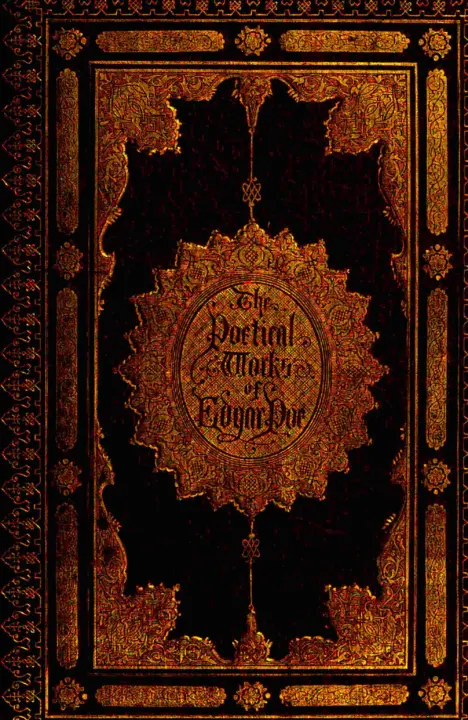
The poetical works of Edgar Allan Poe
Edgar Allan Poe
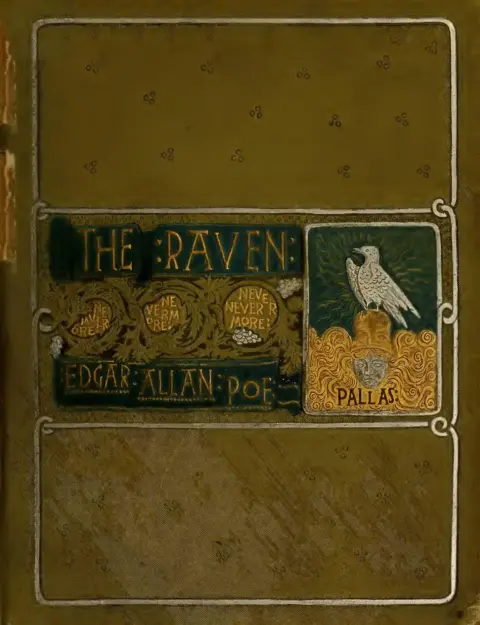
THE CLASSIC COLLECTION · 1845
"The Works of Edgar Allan Poe, The Raven Edition" by Edgar Allan Poe is a comprehensive collection of his literary output, likely compiled in the late 19th century. This collection spans various genres, including poetry, essays, and gothic tales, showcasing Poe's distinctive style and exploration of themes like love, death, and the macabre. The book presents significant works such as "The Raven," "The Tell-Tale Heart," "The Fall of the House of Usher," and many others, illustrating Poe's profound influence on American literature and his mastery of suspense and psychological depth. At the start of this collection, the reader is introduced to a preface that sets the stage for understanding Poe's life and literary journey, giving insights into the struggles he faced, both personally and professionally. The subsequent sections outline key works and achievements in his career, detailing his early poetry, notable prose tales, and his lasting impact on both poetry and fiction. The opening expresses deep admiration for Poe's unique genius, highlighting the interplay between his troubled life and his art, thus creating an engaging entry point for readers new to Poe's work or revisiting it with a fresh perspective.
Introduction adapted from the source catalogue; source summaries may be automatically generated.
Free to read · English · 450,336 words · No account needed
MAKE TIME FOR A GOOD BOOK
On by default. Untick to stop anonymous reading totals. Each page counts after 10 seconds in view. How this works.
Anonymous counting is on unless you have switched it off.
PART I. O! nothing earthly save the ray (Thrown back from flowers) of Beauty’s eye, As in those gardens where the day Springs from the gems of Circassy— O! nothing earthly save the thrill Of melody in woodland rill— Or (music of the passion-hearted) Joy’s voice so peacefully departed That like the murmur in the shell, Its echo dwelleth and will dwell— Oh, nothing of the dross of ours— Yet all the beauty—all the flowers That list our Love, and deck our bowers— Adorn yon world afar, afar— The wandering star. ’Twas a sweet time for Nesace—for there Her world lay lolling on the golden air, Near four bright suns—a temporary rest— An oasis in desert of the blest. * A star was discovered by Tycho Brahe which appeared suddenly in the heavens—attained, in a few days, a brilliancy surpassing that of Jupiter—then as suddenly disappeared, and has never been seen since. Away—away—‘mid seas of rays that roll Empyrean splendor o’er th’ unchained soul— The soul that scarce (the billows are so dense) Can struggle to its destin’d eminence— To distant spheres, from time to time, she rode, And late to ours, the favour’d one of God— But, now, the ruler of an anchor’d realm, She throws aside the sceptre—leaves the helm, And, amid incense and high spiritual hymns, Laves in quadruple light her angel limbs. Now happiest, loveliest in yon lovely Earth, Whence sprang the “Idea of Beauty” into birth, (Falling in wreaths thro’ many a startled star, Like woman’s hair ‘mid pearls, until, afar, It lit on hills Achaian, and there dwelt) She look’d into Infinity—and knelt. Rich clouds, for canopies, about her curled— Fit emblems of the model of her world— Seen but in beauty—not impeding sight Of other beauty glittering thro’ the light— A wreath that twined each starry form around, And all the opal’d air in color bound. All hurriedly she knelt upon a bed Of flowers: of lilies such as rear’d the head *On the fair Capo Deucato, and sprang So eagerly around about to hang Upon the flying footsteps of—deep pride— **Of her who lov’d a mortal—and so died. The Sephalica, budding with young bees, Uprear’d its purple stem around her knees: * On Santa Maura—olim Deucadia. **And gemmy flower, of Trebizond misnam’d— Inmate of highest stars, where erst it sham’d All other loveliness: its honied dew (The fabled nectar that the heathen knew) Deliriously sweet, was dropp’d from Heaven, And fell on gardens of the unforgiven In Trebizond—and on a sunny flower So like its own above that, to this hour, It still remaineth, torturing the bee With madness, and unwonted reverie: In Heaven, and all its environs, the leaf And blossom of the fairy plant, in grief Disconsolate linger—grief that hangs her head, Repenting follies that full long have fled, Heaving her white breast to the balmy air, Like guilty beauty, chasten’d, and more fair: Nyctanthes too, as sacred as the light She fears to perfume, perfuming the night: **And Clytia pondering between many a sun, While pettish tears adown her petals run: ***And that aspiring flower that sprang on Earth— And died, ere scarce exalted into birth, Bursting its odorous heart in spirit to wing Its way to Heaven, from garden of a king: * This flower is much noticed by Lewenhoeck and Tournefort. The bee, feeding upon its blossom, becomes intoxicated. ** Clytia—The Chrysanthemum Peruvianum, or, to employ a better-known term, the turnsol—which continually turns towards the sun, covers itself, like Peru, the country from which it comes, with dewy clouds which cool and refresh its flowers during the most violent heat of the day.—B. de St. Pierre. *** There is cultivated in the king’s garden at Paris, a species of serpentine aloes without prickles, whose large and beautiful flower exhales a strong odour of the vanilla, during the time of its expansion, which is very short. It does not blow till towards the month of July—you then perceive it gradually open its petals—expand them—fade and die.—St. Pierre. *And Valisnerian lotus thither flown From struggling with the waters of the Rhone: **And thy most lovely purple perfume, Zante! Isola d’oro!—Fior di Levante! ***And the Nelumbo bud that floats for ever With Indian Cupid down the holy river— Fair flowers, and fairy! to whose care is given ****To bear the Goddess’ song, in odors, up to Heaven: “Spirit! that dwellest where, In the deep sky, The terrible and fair, In beauty vie! Beyond the line of blue— The boundary of the star Which turneth at the view Of thy barrier and thy bar— Of the barrier overgone By the comets who were cast From their pride, and from their throne To be drudges till the last— To be carriers of fire (The red fire of their heart) With speed that may not tire And with pain that shall not part— * There is found, in the Rhone, a beautiful lily of the Valisnerian kind. Its stem will stretch to the length of three or four feet—thus preserving its head above water in the swellings of the river. ** The Hyacinth. *** It is a fiction of the Indians, that Cupid was first seen floating in one of these down the river Ganges—and that he still loves the cradle of his childhood. **** And golden vials full of odors which are the prayers of the saints. —Rev. St. John. Who livest—that we know— In Eternity—we feel— But the shadow of whose brow What spirit shall reveal? Tho’ the beings whom thy Nesace, Thy messenger hath known Have dream’d for thy Infinity *A model of their own— Thy will is done, Oh, God! The star hath ridden high Thro’ many a tempest, but she rode Beneath thy burning eye; And here, in thought, to thee— In thought that can alone Ascend thy empire and so be A partner of thy throne— * The Humanitarians held that God was to be understood as having a really human form.—Vide Clarke’s Sermons, vol. 1, page 26, fol. edit. The drift of Milton’s argument, leads him to employ language which would appear, at first sight, to verge upon their doctrine; but it will be seen immediately, that he guards himself against the charge of having adopted one of the most ignorant errors of the dark ages of the church.—Dr. Sumner’s Notes on Milton’s Christian Doctrine. This opinion, in spite of many testimonies to the contrary, could never have been very general. Andeus, a Syrian of Mesopotamia, was condemned for the opinion, as heretical. He lived in the beginning of the fourth century. His disciples were called Anthropmorphites.—Vide Du Pin. Among Milton’s poems are these lines:— Dicite sacrorum præsides nemorum Deæ, &c. Quis ille primus cujus ex imagine Natura solers finxit humanum genus? Eternus, incorruptus, æquævus polo, Unusque et universus exemplar Dei.—And afterwards, Non cui profundum Cæcitas lumen dedit Dircæus augur vidit hunc alto sinu, &c. *By winged Fantasy, My embassy is given, Till secrecy shall knowledge be In the environs of Heaven.” She ceas’d—and buried then her burning cheek Abash’d, amid the lilies there, to seek A shelter from the fervour of His eye; For the stars trembled at the Deity. She stirr’d not—breath’d not—for a voice was there How solemnly pervading the calm air! A sound of silence on the startled ear Which dreamy poets name “the music of the sphere.” Ours is a world of words: Quiet we call “Silence”—which is the merest word of all. All Nature speaks, and ev’n ideal things Flap shadowy sounds from visionary wings— But ah! not so when, thus, in realms on high The eternal voice of God is passing by, And the red winds are withering in the sky! ** “What tho’ in worlds which sightless cycles run, Link’d to a little system, and one sun— Where all my love is folly and the crowd Still think my terrors but the thunder cloud, The storm, the earthquake, and the ocean-wrath— (Ah! will they cross me in my angrier path?) What tho’ in worlds which own a single sun The sands of Time grow dimmer as they run, * Seltsamen Tochter Jovis Seinem Schosskinde Der Phantasie.—Göethe. ** Sightless—too small to be seen—Legge. Yet thine is my resplendency, so given To bear my secrets thro’ the upper Heaven. Leave tenantless thy crystal home, and fly, With all thy train, athwart the moony sky— *Apart—like fire-flies in Sicilian night, And wing to other worlds another light! Divulge the secrets of thy embassy To the proud orbs that twinkle—and so be To ev’ry heart a barrier and a ban Lest the stars totter in the guilt of man!” Up rose the maiden in the yellow night, The single-mooned eve!—on Earth we plight Our faith to one love—and one moon adore— The birth-place of young Beauty had no more. As sprang that yellow star from downy hours Up rose the maiden from her shrine of flowers, And bent o’er sheeny mountain and dim plain **Her way—but left not yet her Therasæan reign. * I have often noticed a peculiar movement of the fire-flies; —they will collect in a body and fly off, from a common centre, into innumerable radii. ** Therasæa, or Therasea, the island mentioned by Seneca, which, in a moment, arose from the sea to the eyes of astonished mariners. Part II. HIGH on a mountain of enamell’d head— Such as the drowsy shepherd on his bed Of giant pasturage lying at his ease, Raising his heavy eyelid, starts and sees With many a mutter’d “hope to be forgiven” What time the moon is quadrated in Heaven— Of rosy head, that towering far away Into the sunlit ether, caught the ray Of sunken suns at eve—at noon of night, While the moon danc’d with the fair stranger light— Uprear’d upon such height arose a pile Of gorgeous columns on th’ unburthen’d air, Flashing from Parian marble that twin smile Far down upon the wave that sparkled there, And nursled the young mountain in its lair. *Of molten stars their pavement, such as fall Thro’ the ebon air, besilvering the pall Of their own dissolution, while they die— Adorning then the dwellings of the sky. A dome, by linked light from Heaven let down, Sat gently on these columns as a crown— A window of one circular diamond, there, Look’d out above into the purple air, * Some star which, from the ruin’d roof Of shak’d Olympus, by mischance, did fall.—Milton. And rays from God shot down that meteor chain And hallow’d all the beauty twice again, Save when, between th’ Empyrean and that ring, Some eager spirit flapp’d his dusky wing. But on the pillars Seraph eyes have seen The dimness of this world: that greyish green That Nature loves the best for Beauty’s grave Lurk’d in each cornice, round each architrave— And every sculptur’d cherub thereabout That from his marble dwelling peeréd out Seem’d earthly in the shadow of his niche— Achaian statues in a world so rich? *Friezes from Tadmor and Persepolis— From Balbec, and the stilly, clear abyss **Of beautiful Gomorrah! O, the wave Is now upon thee—but too late to save! Sound loves to revel in a summer night: Witness the murmur of the grey twilight * Voltaire, in speaking of Persepolis, says, “Je connois bien l’admiration qu’inspirent ces ruines—mais un palais erigé au pied d’une chaine des rochers sterils—peut il être un chef d’oevure des arts!” [Voila les arguments de M. Voltaire.] ** “Oh! the wave”—Ula Degusi is the Turkish appellation; but, on its own shores, it is called Bahar Loth, or Almotanah. There were undoubtedly more than two cities engluphed in the “dead sea.” In the valley of Siddim were five—Adrah, Zeboin, Zoar, Sodom and Gomorrah. Stephen of Byzantium mentions eight, and Strabo thirteeen, (engulphed) —but the last is out of all reason. It is said, (Tacitus, Strabo, Josephus, Daniel of St. Saba, Nau, Maundrell, Troilo, D’Arvieux) that after an excessive drought, the vestiges of columns, walls, &c. are seen above the surface. At any season, such remains may be discovered by looking down into the transparent lake, and at such distances as would argue the existence of many settlements in the space now usurped by the ‘Asphaltites.’ *That stole upon the ear, in Eyraco, Of many a wild star-gazer long ago— That stealeth ever on the ear of him Who, musing, gazeth on the distance dim. And sees the darkness coming as a cloud— ***Is not its form—its voice—most palpable and loud? But what is this?—it cometh—and it brings A music with it—’tis the rush of wings— A pause—and then a sweeping, falling strain And Nesace is in her halls again. From the wild energy of wanton haste Her cheeks were flushing, and her lips apart; And zone that clung around her gentle waist Had burst beneath the heaving of her heart. Within the centre of that hall to breathe She paus’d and panted, Zanthe! all beneath, The fairy light that kiss’d her golden hair And long’d to rest, yet could but sparkle there! ***Young flowers were whispering in melody To happy flowers that night—and tree to tree; Fountains were gushing music as they fell In many a star-lit grove, or moon-lit dell; Yet silence came upon material things— Fair flowers, bright waterfalls and angel wings— And sound alone that from the spirit sprang Bore burthen to the charm the maiden sang: * Eyraco—Chaldea. ** I have often thought I could distinctly hear the sound of the darkness as it stole over the horizon. *** Fairies use flowers for their charactery.—Merry Wives of Windsor. [William Shakespeare] “’Neath blue-bell or streamer— Or tufted wild spray That keeps, from the dreamer, *The moonbeam away— Bright beings! that ponder, With half closing eyes, On the stars which your wonder Hath drawn from the skies, Till they glance thro’ the shade, and Come down to your brow Like—eyes of the maiden Who calls on you now— Arise! from your dreaming In violet bowers, To duty beseeming These star-litten hours— And shake from your tresses Encumber’d with dew The breath of those kisses That cumber them too— (O! how, without you, Love! Could angels be blest?) Those kisses of true love That lull’d ye to rest! Up!—shake from your wing Each hindering thing: The dew of the night— It would weigh down your flight; And true love caresses— O! leave them apart! * In Scripture is this passage—“The sun shall not harm thee by day, nor the moon by night.” It is perhaps not generally known that the moon, in Egypt, has the effect of producing blindness to those who sleep with the face exposed to its rays, to which circumstance the passage evidently alludes. They are light on the tresses, But lead on the heart. Ligeia! Ligeia! My beautiful one! Whose harshest idea Will to melody run, O! is it thy will On the breezes to toss? Or, capriciously still, *Like the lone Albatross, Incumbent on night (As she on the air) To keep watch with delight On the harmony there? Ligeia! whatever Thy image may be, No magic shall sever Thy music from thee. Thou hast bound many eyes In a dreamy sleep— But the strains still arise Which thy vigilance keep— The sound of the rain Which leaps down to the flower, And dances again In the rhythm of the shower— **The murmur that springs From the growing of grass * The Albatross is said to sleep on the wing. ** I met with this idea in an old English tale, which I am now unable to obtain and quote from memory:—“The verie essence and, as it were, springe-heade, and origine of all musiche is the verie pleasaunte sounde which the trees of the forest do make when they growe.” Are the music of things— But are modell’d, alas!— Away, then my dearest, O! hie thee away To springs that lie clearest Beneath the moon-ray— To lone lake that smiles, In its dream of deep rest, At the many star-isles That enjewel its breast— Where wild flowers, creeping, Have mingled their shade, On its margin is sleeping Full many a maid— Some have left the cool glade, and * Have slept with the bee— Arouse them my maiden, On moorland and lea— Go! breathe on their slumber, All softly in ear, The musical number They slumber’d to hear— For what can awaken An angel so soon * The wild bee will not sleep in the shade if there be moonlight. The rhyme in this verse, as in one about sixty lines before, has an appearance of affectation. It is, however, imitated from Sir W. Scott, or rather from Claud Halcro—in whose mouth I admired its effect: O! were there an island, Tho’ ever so wild Where woman might smile, and No man be beguil’d, &c. Whose sleep hath been taken Beneath the cold moon, As the spell which no slumber Of witchery may test, The rythmical number Which lull’d him to rest?” Spirits in wing, and angels to the view, A thousand seraphs burst th’ Empyrean thro’, Young dreams still hovering on their drowsy flight— Seraphs in all but “Knowledge,” the keen light That fell, refracted, thro’ thy bounds, afar O Death! from eye of God upon that star: Sweet was that error—sweeter still that death— Sweet was that error—ev’n with us the breath Of science dims the mirror of our joy— To them ’twere the Simoom, and would destroy— For what (to them) availeth it to know That Truth is Falsehood—or that Bliss is Woe? Sweet was their death—with them to die was rife With the last ecstacy of satiate life— Beyond that death no immortality— But sleep that pondereth and is not “to be”— And there—oh! may my weary spirit dwell— *Apart from Heaven’s Eternity—and yet how far from Hell! * With the Arabians there is a medium between Heaven and Hell, where men suffer no punishment, but yet do not attain that tranquil and even happiness which they suppose to be characteristic of heavenly enjoyment. Un no rompido sueno— Un dia puro—allegre—libre Quiera— Libre de amor—de zelo— De odio—de esperanza—de rezelo.—Luis Ponce de Leon. Sorrow is not excluded from “Al Aaraaf,” but it is that sorrow which the living love to cherish for the dead, and which, in some minds, resembles the delirium of opium. The passionate excitement of Love and the buoyancy of spirit attendant upon intoxication are its less holy pleasures— the price of which, to those souls who make choice of “Al Aaraaf” as their residence after life, is final death and annihilation. What guilty spirit, in what shrubbery dim, Heard not the stirring summons of that hymn? But two: they fell: for Heaven no grace imparts To those who hear not for their beating hearts. A maiden-angel and her seraph-lover— O! where (and ye may seek the wide skies over) Was Love, the blind, near sober Duty known? *Unguided Love hath fallen—‘mid “tears of perfect moan.” He was a goodly spirit—he who fell: A wanderer by moss-y-mantled well— A gazer on the lights that shine above— A dreamer in the moonbeam by his love: What wonder? For each star is eye-like there, And looks so sweetly down on Beauty’s hair— And they, and ev’ry mossy spring were holy To his love-haunted heart and melancholy. The night had found (to him a night of wo) Upon a mountain crag, young Angelo— Beetling it bends athwart the solemn sky, And scowls on starry worlds that down beneath it lie. Here sate he with his love—his dark eye bent With eagle gaze along the firmament: Now turn’d it upon her—but ever then It trembled to the orb of EARTH again. “Iante, dearest, see! how dim that ray! How lovely ’tis to look so far away! * There be tears of perfect moan Wept for thee in Helicon.—Milton. She seem’d not thus upon that autumn eve I left her gorgeous halls—nor mourn’d to leave. That eve—that eve—I should remember well— The sun-ray dropp’d, in Lemnos, with a spell On th’Arabesque carving of a gilded hall Wherein I sate, and on the draperied wall— And on my eye-lids—O the heavy light! How drowsily it weigh’d them into night! On flowers, before, and mist, and love they ran With Persian Saadi in his Gulistan: But O that light!—I slumber’d—Death, the while, Stole o’er my senses in that lovely isle So softly that no single silken hair Awoke that slept—or knew that it was there. The last spot of Earth’s orb I trod upon *Was a proud temple call’d the Parthenon— More beauty clung around her column’d wall **Than ev’n thy glowing bosom beats withal, And when old Time my wing did disenthral Thence sprang I—as the eagle from his tower, And years I left behind me in an hour. What time upon her airy bounds I hung One half the garden of her globe was flung Unrolling as a chart unto my view— Tenantless cities of the desert too! Ianthe, beauty crowded on me then, And half I wish’d to be again of men.” “My Angelo! and why of them to be? A brighter dwelling-place is here for thee— * It was entire in 1687—the most elevated spot in Athens. ** Shadowing more beauty in their airy brows Than have the white breasts of the Queen of Love.—Marlowe. And greener fields than in yon world above, And women’s loveliness—and passionate love.” “But, list, Ianthe! when the air so soft *Fail’d, as my pennon’d spirit leapt aloft, Perhaps my brain grew dizzy—but the world I left so late was into chaos hurl’d— Sprang from her station, on the winds apart, And roll’d, a flame, the fiery Heaven athwart. Methought, my sweet one, then I ceased to soar And fell—not swiftly as I rose before, But with a downward, tremulous motion thro’ Light, brazen rays, this golden star unto! Nor long the measure of my falling hours, For nearest of all stars was thine to ours— Dread star! that came, amid a night of mirth, A red Dædalion on the timid Earth. “We came—and to thy Earth—but not to us Be given our lady’s bidding to discuss: We came, my love; around, above, below, Gay fire-fly of the night we come and go, Nor ask a reason save the angel-nod She grants to us, as granted by her God— But, Angelo, than thine grey Time unfurl’d Never his fairy wing o’er fairier world! Dim was its little disk, and angel eyes Alone could see the phantom in the skies, When first Al Aaraaf knew her course to be Headlong thitherward o’er the starry sea— But when its glory swell’d upon the sky, As glowing Beauty’s bust beneath man’s eye, * Pennon—for pinion.—Milton. We paus’d before the heritage of men, And thy star trembled—as doth Beauty then!” Thus, in discourse, the lovers whiled away The night that waned and waned and brought no day. They fell: for Heaven to them no hope imparts Who hear not for the beating of their hearts.
Your reading position is saved on this browser. Take it to another device with a library code. Reading pages adapt to text, rather than matching a printed edition.
Edgar Allan Poe

Rebecca Harding Davis & Thomas De Quincey & Charles Dickens & Nathaniel Hawthorne & Edward Bulwer Lytton, Baron Lytton & Edgar Allan Poe & Harriet Elizabeth Prescott Spofford
Edgar Allan Poe
Edgar Allan Poe
BEHIND THE BOOK
This eBook is for the use of anyone anywhere in the United States and most other parts of the world at no cost and with almost no restrictions whatsoever. You may copy it, give it away or re-use it under the terms of the Project Gutenberg License included with this eBook or online at www.gutenberg.org. If you are not located in the United States, you will have to check the laws of the country where you are located before using this eBook. Read the source licence.
The original source file, including credits and licence, is retained by this library. Request an original-format copy at no charge. Please include the book title and Project Gutenberg identifier #25525.
KEEP YOUR CURIOSITY GOING

David Patterson (Spirit) Hatch

David Patterson (Spirit) Hatch

David Patterson (Spirit) Hatch
Coulson Kernahan

Ralph Waldo Emerson

Maurice Baring