
The Writing of News A Handbook with Chapters on Newspaper Correspondence and Copy Reading
Charles G. (Charles Griffith) Ross
THE CLASSIC COLLECTION · 1900
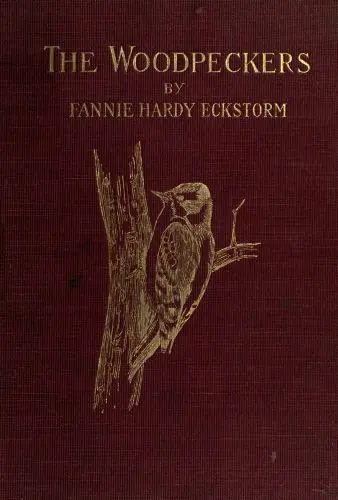
"The Woodpeckers" by Fannie Hardy Eckstorm is a natural history text written in the late 19th century. The book focuses specifically on the fascinating world of woodpeckers, exploring their characteristics, behaviors, and roles within the ecosystem. It serves as both a guide for identifying various species of woodpeckers and an invitation to observe these unique birds more closely in their natural habitats. At the start of the book, the author introduces the concept of nature as a series of riddles to be solved, much like the ancient Sphinx. Eckstorm aims to demystify the world of woodpeckers, providing readers with practical knowledge on how to recognize them by their distinctive silhouettes, colors, and behaviors. The opening portion covers key identifying traits of woodpeckers, such as their clinging posture and unique characteristics of their bills and feet, setting the stage for a thorough exploration of their ecological importance and intriguing habits that will follow in subsequent chapters.
Introduction adapted from the source catalogue; source summaries may be automatically generated.
Free to read · English · 27,335 words · No account needed
MAKE TIME FOR A GOOD BOOK
On by default. Untick to stop anonymous reading totals. Each page counts after 10 seconds in view. How this works.
Anonymous counting is on unless you have switched it off.
g^2 Grayish white and black; sides closely barred (i).
i^1 Back plain black, white stripe down side of throat. Female of Arctic Three-toed Woodpecker. 9.
i^2 Back with interrupted white stripe, white line down side of throat. Female of American Three-toed Woodpecker. 10. (NOTE.--The males are similar with the addition of the yellow crown. The three toes cannot ordinarily be seen in life.)
g^3 Yellowish (often dingy or smutty), white and black; under parts yellowish; back varied with white, no line nor streak; rump white; white wing-bars (j).
j^1 Breast with black patch; head of adult with red
patches.
Yellow-bellied Sapsucker. 11.
j^2 Breast and head red.
Red-breasted Sapsucker. 12.
f^2 Back barred with white; wings spotted or barred with
white (k).
k^1 Belly white; ear coverts white.
Red-cockaded Woodpecker. 4.
k^2 Belly white; forehead black.
Nuttall's Woodpecker. 6.
k^3 Belly smoky brown; forehead and breast same. Texan Woodpecker. 5.
k^4 Belly sulphur or lemon yellow.
Female of Williamson's Woodpecker. 13.
k^5 Belly pinkish red.
Red-bellied Woodpecker. 18.
k^6 Belly yellow, hind neck and forehead orange. Golden-fronted Woodpecker. 19.
k^7 Belly yellow, hind neck brown.
Gila Woodpecker. 20.
The following are descriptions of all the species of Woodpeckers found in North America, arranged in their proper genera and in the order given in the check list of the American Ornithologists' Union, 1895; with the range of species and subspecies as defined by the same authority or by Bendire's "Life Histories of North American Birds."
1. CAMPEPHILUS PRINCIPALIS, Ivory-billed Woodpecker. Glossy black except white secondaries (very conspicuous) and white stripe from beneath ear down neck and shoulders; white nasal tufts; bill white. Both sexes crested; [M] with scarlet occipital crest, [F] with crest black. Iris yellow. 20 inches. Cypress swamps of Gulf States, locally distributed. The largest, shyest, and rarest of our woodpeckers.
2. DRYOBATES VILLOSUS, Hairy Woodpecker. Black and white. Upper parts glossy black with a broad white stripe down the back; wings thickly spotted with white; under parts white; three outer pairs of tail feathers white; two white and two black stripes on sides of head; nasal tufts brownish white. [M] with scarlet occipital patch. 9-10 inches. Eastern United States except South Atlantic and Gulf States, with the following subspecies, all the races being resident the year round, and breeding in most places where they are found:--
a. D. v. leucomelas, Northern Hairy Woodpecker. 10-11 inches.
Larger, whiter.
British America.
b. D. v. audubonii, Southern Hairy Woodpecker. 8-8.5 inches. Smaller, more dingy white. South Atlantic and Gulf States.
c. D. v. harrisii, Harris's Woodpecker. 9-10 inches. Upper parts with less white, few wing spots, under parts soiled white or smoky brown; larger than next. Northwest coast, northern California to Alaska.
Your reading position is saved on this browser. Take it to another device with a library code. Reading pages adapt to text, rather than matching a printed edition.
BEHIND THE BOOK
This eBook is for the use of anyone anywhere in the United States and most other parts of the world at no cost and with almost no restrictions whatsoever. You may copy it, give it away or re-use it under the terms of the Project Gutenberg License included with this eBook or online at www.gutenberg.org. If you are not located in the United States, you will have to check the laws of the country where you are located before using this eBook. Read the source licence.
The original source file, including credits and licence, is retained by this library. Request an original-format copy at no charge. Please include the book title and Project Gutenberg identifier #35062.
KEEP YOUR CURIOSITY GOING
Charles G. (Charles Griffith) Ross
Hannah Webster Foster

Emily Lawless
Edwin Hamlin Carr

Charles De Lano Hine
Andrew Ure