
The Writing of News A Handbook with Chapters on Newspaper Correspondence and Copy Reading
Charles G. (Charles Griffith) Ross
THE CLASSIC COLLECTION · 1900
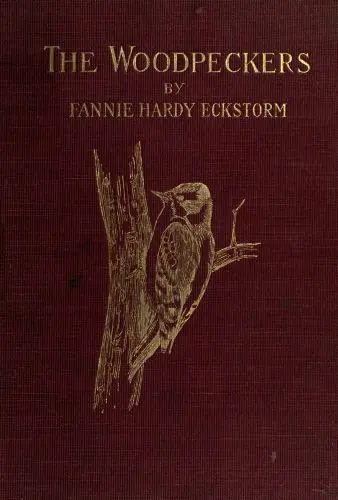
"The Woodpeckers" by Fannie Hardy Eckstorm is a natural history text written in the late 19th century. The book focuses specifically on the fascinating world of woodpeckers, exploring their characteristics, behaviors, and roles within the ecosystem. It serves as both a guide for identifying various species of woodpeckers and an invitation to observe these unique birds more closely in their natural habitats. At the start of the book, the author introduces the concept of nature as a series of riddles to be solved, much like the ancient Sphinx. Eckstorm aims to demystify the world of woodpeckers, providing readers with practical knowledge on how to recognize them by their distinctive silhouettes, colors, and behaviors. The opening portion covers key identifying traits of woodpeckers, such as their clinging posture and unique characteristics of their bills and feet, setting the stage for a thorough exploration of their ecological importance and intriguing habits that will follow in subsequent chapters.
Introduction adapted from the source catalogue; source summaries may be automatically generated.
Free to read · English · 27,335 words · No account needed
MAKE TIME FOR A GOOD BOOK
On by default. Untick to stop anonymous reading totals. Each page counts after 10 seconds in view. How this works.
Anonymous counting is on unless you have switched it off.
The rounded tail is no doubt the best; but we have yet to decide whether the sharper curve is more advantageous than the lesser curve, as we thought probable from our observations. And there is still another deduction from our experiment which we did not make. If in the rounded tail the middle pairs of feathers do most of the work, and if use increases the size and efficiency of a part, which is almost an axiom in science, we should expect to find the middle tail feathers not only strongest in all woodpeckers but also strongest in increasing ratio in the species that use them most. To determine this we must study the use of the tail and the structure and shape of the individual tail feathers.
We should remark, perhaps, that the woodpecker's tail is always composed of twelve feathers--ten pointed rectrices and two tiny abortive feathers so short and so hidden that no attention is paid to them. The ten principal feathers are arranged in corresponding pairs numbered from the outside to the centre as first, second, third, fourth, and fifth pairs.
In the flickers all ten feathers have wide vanes and are similar in everything but the shape; all are more or less pointed. The flicker's tail looks and feels very much like that of any other bird except that the shafts are stiffer and the vanes contract to an acuminate tip. But as we take up the other species we notice a change, not only in the shape of the feathers but much more in their texture and in the difference between the various pairs. While in the flicker four pairs out of five are pointed and all are rigid, in the downy and the hairy three pairs out of five seem to be too soft to give any support, the sharp points have disappeared, and the tail has lost much of its stiffness. The two middle pairs of feathers are the only ones capable of doing much work and they are wavering and infirm at the tips where we should expect them to be strongest. In the logcock it is about the same,--two pairs are apparently unfit for work, one pair is infirm, and the two middle pairs are compelled to give all the support, except the little contributed by the third pair. In the ivory-billed woodpecker the two outer pairs are of no assistance and the three central ones do the work, and here again we find the base of the rectrices rigid and inflexible and the last fourth of their length weak and yielding. But what a difference in the individual feather! It is well able to do all the work; for, except for that weak tip which we cannot now explain, it is one of the toughest and strongest feathers to be found. The shaft is broad and flat, as elastic as a watch-spring; it looks like a band of burnished steel as it runs down between the vanes. And the vanes themselves are of a very curious pattern. They curl under at the edges so that we do not see their whole width, and the barbs crowd so thickly upon each other that they over-lie until they present an edge three or four broad. Indeed, the under side of one of these tail feathers reminds one of nothing so much as of the under side of a star-fish's arm with its two long lines of ambulacral suckers on each side of a central groove, so thickly do the spiny vanes of these strong rectrices over ride and crowd together. These spines lay hold of the bark of the tree, rank after rank, hundreds of bristling points that cannot be dislodged except by a forward motion of the bird or by lifting the tail. Compared with this, the spiny points on the flicker's tail were a poor invention. This device, which takes hold like a wool card, or a wire hair-brush, cannot slip from place. We begin to see, too, the use of that weak and flexible tip; it is to press down upon the tree-trunk a flat surface sufficiently large to hold hundreds of these little spiny points against the bark. The ivory-bill braces against this with the stiff upper part of the shaft and has a support that will not slip. The upper part of the shaft acts like a spring also, and adds tremendous force to the blow of the bill. Watch a hairy woodpecker when hard at work and see how his legs and tail form a triangular base by bracing against each other, and how his blow is delivered, not with the head alone, but with the whole body, swinging from the hips, the apex of the triangle on which he rests. He swings like a man wielding a sledge hammer, and to the strength of his neck adds the weight of his body, the spring of his tail, and the momentum of a blow delivered from a greater height. When the little hairy woodpecker does so much with his weak body, we can imagine what great birds like the logcock and the ivory-billed woodpecker, with their tremendous beaks, their huge claws, their springy tails, and their great physical strength can do. They are magnificent birds, the terror of all the grubs that hide in tree-trunks.
Your reading position is saved on this browser. Take it to another device with a library code. Reading pages adapt to text, rather than matching a printed edition.
BEHIND THE BOOK
This eBook is for the use of anyone anywhere in the United States and most other parts of the world at no cost and with almost no restrictions whatsoever. You may copy it, give it away or re-use it under the terms of the Project Gutenberg License included with this eBook or online at www.gutenberg.org. If you are not located in the United States, you will have to check the laws of the country where you are located before using this eBook. Read the source licence.
The original source file, including credits and licence, is retained by this library. Request an original-format copy at no charge. Please include the book title and Project Gutenberg identifier #35062.
KEEP YOUR CURIOSITY GOING
Charles G. (Charles Griffith) Ross
Hannah Webster Foster

Emily Lawless
Edwin Hamlin Carr

Charles De Lano Hine
Andrew Ure