THE CLASSIC COLLECTION✦An outlaw’s diary: the CommuneCLASSIC FREE BOOKS
An outlaw’s diary: the Commune
Cécile Tormay
THE CLASSIC COLLECTION · 1906
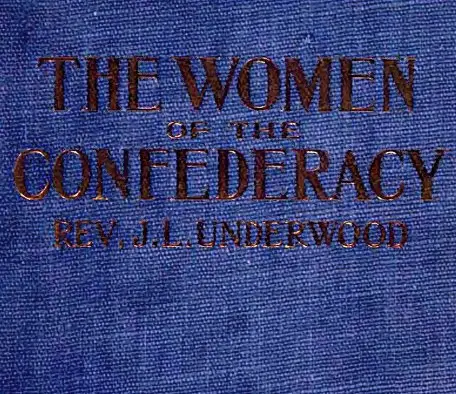
"The Women of the Confederacy" by J. L. Underwood is a historical account written in the early 20th century. The book focuses on the profound heroism and sacrifices of women in the Confederacy during the Civil War and the Reconstruction period. It examines their trials, motivations, and ultimate resilience, illustrating their critical role in supporting the Confederate cause and how they managed to persevere despite significant adversity. At the start of the work, Underwood introduces the reader to the heroic actions of Southern women, highlighted through various tributes and testimonials from prominent figures of the time, such as Jefferson Davis and Stonewall Jackson. These testimonials detail the women's invaluable contributions, from knitting uniforms to nursing wounded soldiers, and emphasize the emotional sacrifices they made as they supported their loved ones at war. Through poignant anecdotes, the opening sets the tone for an exploration of the strength and determination of Confederate women, portraying them as essential pillars of the Southern home front during a tumultuous period in American history.
Introduction adapted from the source catalogue; source summaries may be automatically generated.
Free to read · English · 104,120 words · No account needed
MAKE TIME FOR A GOOD BOOK
On by default. Untick to stop anonymous reading totals. Each page counts after 10 seconds in view. How this works.
Anonymous counting is on unless you have switched it off.
Nevertheless, the young ladies did not stir. They had half mounted the board fence, and in this elevated position were exposed to a close and dangerous fire; more than one bullet burying itself in the wood close to their persons. But they did not move--and this for a reason more creditable than mere curiosity to witness the engagement, which may, however, have counted for something. This attracted them, but they were engaged in "doing good," too. It was of the last importance that the men should know where they could cross the river.
"Where is the nearest ford?" they shouted.
"In the woods there," was the reply of one of the young ladies, pointing with her hand, and not moving.
"How can we reach it?"
"Through the gate," and waving her hand, the speaker directed the rest, amid a storm of bullets burying themselves in the fence close beside her.
The men went at full gallop towards the ford. Last of all came Mountjoy--but Mountjoy, furious, foaming almost at the mouth, on fire with indignation, and uttering oaths so frightful that they terrified the young ladies much more than the balls or the Federal cavalry darting up the hill.
The partisan had scarcely disappeared in the woods, when the enemy rushed up, and demanded which way the Confederates had taken.
"I will not tell you," was the reply of the youngest girl. The trooper drew a pistol, and cocking it, levelled it at her head.
"Which way?" he thundered.
The young lady shrunk from the muzzle, and said: "How do I know?"
"Move on!" resounded from the lips of the officer in command, and the column rushed by, nearly trampling upon the ladies, who ran into the house.
Here a new incident greeted them, and one sufficiently tragic. Before the door, sitting on his horse, was a trooper, clad in blue--and at sight of him the ladies shrunk back. A second glance showed them that he was bleeding to death from a mortal wound. The bullet had entered his side, traversed the body, issued from the opposite side, inflicting a wound which rendered death almost certain.
"Take me from my horse!" murmured the wounded man, stretching out his
arms and tottering.
The young girls ran to him.
"Who are you--one of the Yankees?" they exclaimed.
"Oh, no!" was the faint reply. "I am one of Mountjoy's men. Tell him, when you see him, that I said, 'Captain, this is the first time I have gone out with you, and the last!'"
Your reading position is saved on this browser. Take it to another device with a library code. Reading pages adapt to text, rather than matching a printed edition.
BEHIND THE BOOK
This eBook is for the use of anyone anywhere in the United States and most other parts of the world at no cost and with almost no restrictions whatsoever. You may copy it, give it away or re-use it under the terms of the Project Gutenberg License included with this eBook or online at www.gutenberg.org. If you are not located in the United States, you will have to check the laws of the country where you are located before using this eBook. Read the source licence.
The original source file, including credits and licence, is retained by this library. Request an original-format copy at no charge. Please include the book title and Project Gutenberg identifier #36969.
KEEP YOUR CURIOSITY GOING
Cécile Tormay

Moritz Busch
John L. Ransom
Frances Wright
Cécile Tormay

Mabel Potter Daggett