THE CLASSIC COLLECTION✦An outlaw’s diary: the CommuneCLASSIC FREE BOOKS
An outlaw’s diary: the Commune
Cécile Tormay
THE CLASSIC COLLECTION · 1906
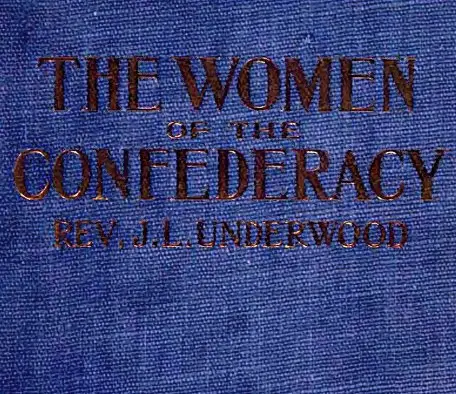
"The Women of the Confederacy" by J. L. Underwood is a historical account written in the early 20th century. The book focuses on the profound heroism and sacrifices of women in the Confederacy during the Civil War and the Reconstruction period. It examines their trials, motivations, and ultimate resilience, illustrating their critical role in supporting the Confederate cause and how they managed to persevere despite significant adversity. At the start of the work, Underwood introduces the reader to the heroic actions of Southern women, highlighted through various tributes and testimonials from prominent figures of the time, such as Jefferson Davis and Stonewall Jackson. These testimonials detail the women's invaluable contributions, from knitting uniforms to nursing wounded soldiers, and emphasize the emotional sacrifices they made as they supported their loved ones at war. Through poignant anecdotes, the opening sets the tone for an exploration of the strength and determination of Confederate women, portraying them as essential pillars of the Southern home front during a tumultuous period in American history.
Introduction adapted from the source catalogue; source summaries may be automatically generated.
Free to read · English · 104,120 words · No account needed
MAKE TIME FOR A GOOD BOOK
On by default. Untick to stop anonymous reading totals. Each page counts after 10 seconds in view. How this works.
Anonymous counting is on unless you have switched it off.
Imagine my astonishment, admiration, and gratitude when that group of Federal officers with unanimity said:
"I glory in your spunk, and am proud of you as my countrywoman; and so far from banishing you from your home, we will vote for your retention within our lines."
[From original manuscript, now in the Confederate Museum.]
MY DEAR FRIEND: * * * Soon after the Yankees went into winter quarters in Warrenton, I was requested by a soldier friend to avail myself of every opportunity to obtain and transmit information that might be of service to our scouts and guerrillas, and this of course I was most willing to do. Our house was at that time within the lines in the day time, and beyond them at night. I walked up to Warrenton one bright but very cold morning, (the 22d of December) and as soon as I arrived was informed by a lady friend, who was also on the lookout, that she had just seen a negro, who looked like a newcomer, escorted by several officers to the provost marshal's office. I immediately concluded that he was bearer of some tidings, most probably from "Mosby's Confederacy," and that I must know what it might be, but how could I accomplish it? A sentinel was placed always before the office. I had my purse with me. I fell into conversation with him. I offered him so much to let me pass into the basement of the house on pretense of wishing to transact some business with the negroes who occupied it. He accepted it, and I went--not into the room which the negroes occupied, but into the one adjoining it--a place very damp and dark, where I could hear, but not be seen, and suiting my purpose admirably, as it was immediately under the office. I listened; heard the negro questioned and heard him answer that he could and would guide a force to Mosby's headquarters, to the houses where he knew many of his men boarded, to the place where the command had stored a quantity of corn. About the corn they seemed to care little, but oh! to catch Mosby,--they waxed warm at the thought--they talked long and loudly (all for my convenience, no doubt) and the result of the consultation was a plan to go "riding on a raid" with the "reliable contraband" acting as guide--to go that very night if certain reinforcements arrived in time, or should they fail to do so, the next night. I had heard enough. I came out of my cell, walked through town to a picket post, with the remaining contents of my purse bribed the faithful soldier of the Union to let me pass, then walked two miles to a neighbor's where I thought I could get a horse, which was most gladly furnished me when my errand was made known. By this time it was late in the afternoon; it had been turning colder all day, and was now intensely cold with a blustering wind, the sky covered with moving masses of black clouds. My friends wrapped me up as best they could. I mounted and rode three miles to a neighbor's house, where I took a little boy up behind me for escort. My object now was to ride in what seemed the right direction until I met some Southern soldier to whom I could impart the information I gathered, and commission him to convey it to those whom it most nearly concerned. I rode on for miles--the country becoming entirely new to me--the cold increasing--the darkness deepening--the wind rising higher and higher. Mosby's men were always hanging about the outposts of the enemy. Why was it that I could not meet one of them? Did they think the night too terrible to be out? Oh! how I ached with cold, and when I thoughtlessly said as much, my gallant little escort, who was not less so, I am sure, begged that he might be allowed to take off his overcoat and put it around me. Suddenly, just before me, I saw a large fire--the temptation was too great--I forgot that its light might reveal me to those whom the darkness hid, drew the reins--old Kitty Grey stood still, and I stretched out my hands toward the genial warmth. I then discovered that I was near the "View Tree" to reach which, though only four miles from Warrenton, I had traveled eight or ten. The fire, thought I to myself, was built by some Southern scouts, but they left it as I came on lest it should endanger them. The thought aroused me. I started on, but had scarcely done so when the moon came out, and almost immediately Walter called my attention to a body of men on my right, in the form of a V, each with his carbine levelled, and moving slowly toward me: I expected them to fire any moment, but I neither quickened nor slackened my pace. The moon went under a cloud and I passed into the sheltering darkness, wondering much why they did not fire. My curiosity on that point was afterwards satisfied. On I rode. It was not long before I saw a single horseman with his raised weapon just in front of me.
Your reading position is saved on this browser. Take it to another device with a library code. Reading pages adapt to text, rather than matching a printed edition.
BEHIND THE BOOK
This eBook is for the use of anyone anywhere in the United States and most other parts of the world at no cost and with almost no restrictions whatsoever. You may copy it, give it away or re-use it under the terms of the Project Gutenberg License included with this eBook or online at www.gutenberg.org. If you are not located in the United States, you will have to check the laws of the country where you are located before using this eBook. Read the source licence.
The original source file, including credits and licence, is retained by this library. Request an original-format copy at no charge. Please include the book title and Project Gutenberg identifier #36969.
KEEP YOUR CURIOSITY GOING
Cécile Tormay

Moritz Busch
John L. Ransom
Frances Wright
Cécile Tormay

Mabel Potter Daggett