THE CLASSIC COLLECTION✦Stories of the Foot-hillsCLASSIC FREE BOOKS
Stories of the Foot-hills
Margaret Collier Graham
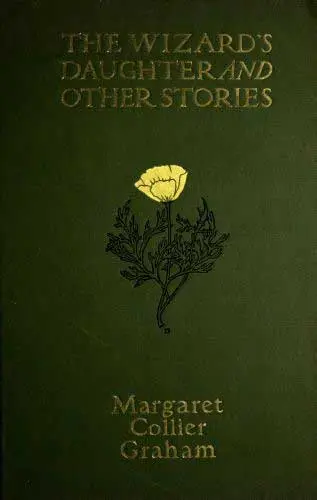
THE CLASSIC COLLECTION · 1905
"The Wizard's Daughter and Other Stories" by Margaret Collier Graham is a collection of short stories written in the early 20th century. The stories explore the interwoven lives of characters against pastoral backdrops and themes of human emotion, nature, and social dynamics. The opening story, "The Wizard's Daughter," introduces a range of characters navigating personal challenges and relationships in a rustic setting, hinting at the blend of realism and moral inquiry. At the start of the collection, the reader is introduced to a young man named Mr. Palmerston, who is convalescing at the Dysart cabin in California. As he interacts with Mrs. Dysart and another newcomer, Professor Brownell, the dynamics of their conversations reveal both personal insecurities and communal aspirations, particularly relating to water rights and agricultural ambitions. The exchange between Mrs. Dysart and Palmerston sets a humorous yet poignant tone, highlighting themes of health, hope, and the tensions between science and faith. The atmosphere is rich with natural imagery, and the character interactions foreshadow deeper explorations into human relationships and personal motivations that continue throughout the narrative.
Introduction adapted from the source catalogue; source summaries may be automatically generated.
Free to read · English · 36,645 words · No account needed
MAKE TIME FOR A GOOD BOOK
On by default. Untick to stop anonymous reading totals. Each page counts after 10 seconds in view. How this works.
Anonymous counting is on unless you have switched it off.
"Sweet cider!" he announced, with a triumphant smile. "I had a lot of apples in the fall, not big enough to peddle,--you know our apples ain't anything to brag of,--and I just rigged up a kind of hand-press in the back yard, and now and then I press out a pitcher of cider for Sunday. I never let it get the least bit hard; not that I don't like a little tang to it myself, but mother belongs to the W.C.T.U., and it'd worry her."
He darted into the house again, and emerged with a plate of brown
twisted cakes.
"Mother usually makes cookies on Saturday, but I can't find anything but these doughnuts. Maybe they won't go bad with the cider."
He poured his guest a glass, and Mr. Anthony drank it, holding a doughnut in one hand, and partaking of it with evident relish.
"It's good, Burson," he said. "May I have another glass and another
doughnut?"
His host's countenance fairly shone with delighted hospitality as he replenished the empty glass. There were crumbs on the floor when the visitor left, and flies buzzed about the empty plate and pitcher as Mrs. Burson and her daughters came up the steps.
"Mr. Anthony's been here," said Erastus cheerfully; "I'm awful sorry you missed him. We had some cider and doughnuts."
The three women stopped suddenly, and stared at the speaker.
"Why, Paw Burson!" ejaculated the elder daughter, "did you give Mr. Anthony doughnuts and cider out here on this porch?"
"Why, yes, Millie," apologized the father; "I looked for cookies, but I couldn't find any. He said he liked doughnuts, and he did seem to relish 'em; he eat several."
"That awful rich man! Why, Paw Burson!"
The young woman gave an awe-stricken glance about her, as if expecting to discover some lingering traces of wealth.
"Doughnuts!" she repeated helplessly.
"Why, Millie," faltered the father, mildly aggressive, "I don't see why being rich should take away a man's appetite; I'm sure I hope I'll never be too rich to like doughnuts and cider."
"Didn't you give him a napkin, paw?" queried the younger girl.
"No," said the father meekly, "he had his handkerchief. I coaxed him to stay to dinner, but he couldn't; and I asked him to drive out some day with his wife and daughter--he hasn't but one--they lost a little girl when she was seven"--
The man's voice quivered on the last word, and died away. Mrs. Burson went hurriedly into the house. She reappeared at the door in a few minutes without her bonnet.
Your reading position is saved on this browser. Take it to another device with a library code. Reading pages adapt to text, rather than matching a printed edition.
BEHIND THE BOOK
This eBook is for the use of anyone anywhere in the United States and most other parts of the world at no cost and with almost no restrictions whatsoever. You may copy it, give it away or re-use it under the terms of the Project Gutenberg License included with this eBook or online at www.gutenberg.org. If you are not located in the United States, you will have to check the laws of the country where you are located before using this eBook. Read the source licence.
The original source file, including credits and licence, is retained by this library. Request an original-format copy at no charge. Please include the book title and Project Gutenberg identifier #26307.
KEEP YOUR CURIOSITY GOING
Coulson Kernahan

Maurice Baring
Frances Wright
Cécile Tormay

Frederic Jesup Stimson

W. H. P. (William Henry Pope) Jarvis