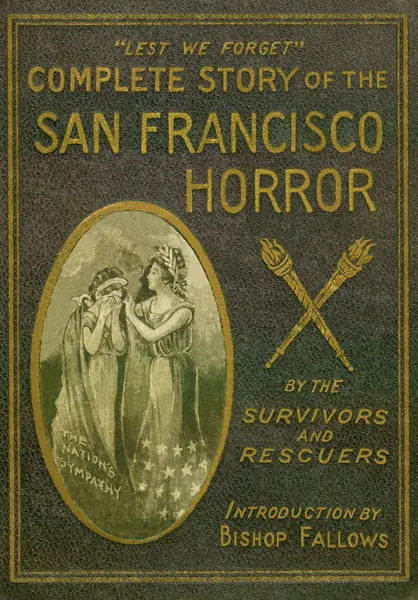
Complete Story of the San Francisco Horror
Richard Linthicum & Samuel Fallows & Trumbull White
THE CLASSIC COLLECTION · 1892
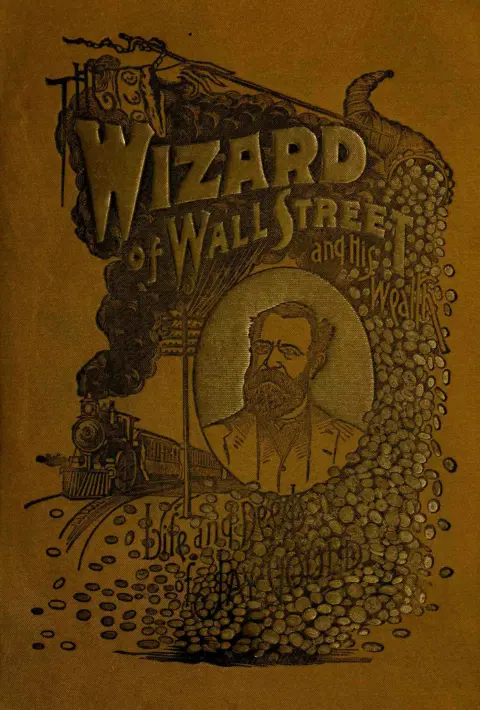
"The Wizard of Wall Street and His Wealth; or, The Life and Deeds of Jay Gould" by Trumbull White is a historical account written in the late 19th century. The book chronicles the life and notable financial exploits of Jay Gould, known as “The Wizard of Wall Street,” who was one of the richest and most controversial financiers of his time. It explores his rise to immense wealth through daring financial strategies and the significant events that defined his career, making it of interest to both general readers and students of financial history. The beginning of this work sets the stage for an in-depth exploration of Jay Gould's character and the dramatic circumstances surrounding his life. The preface highlights Gould's remarkable ability to amass a fortune that was unrivaled by any individual, while also touching on the controversies that accompanied his business practices. In the opening chapters, Gould's upbringing, early ventures in surveying and tanning, and the various challenges he faced are outlined. The narrative illustrates his relentless ambition, early encounters with adversity, and the qualities that propelled him from a humble background in New York to the pinnacle of the financial world, establishing the foundation for the complex and often tumultuous life that follows.
Introduction adapted from the source catalogue; source summaries may be automatically generated.
Free to read · English · 76,790 words · No account needed
MAKE TIME FOR A GOOD BOOK
On by default. Untick to stop anonymous reading totals. Each page counts after 10 seconds in view. How this works.
Anonymous counting is on unless you have switched it off.
“Look back upon his wonderful career. As sometimes an assassin is tracked by his footsteps in the snow or by the drops of crimson that have fallen from his fingers, dripping with the life blood of his victim, so the life of Jay Gould can be traced by the dark, deep stains it has left on the records of his time. We see him leaving his father’s farm a penniless but determined lad, clerking in a country store by day and studying mathematics at night. We follow him as he becomes a map-maker and goes forth to survey his own and adjoining counties. We see him hungry and unable to purchase a meal, kneeling down by the roadside and repeating his sister’s prayer. We see him strike his first bargain. We see him win the confidence of Zadock Pratt, the tanner. We follow him into the forests of Pennsylvania and hear the sound of his ax as he fells the first tree for a great tannery. We see him scheming for the control of the property and finally forcing out of the concern the man who had set him up in the business. We follow him in his partnership with Leupp, the old-fashioned and honorable merchant, of New York, and see him again scheming to gain control of the entire business. We see him entering, even at this early day, into wild speculations that involved his partner and threatened him with ruin. We hear the click of the pistol with which Leupp in his despair shot himself. We see Gould still scheming and endeavoring to drive a sharp bargain with Leupp’s daughters and heirs. We see him leading a gang of ruffians to drive out of the tannery the men who were endeavoring to protect it in the interests of Leupp’s daughters. We hear the groans of those who were wounded in that battle. We follow the young adventurer to New York. We see him buy his first railroad on credit and clear a handsome fortune out of the operation. We follow him into Wall street, where for twenty years he was to reign as a king and master. We see him in Erie, first as a follower of Daniel Drew and afterward as president. We see him at Albany bribing senators. We see him in New York purchasing judges, defying the law, issuing millions of securities, not a dollar of which represented legitimate expenditures. We see him plundering the great property of which he was nominally the trustee. We see him and his companion, James Fisk, Jr., the gambler and defaulter in a series of wonderful stock operations, cornering even their former leader, Daniel Drew, and fighting with desperation Commodore Vanderbilt. We see him organizing the greatest and most dastardly financial conspiracy the world has ever seen, laying its foundation in the actual bribery of a member of the President’s family, and in an attempt to involve in the speculation the President himself--America’s greatest captain. We hear the awful crash of Black Friday’s earthquake, from which Gould, the arch conspirator, saved himself, but in which hundreds were involved in ruin and the nation in dishonor. We see him now driven out of Erie by the indignant stockholders, headed by Gen. Sickles, Gen. Dix and Gen. McClellan. We see him arrested for appropriating the property of the company of which he was president, and to save himself we see him make a pretended restitution of the misappropriated millions. We see him cornering Northwest and raking in the wealth of his recent Wall street partner. We can see him now fastening his fingers on the great Union Pacific railroad, which for ten years he controlled. We can see him betraying his trust as trustee for Kansas Pacific mortgages, for which he was obliged years after to plead the statute of limitations in order to save himself from prosecution. We see him securing control of the Pacific Mail, the chief American steamship line. We see him buying for a few million dollars from Commodore Garrison the Missouri Pacific, ‘just as a plaything,’ but which he afterward developed into a great railroad system covering thousands of miles of territory. We see him repeating his old Erie tactics in Wabash and we can hear the stinging words of an unpurchasable judge as he turns his dummy receivers from power. We see him organizing an opposition against Western Union until, the favorable moment arriving, he secures control of the company and by a series of extraordinary consolidations make himself the head of a telegraph monopoly with a system covering the United States and crossing the Atlantic Ocean. We hear the crash of another panic. There are moments when we think the great speculator will fall--when, lo! we see him calmly exhibiting his millions of securities to his friends. Others fail, among them men who had been his partners and agents, but he is safe. We see him living in a palace on the Hudson and ploughing the waters of the river and the ocean with the most splendid yacht ever constructed. We see him at home, the personification of domestic honor and purity, a faithful husband and a kind father, and we see him abroad, hated, feared and detested. Despite his record, we find the power of his millions and of the great properties he controlled felt in every direction. He is a factor in elections. Candidates seek him for favors. He dictates appointments to high offices. Honorable men who would not repeat his methods sit with him in boards of direction and are identified with some of his enterprises. Nothing that the fertile imagination of Balzac, Dumas or Gaboriau ever conceived equals in dramatic incidents and sensational developments the career of this extraordinary man.
Your reading position is saved on this browser. Take it to another device with a library code. Reading pages adapt to text, rather than matching a printed edition.
Richard Linthicum & Samuel Fallows & Trumbull White
Trumbull White
BEHIND THE BOOK
This eBook is for the use of anyone anywhere in the United States and most other parts of the world at no cost and with almost no restrictions whatsoever. You may copy it, give it away or re-use it under the terms of the Project Gutenberg License included with this eBook or online at www.gutenberg.org. If you are not located in the United States, you will have to check the laws of the country where you are located before using this eBook. Read the source licence.
The original source file, including credits and licence, is retained by this library. Request an original-format copy at no charge. Please include the book title and Project Gutenberg identifier #66148.
KEEP YOUR CURIOSITY GOING
Cécile Tormay

Moritz Busch
John L. Ransom
Frances Wright
Cécile Tormay

Mabel Potter Daggett