THE CLASSIC COLLECTION✦A dead man’s diaryCLASSIC FREE BOOKS
A dead man’s diary
Coulson Kernahan
THE CLASSIC COLLECTION · 1916
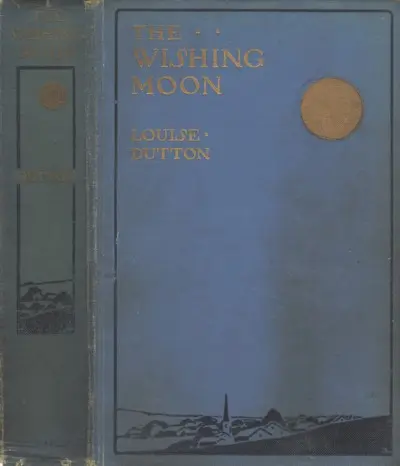
"The Wishing Moon" by Louise Elizabeth Dutton is a novel written in the early 20th century. The story introduces readers to a young girl, Judith Devereux Randall, who navigates the complexities of childhood, social expectations, and her desire for adventure in a small town named Green River. With a backdrop of a magical May night, the narrative explores themes of friendship, identity, and the interplay between childhood innocence and the expectations of growing up. The opening of the book sets a whimsical tone as Judith, a unique eleven-year-old girl, prepares for a night of excitement with her friends. The narrative captures her feelings of happiness and anticipation while hinting at her struggles with identity and fitting in. As she plans to hang May-baskets with her friends, Judith reflects on her distinctions from other children, pointedly noting that she's been labeled different due to her upbringing and social status. Her adventure begins as she interacts with her best friend Willard, who teases her but is also part of the group preparing for a night filled with daring escapades. The chapter intricately weaves Judith’s thoughts, dreams, and the thrilling essence of youth while foreshadowing a deeper journey of self-discovery.
Introduction adapted from the source catalogue; source summaries may be automatically generated.
Free to read · English · 69,444 words · No account needed
MAKE TIME FOR A GOOD BOOK
On by default. Untick to stop anonymous reading totals. Each page counts after 10 seconds in view. How this works.
Anonymous counting is on unless you have switched it off.
Sh! Somebody was always saying that. It was part of the ceremony, which had been the same all three times. The procession was halting opposite the Nealy house. A whispered quarrel started every time they approached a house, and was hushed halfway through and not taken up again. The quarrel and the hush were part of the ceremony, too.
The Nealy house was small and harmless looking, and entirely dark, but they did not allow that to make them reckless. They stood looking warily across the dark street.
"But there's nobody there. Maggie Nealy's out, too, to-night, and her
mother----"
"Sh!" Willard put a hand over Judith's mouth. It smelled of kerosene, and she struggled, but did not make a noise. Just at this dramatic moment the Nealy's dog barked.
Judith could hear her heart beat and feel her damp feet getting really
wet and cold.
"Now," Ed whispered, close to her ear and uncomfortably loud, and she fumbled in her basket. Willard jiggled the lantern dizzily over her shoulder, tissue paper tore under her fingers, and bonbons rattled. Hanging May-baskets was certainly hard on the May-baskets, and they were so pretty; pale coloured, like flowers.
"I can't find the right one. The marks are all falling off. The candy's
falling out."
"We can't stand here all night. Here----"
"Willard, take your hands out. Not that one----"
"Willard and Judy stop fighting. That one will do. I'm going."
There was dead silence now, and Ed, clutching the wreck of a sizable crepe-paper creation to the bosom of his white sweater, doubled into a crouching, boy scout attitude, crossed the road, and approached the house. Nothing but his own commendable caution delayed his approach. The small dog's dreams within were untroubled now. There were no signs of life.
He reached the front door, deposited the May-basket with a force that further demolished it, and took to his heels. After another breathless wait the procession formed behind him and trailed after him up the road, hilly here, so that the market basket grew heavier.
"Some evening," Willard murmured to himself, not the rest of the world,
but he sounded amiable.
"Willard."
"Well, kid."
"There wasn't anybody in that house. Ed knew it."
"There might have been. They might have come home."
"But they didn't ... Willard, is this all there is to it?"
"What?"
"Hanging May-baskets. Throwing them down that way. I thought maybe they really hung them, on the doorknob--I thought----"
"Silly! Ed's going cross lots, and up the wood road to Larribees'. Good work. That will throw them off the track."
"Throw who off the track?"
"You scared? Want to go home?"
"Oh, no! But who? There's nobody chasing us. Nobody."
Your reading position is saved on this browser. Take it to another device with a library code. Reading pages adapt to text, rather than matching a printed edition.
BEHIND THE BOOK
This eBook is for the use of anyone anywhere in the United States and most other parts of the world at no cost and with almost no restrictions whatsoever. You may copy it, give it away or re-use it under the terms of the Project Gutenberg License included with this eBook or online at www.gutenberg.org. If you are not located in the United States, you will have to check the laws of the country where you are located before using this eBook. Read the source licence.
The original source file, including credits and licence, is retained by this library. Request an original-format copy at no charge. Please include the book title and Project Gutenberg identifier #31057.
KEEP YOUR CURIOSITY GOING
Coulson Kernahan

Maurice Baring
Frances Wright
Cécile Tormay

Frederic Jesup Stimson

W. H. P. (William Henry Pope) Jarvis