THE CLASSIC COLLECTION✦A dead man’s diaryCLASSIC FREE BOOKS
A dead man’s diary
Coulson Kernahan
THE CLASSIC COLLECTION · 1916
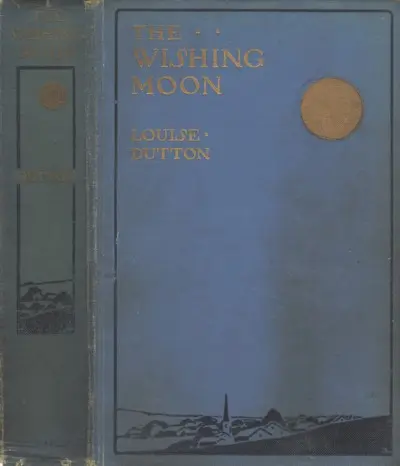
"The Wishing Moon" by Louise Elizabeth Dutton is a novel written in the early 20th century. The story introduces readers to a young girl, Judith Devereux Randall, who navigates the complexities of childhood, social expectations, and her desire for adventure in a small town named Green River. With a backdrop of a magical May night, the narrative explores themes of friendship, identity, and the interplay between childhood innocence and the expectations of growing up. The opening of the book sets a whimsical tone as Judith, a unique eleven-year-old girl, prepares for a night of excitement with her friends. The narrative captures her feelings of happiness and anticipation while hinting at her struggles with identity and fitting in. As she plans to hang May-baskets with her friends, Judith reflects on her distinctions from other children, pointedly noting that she's been labeled different due to her upbringing and social status. Her adventure begins as she interacts with her best friend Willard, who teases her but is also part of the group preparing for a night filled with daring escapades. The chapter intricately weaves Judith’s thoughts, dreams, and the thrilling essence of youth while foreshadowing a deeper journey of self-discovery.
Introduction adapted from the source catalogue; source summaries may be automatically generated.
Free to read · English · 69,444 words · No account needed
MAKE TIME FOR A GOOD BOOK
On by default. Untick to stop anonymous reading totals. Each page counts after 10 seconds in view. How this works.
Anonymous counting is on unless you have switched it off.
His client laughed. "You don't mean the Judge wants to take over the house. That's 'Way Down East stuff. If money's tight with him, we'll pay the interest and manage some way, though I don't see how. But the house would be no good to him if he took it, and he wouldn't take it if it was. I know the Judge. Don't let your imagination get away with you, Theodore."
"I'm sorry for you, Donovan."
"You think he's going to take it?"
"I know he is."
"You mean that," his client decided slowly, "and you've got the Judge's
authority for it, too."
"Take it quietly. It's the best way," urged the junior partner
helpfully.
"I understand that's your motto, Theodore," said his client, and proceeded to take his advice, sitting quite still in the Judge's big chair, and fixing a clear-seeing but unappreciative gaze upon the immaculate folds of Mr. Burr's turquoise-blue tie. He took the advice too literally. The silence grew oppressive and sinister, and as if he found it so, Mr. Burr broke into a monologue, disjointed, but made up of irreproachable sentiments.
"This is hard on your uncle, Neil, and it's hard on you, but it may be the best thing in the end. He's been hiding behind you too long. A business that can't stand on its own feet deserves to fail. He can start new and start clean. The Judge has been a good friend to you----"
"Don't explain him to me. You don't own him, whoever else does," interrupted the Judge's protege softly.
"What do you mean? If you don't think you're getting a square deal, say
so."
"Do you want me to weep on your shoulder, Theodore?"
"The Judge is your friend, and," Mr. Burr added handsomely, "I'm your
friend, too."
His client arose briskly, as if encouraged by this. "Theodore, you don't want to tell me what's back of your turning me down?" he asked. "No, I thought not. Well----"
"I'm your friend," repeated Mr. Burr, generously if irrelevantly, and this time without effect. His client had crossed the room without another glance at him, and had his hand on the knob of the Judge's office door. His manner still had the composure which Mr. Burr had advocated, but his face was very pale, ominously pale, and his brown eyes were changed and bright, dangerously bright. To imaginative eyes like Mr. Burr's he must have looked suddenly taller.
Mr. Burr was facing an unmistakable crisis, with no time to wonder how long it had been forming, or why. He hurried after the boy and caught him fiercely if ineffectively by the arm.
Your reading position is saved on this browser. Take it to another device with a library code. Reading pages adapt to text, rather than matching a printed edition.
BEHIND THE BOOK
This eBook is for the use of anyone anywhere in the United States and most other parts of the world at no cost and with almost no restrictions whatsoever. You may copy it, give it away or re-use it under the terms of the Project Gutenberg License included with this eBook or online at www.gutenberg.org. If you are not located in the United States, you will have to check the laws of the country where you are located before using this eBook. Read the source licence.
The original source file, including credits and licence, is retained by this library. Request an original-format copy at no charge. Please include the book title and Project Gutenberg identifier #31057.
KEEP YOUR CURIOSITY GOING
Coulson Kernahan

Maurice Baring
Frances Wright
Cécile Tormay

Frederic Jesup Stimson

W. H. P. (William Henry Pope) Jarvis