THE CLASSIC COLLECTION✦A dead man’s diaryCLASSIC FREE BOOKS
A dead man’s diary
Coulson Kernahan
THE CLASSIC COLLECTION · 1916
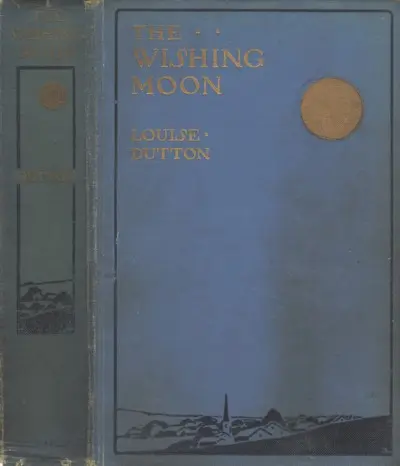
"The Wishing Moon" by Louise Elizabeth Dutton is a novel written in the early 20th century. The story introduces readers to a young girl, Judith Devereux Randall, who navigates the complexities of childhood, social expectations, and her desire for adventure in a small town named Green River. With a backdrop of a magical May night, the narrative explores themes of friendship, identity, and the interplay between childhood innocence and the expectations of growing up. The opening of the book sets a whimsical tone as Judith, a unique eleven-year-old girl, prepares for a night of excitement with her friends. The narrative captures her feelings of happiness and anticipation while hinting at her struggles with identity and fitting in. As she plans to hang May-baskets with her friends, Judith reflects on her distinctions from other children, pointedly noting that she's been labeled different due to her upbringing and social status. Her adventure begins as she interacts with her best friend Willard, who teases her but is also part of the group preparing for a night filled with daring escapades. The chapter intricately weaves Judith’s thoughts, dreams, and the thrilling essence of youth while foreshadowing a deeper journey of self-discovery.
Introduction adapted from the source catalogue; source summaries may be automatically generated.
Free to read · English · 69,444 words · No account needed
MAKE TIME FOR A GOOD BOOK
On by default. Untick to stop anonymous reading totals. Each page counts after 10 seconds in view. How this works.
Anonymous counting is on unless you have switched it off.
A mud-splashed Ford clattered down Main Street, and drew up in front of the post-office as Neil reached it with a flourish that would have done credit to a more elegant equipage than this second-hand one of the Nashes. Two elegant young gentlemen, week-end guests of Willard's and duly presented to Neil the night before, ignored his existence, perusing a gaudily covered series of topical songs with exaggerated attention on the rear seat of the car, but Willard greeted him exuberantly:
"Ah, there, Murph. You don't look like the morning after. Sorry I haven't got room for you. We've got other plans. We love the ladies."
"I'm tied up, anyway. So long."
Willard's tone was too patronizing, but he was not to blame, for the days when they would exchange intimate greetings at all were numbered. As Neil left them one of the elegant guests demanded audibly:
"Who's your friend?"
Neil flushed but did not look back. He had an errand to do in the few minutes before his appointment with Judge Saxon. He crossed the street to Ward's store.
Ward's Dry Goods Emporium, three stores in one, and literally three stores bought out one by one, and joined by connecting doors, though they could never be united in their style of architecture, was rather dark and chaotic inside, though a brave showing of plate glass across the front advertised its prosperity. Luther Ward himself, in his shirt sleeves, was looking over a tray of soiled, pale-coloured spats, assisted by a tall, full-bodied girl with a sweet, sulky mouth, and a towering mass of blue-black hair.
"Hello, Donovan, what's new?" he said, with only a shade more condescension than Willard, and distinctly more friendliness.
"Nothing, sir," said Neil with conviction.
"You want to talk to Maggie, here. I won't intrude on a family quarrel," said Mr. Ward, and chuckling heartily at his own mild joke, as he generally did, and few others did, disappeared into the furniture department, the central one of the three stores, and his favourite. The two cousins regarded each other across the tray of spats as if the family quarrel were not a joke, but an unpleasant reality.
"You can't come here and take up my time," stated Miss Brady.
"Your time is pretty full--evenings, too. Do you know where Charlie was
last night?"
"I don't care."
"You ought. He's your second cousin, and goes by the same name as you, if you're not in love with him. He was in Halloran's billiard hall."
"If he can't keep himself out of the gutter, I can't keep him out,"
stated Miss Brady logically.
Your reading position is saved on this browser. Take it to another device with a library code. Reading pages adapt to text, rather than matching a printed edition.
BEHIND THE BOOK
This eBook is for the use of anyone anywhere in the United States and most other parts of the world at no cost and with almost no restrictions whatsoever. You may copy it, give it away or re-use it under the terms of the Project Gutenberg License included with this eBook or online at www.gutenberg.org. If you are not located in the United States, you will have to check the laws of the country where you are located before using this eBook. Read the source licence.
The original source file, including credits and licence, is retained by this library. Request an original-format copy at no charge. Please include the book title and Project Gutenberg identifier #31057.
KEEP YOUR CURIOSITY GOING
Coulson Kernahan

Maurice Baring
Frances Wright
Cécile Tormay

Frederic Jesup Stimson

W. H. P. (William Henry Pope) Jarvis