THE CLASSIC COLLECTION✦A dead man’s diaryCLASSIC FREE BOOKS
A dead man’s diary
Coulson Kernahan
THE CLASSIC COLLECTION · 1916
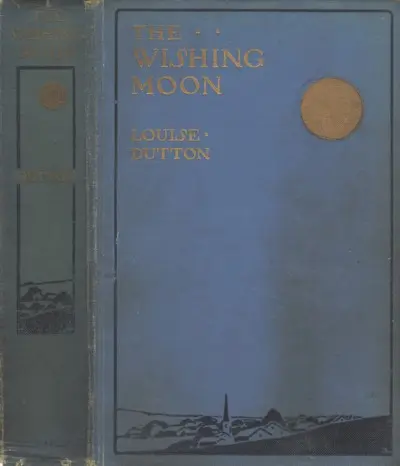
"The Wishing Moon" by Louise Elizabeth Dutton is a novel written in the early 20th century. The story introduces readers to a young girl, Judith Devereux Randall, who navigates the complexities of childhood, social expectations, and her desire for adventure in a small town named Green River. With a backdrop of a magical May night, the narrative explores themes of friendship, identity, and the interplay between childhood innocence and the expectations of growing up. The opening of the book sets a whimsical tone as Judith, a unique eleven-year-old girl, prepares for a night of excitement with her friends. The narrative captures her feelings of happiness and anticipation while hinting at her struggles with identity and fitting in. As she plans to hang May-baskets with her friends, Judith reflects on her distinctions from other children, pointedly noting that she's been labeled different due to her upbringing and social status. Her adventure begins as she interacts with her best friend Willard, who teases her but is also part of the group preparing for a night filled with daring escapades. The chapter intricately weaves Judith’s thoughts, dreams, and the thrilling essence of youth while foreshadowing a deeper journey of self-discovery.
Introduction adapted from the source catalogue; source summaries may be automatically generated.
Free to read · English · 69,444 words · No account needed
MAKE TIME FOR A GOOD BOOK
On by default. Untick to stop anonymous reading totals. Each page counts after 10 seconds in view. How this works.
Anonymous counting is on unless you have switched it off.
Even the mention of this desirable rendezvous, which was denied to her because Mollie always brought home the evening mail in a black silk bag, did not dim the dancing light in Judith's eyes. She put a hand on his sleeve.
"Willard----"
"Well, kid?"
"Willard, don't you wish I was going to-night?"
"What for, to fight the paddies, or carry the dark lantern?"
"I could fight," said Judith, with a little quiver in her voice, as if
she could.
"Fight? You couldn't even run away. They'd"--Willard hissed it
mysteriously--"they'd get you."
"No, they wouldn't, because"--something had happened to her eyes, so that they did not look tantalizing--"you'd take care of me, Willard," she announced surprisingly, "wouldn't you?"
"Forget it," murmured Willard, flattered.
"Wouldn't you?"
"Willard!"
"Yes."
"Well--I am. Father made mother let me. I'm going with you."
The words she had been trying to say were out at last in a hushed voice, because her heart was beating hard, but they sounded beautiful to her, like a kind of song. Perhaps Willard heard it, too. He really was her best friend, and he did not look so fat, after all, in the twilight. She waited breathlessly.
"You are?"
Judith nodded. She could not speak.
"Well!" Willard's feelings were mixed, his face was not fashioned to express a conflict of emotions, and words failed him, too. "You're a queer kid. Why didn't you tell me before?"
"Aren't you glad, Willard?"
"You'll get sleepy."
"Aren't you glad?"
"Sure I'm glad. But you can't run, and you are a cry-baby."
These were known facts, not insults, but now Judith's eyes had stopped
dancing.
"Judy, are you mad with me?"
"No."
"You're the queerest kid." Up the street, he caught sight of a member of a simpler sex than Judith's. "There's Ed coming out of the gate. I've got to see him about something. See you later. Don't be mad. So long!"
The house was astir behind Judith. Father was opening and shutting doors, and hunting for things. Norah was helping mother into her wraps and scolding. Somebody was telephoning. Mother's carriage was late.
But it was turning into the yard now, a big, black hack from the Inn, with a white horse. Judith liked white horses best. The front door opened, and her father, very tall and blond, with his shirt-front showing white, and her mother, with something shiny in her black hair, swept out.
"Look who's here," said her father, and picked her up with his hands under her elbows. "Going to paint the town red to-night, son?"
Your reading position is saved on this browser. Take it to another device with a library code. Reading pages adapt to text, rather than matching a printed edition.
BEHIND THE BOOK
This eBook is for the use of anyone anywhere in the United States and most other parts of the world at no cost and with almost no restrictions whatsoever. You may copy it, give it away or re-use it under the terms of the Project Gutenberg License included with this eBook or online at www.gutenberg.org. If you are not located in the United States, you will have to check the laws of the country where you are located before using this eBook. Read the source licence.
The original source file, including credits and licence, is retained by this library. Request an original-format copy at no charge. Please include the book title and Project Gutenberg identifier #31057.
KEEP YOUR CURIOSITY GOING
Coulson Kernahan

Maurice Baring
Frances Wright
Cécile Tormay

Frederic Jesup Stimson

W. H. P. (William Henry Pope) Jarvis