THE CLASSIC COLLECTION✦A dead man’s diaryCLASSIC FREE BOOKS
A dead man’s diary
Coulson Kernahan
THE CLASSIC COLLECTION · 1916
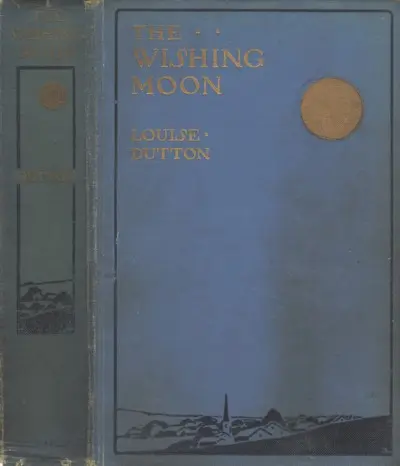
"The Wishing Moon" by Louise Elizabeth Dutton is a novel written in the early 20th century. The story introduces readers to a young girl, Judith Devereux Randall, who navigates the complexities of childhood, social expectations, and her desire for adventure in a small town named Green River. With a backdrop of a magical May night, the narrative explores themes of friendship, identity, and the interplay between childhood innocence and the expectations of growing up. The opening of the book sets a whimsical tone as Judith, a unique eleven-year-old girl, prepares for a night of excitement with her friends. The narrative captures her feelings of happiness and anticipation while hinting at her struggles with identity and fitting in. As she plans to hang May-baskets with her friends, Judith reflects on her distinctions from other children, pointedly noting that she's been labeled different due to her upbringing and social status. Her adventure begins as she interacts with her best friend Willard, who teases her but is also part of the group preparing for a night filled with daring escapades. The chapter intricately weaves Judith’s thoughts, dreams, and the thrilling essence of youth while foreshadowing a deeper journey of self-discovery.
Introduction adapted from the source catalogue; source summaries may be automatically generated.
Free to read · English · 69,444 words · No account needed
MAKE TIME FOR A GOOD BOOK
On by default. Untick to stop anonymous reading totals. Each page counts after 10 seconds in view. How this works.
Anonymous counting is on unless you have switched it off.
Willard turned scarlet, swung round, then changed his mind and inserted his foot in the crack of the door again, this time with a purposeful air. He was to develop into the type of man to whom an unpropitious time and place are an irresistible temptation to demand a show-down. It is a type that goes far, though it is not essentially popular. Judith sighed, then resigned herself.
"Judy, I don't make you out."
"You don't have to."
"I do." Willard's voice was impressive, as even a fat boy's can be when he is in the grip of fate and conscious of it. "I do."
"I'm sorry, Willard, dear," murmured Judith, with disarming sweetness, but he was not to be turned from his purpose.
"Judy, are you going with me or not?"
"Going with you?"
"Don't be a snob. What else can I call it but going with me? I don't know any other way to say it."
"Then don't say it."
"You've got my class pin and I've got yours. I know there isn't anybody else. You let me call and take you places, but you won't let me----"
"What?"
Willard looked sheepishly down at his boots, then bravely up at Judith. "Put my arm round you at picnics. Kiss you good-night."
Judith cut short this catalogue crisply.
"Spoon?"
This word was forbidden in the upper circles of the Green River younger set, and Willard looked pained, but collected himself.
"We are the same as engaged," he insisted sturdily.
He had forced an issue at last, but Judith evaded it, laughing softly in
the dark.
"Oh, are we?"
"Aren't we?"
"How do you know there isn't anybody else?"
"Well, you won't look at Ed, and Murph don't count." Willard made this pronouncement lightly, though the adamantine rules and impassable barriers of a whole social order were embodied in it. "Murph that you're so thick with, all of a sudden. He's a bully fellow, all right, next captain of the team, probably. Good thing he's broken into the crowd a little way. Too bad he's Irish. Murph don't count."
"No--no!" A sudden and poignant sweetness thrilled in Judith's voice. The tenor of the Green River High School quartette, not ordinarily sensitive to variations of tone in the voices of others, could not ignore it. The change had disturbed him vaguely. It seemed to call for some comment.
"Judy, you look great to-night.... I'd do anything for you."
"Then go home, Willard."
"You haven't answered my question."
"What question?"
"Don't tease."
"I honestly don't know."
"You don't hear one word I'm saying to you."
Judith laughed guiltily. "Then what makes you talk to me?"
"Judith--are we the same as engaged?"
Your reading position is saved on this browser. Take it to another device with a library code. Reading pages adapt to text, rather than matching a printed edition.
BEHIND THE BOOK
This eBook is for the use of anyone anywhere in the United States and most other parts of the world at no cost and with almost no restrictions whatsoever. You may copy it, give it away or re-use it under the terms of the Project Gutenberg License included with this eBook or online at www.gutenberg.org. If you are not located in the United States, you will have to check the laws of the country where you are located before using this eBook. Read the source licence.
The original source file, including credits and licence, is retained by this library. Request an original-format copy at no charge. Please include the book title and Project Gutenberg identifier #31057.
KEEP YOUR CURIOSITY GOING
Coulson Kernahan

Maurice Baring
Frances Wright
Cécile Tormay

Frederic Jesup Stimson

W. H. P. (William Henry Pope) Jarvis