THE CLASSIC COLLECTION✦A dead man’s diaryCLASSIC FREE BOOKS
A dead man’s diary
Coulson Kernahan
THE CLASSIC COLLECTION · 1916
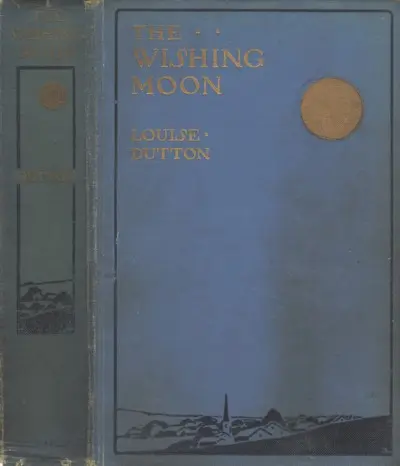
"The Wishing Moon" by Louise Elizabeth Dutton is a novel written in the early 20th century. The story introduces readers to a young girl, Judith Devereux Randall, who navigates the complexities of childhood, social expectations, and her desire for adventure in a small town named Green River. With a backdrop of a magical May night, the narrative explores themes of friendship, identity, and the interplay between childhood innocence and the expectations of growing up. The opening of the book sets a whimsical tone as Judith, a unique eleven-year-old girl, prepares for a night of excitement with her friends. The narrative captures her feelings of happiness and anticipation while hinting at her struggles with identity and fitting in. As she plans to hang May-baskets with her friends, Judith reflects on her distinctions from other children, pointedly noting that she's been labeled different due to her upbringing and social status. Her adventure begins as she interacts with her best friend Willard, who teases her but is also part of the group preparing for a night filled with daring escapades. The chapter intricately weaves Judith’s thoughts, dreams, and the thrilling essence of youth while foreshadowing a deeper journey of self-discovery.
Introduction adapted from the source catalogue; source summaries may be automatically generated.
Free to read · English · 69,444 words · No account needed
MAKE TIME FOR A GOOD BOOK
On by default. Untick to stop anonymous reading totals. Each page counts after 10 seconds in view. How this works.
Anonymous counting is on unless you have switched it off.
"Rose-white youth! But she doth protest too much." The Honourable Joe was fond of quotations, and often tried to make his remarks sound like them, when he could not recall appropriate ones, raising a solemn fat finger to emphasize them: "The thoughts of youth are long, long thoughts."
"Wrong, wrong thoughts," supplied Randolph Sebastian, so gravely that the Honourable Joe accepted the amendment, and looked worried, as only the thought of losing his grip on Bartlett's "Familiar Quotations" could worry him at the end of a perfect meal.
"Wrong thought?" he repeated, in a puzzled voice.
"Thinking's barred here. What's the penalty, Judge?"
"You aren't likely to get it inflicted on you, so I won't tell you,
Lil."
"No, I don't think; I act," Mrs. Burr admitted cheerfully. She always became a shade more cheerful just when you expected her to lose her temper.
"How true that is," observed Mr. Sebastian gently.
"Ranny!"
"Didn't you play auction with me last night? We're out just----"
"Don't tell me. I can't think in anything beyond three figures. Ted's doing higher mathematics over it. That's why he's home, really. I'll play with you again to-night, for your sins."
"For my sins!" He made melancholy eyes, as if he were really confessing them. Mr. Sebastian always pretended a deep devotion to Mrs. Burr. Judith thought it was one of the silliest of their games.
"But what was Judy thinking about?" demanded Mrs. Grant, in the sweet, indifferent voice that always made itself heard.
"She met a fairy prince at the ball last night. They are still to be
met--at balls."
"You'd meet one anywhere he made a date, wouldn't you, Edith Kent?" said the Judge rudely. "Give Miss Judy a penny for her thoughts, if you want them, Everard. You've got to pay sometimes, you know--even you."
"Don't commercialize her too young," said Mr. Sebastian smoothly. "Though, on the whole--can you commercialize them too young?"
"Judith, what were you thinking about?" the Colonel interrupted, rather quickly, turning every one's eyes upon her at once, as he could with a word.
Judith met them confidently--amused, curious eyes, but all friendly and gay. They talked a great deal of nonsense here, but it did not irritate her, as it did her friend Judge Saxon, though she was not always amused, and could not always understand. They never tried to shock her. She was sorry for the Judge. He was not at home with these gay and good-natured people, and it was so easy to be.
Your reading position is saved on this browser. Take it to another device with a library code. Reading pages adapt to text, rather than matching a printed edition.
BEHIND THE BOOK
This eBook is for the use of anyone anywhere in the United States and most other parts of the world at no cost and with almost no restrictions whatsoever. You may copy it, give it away or re-use it under the terms of the Project Gutenberg License included with this eBook or online at www.gutenberg.org. If you are not located in the United States, you will have to check the laws of the country where you are located before using this eBook. Read the source licence.
The original source file, including credits and licence, is retained by this library. Request an original-format copy at no charge. Please include the book title and Project Gutenberg identifier #31057.
KEEP YOUR CURIOSITY GOING
Coulson Kernahan

Maurice Baring
Frances Wright
Cécile Tormay

Frederic Jesup Stimson

W. H. P. (William Henry Pope) Jarvis