THE CLASSIC COLLECTION✦A dead man’s diaryCLASSIC FREE BOOKS
A dead man’s diary
Coulson Kernahan
THE CLASSIC COLLECTION · 1916
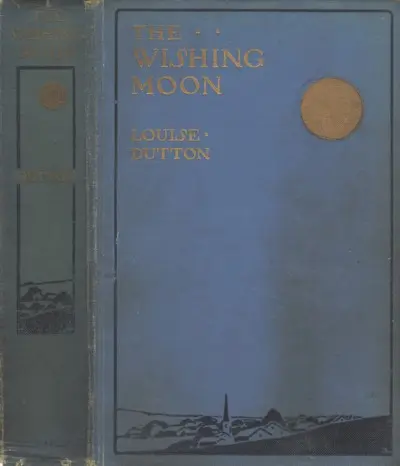
"The Wishing Moon" by Louise Elizabeth Dutton is a novel written in the early 20th century. The story introduces readers to a young girl, Judith Devereux Randall, who navigates the complexities of childhood, social expectations, and her desire for adventure in a small town named Green River. With a backdrop of a magical May night, the narrative explores themes of friendship, identity, and the interplay between childhood innocence and the expectations of growing up. The opening of the book sets a whimsical tone as Judith, a unique eleven-year-old girl, prepares for a night of excitement with her friends. The narrative captures her feelings of happiness and anticipation while hinting at her struggles with identity and fitting in. As she plans to hang May-baskets with her friends, Judith reflects on her distinctions from other children, pointedly noting that she's been labeled different due to her upbringing and social status. Her adventure begins as she interacts with her best friend Willard, who teases her but is also part of the group preparing for a night filled with daring escapades. The chapter intricately weaves Judith’s thoughts, dreams, and the thrilling essence of youth while foreshadowing a deeper journey of self-discovery.
Introduction adapted from the source catalogue; source summaries may be automatically generated.
Free to read · English · 69,444 words · No account needed
MAKE TIME FOR A GOOD BOOK
On by default. Untick to stop anonymous reading totals. Each page counts after 10 seconds in view. How this works.
Anonymous counting is on unless you have switched it off.
Willard, watching the late arrivals and commenting upon them to Neil, still an uncommunicative audience, was vaguely stirred.
"This gets me," he conceded. "There's something about old Dugan's music that always gets me. For two cents, I'd go in. I sat through a patent medicine show there last week, because I didn't have the sense to stay away. It always gets me when there is anything doing in the hall. And--" he paused, heavily testing his powers of self-analysis, "it gets me," he brought out at length, "more to-night than it ever did before. It--gets me."
"Look, there's Joe Grant," Willard went on. "This is his night, all right. Look at the bulge to that manuscript case, and the shine to his hair. He mixes varnish with his hair dye, all right. I said, look at him."
"I'm looking."
"Well, you don't do much else. What's eating you to-night? Say, will you
go in if I will?"
An inarticulate murmur answered him.
"What's that?"
"No."
"All right. Well, what do you know about that? Look there."
"I'm looking."
The latest comers were crowding hurriedly into the entrance hall by this time, and with them, a slender, heavily veiled figure had slipped quickly through the door and out of sight.
"Was that Lil?" Willard said. "Lil Burr?"
"Yes."
"She wouldn't come here; I don't believe it."
"I know it."
"How?"
"She told me."
"What was she doing, talking to you? Why, she won't talk to anybody.
She----"
"You'll be late at Hallorans'."
"Aren't you coming?"
"No."
"But you said you would. I don't want to go if you don't. I don't half like to leave you here, you act so queer to-night. What makes you act so? What's eating----"
"Nothing."
Willard detached himself from the railings and regarded his friend, suddenly breathless with surprise, and deeply grieved. Nothing. The word, harmless in itself, had been spoken so that it hit him like an actual blow, straight from the shoulder. Neil, shifting so that the light showed his face, was returning his look with the sudden, unreasoning anger that we feel toward little sounds that beat their slow way into our consciousness at night, to irritate us unendurably at last.
"Go," he urged, "go along to Halloran's. Go anywhere."
"Well, what do you know about that?" began Willard, offended, and then forgave him. There was a look in Neil's pale face that commanded forgiveness. It was pale and strained with a trouble that had nothing to do with Willard, and Willard was respectful and inarticulate before it.
"That's all right," Willard muttered, "that will be all right. I'll go."
Your reading position is saved on this browser. Take it to another device with a library code. Reading pages adapt to text, rather than matching a printed edition.
BEHIND THE BOOK
This eBook is for the use of anyone anywhere in the United States and most other parts of the world at no cost and with almost no restrictions whatsoever. You may copy it, give it away or re-use it under the terms of the Project Gutenberg License included with this eBook or online at www.gutenberg.org. If you are not located in the United States, you will have to check the laws of the country where you are located before using this eBook. Read the source licence.
The original source file, including credits and licence, is retained by this library. Request an original-format copy at no charge. Please include the book title and Project Gutenberg identifier #31057.
KEEP YOUR CURIOSITY GOING
Coulson Kernahan

Maurice Baring
Frances Wright
Cécile Tormay

Frederic Jesup Stimson

W. H. P. (William Henry Pope) Jarvis