THE CLASSIC COLLECTION✦A dead man’s diaryCLASSIC FREE BOOKS
A dead man’s diary
Coulson Kernahan
THE CLASSIC COLLECTION · 1916
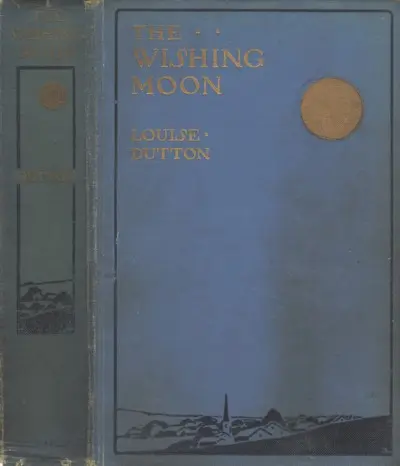
"The Wishing Moon" by Louise Elizabeth Dutton is a novel written in the early 20th century. The story introduces readers to a young girl, Judith Devereux Randall, who navigates the complexities of childhood, social expectations, and her desire for adventure in a small town named Green River. With a backdrop of a magical May night, the narrative explores themes of friendship, identity, and the interplay between childhood innocence and the expectations of growing up. The opening of the book sets a whimsical tone as Judith, a unique eleven-year-old girl, prepares for a night of excitement with her friends. The narrative captures her feelings of happiness and anticipation while hinting at her struggles with identity and fitting in. As she plans to hang May-baskets with her friends, Judith reflects on her distinctions from other children, pointedly noting that she's been labeled different due to her upbringing and social status. Her adventure begins as she interacts with her best friend Willard, who teases her but is also part of the group preparing for a night filled with daring escapades. The chapter intricately weaves Judith’s thoughts, dreams, and the thrilling essence of youth while foreshadowing a deeper journey of self-discovery.
Introduction adapted from the source catalogue; source summaries may be automatically generated.
Free to read · English · 69,444 words · No account needed
MAKE TIME FOR A GOOD BOOK
On by default. Untick to stop anonymous reading totals. Each page counts after 10 seconds in view. How this works.
Anonymous counting is on unless you have switched it off.
"Do you want me to care?"
"Much you care about the flowers or the party."
Judith had caught up the alluring dress without a second glance, and slipped it expertly over her head, and was jerking capably at the fastenings.
"With the spoiled airs of you, and Willard Nash sending to Wells for flowers, when his father clerked in a drygoods store at his age----"
"Oh, carnations are cheap--or he wouldn't get them."
"These aren't cheap, then."
The smaller box was full of white violets.
"Give them to me. No, you can't see the card. You don't deserve to. You're too cross, and besides you wouldn't like it. Do my two top hooks. Now, am I perfectly beautiful?"
Under her capable hands a pretty miracle had been going on, common enough, but always new. Ruffle above ruffle, the soft, shapeless mass of white had shaken itself into its proper lines and contours, lightly, like a bird's plumage settling itself, and with it the change that comes when a woman with the inborn, unteachable trick of wearing clothes puts on a perfect gown, had come to her slight girl's figure. It looked softer, rounder, and more lightly poised. Her throat looked whiter above the encircling folds of white. Her shy half smile was sweeter. The white violets, caught to her high girdle, were sweeter, too.
Norah surrendered, her voice husky and reluctant.
"You're too good for them."
"For the G. H. S. dance? For Willard?" Judith pretended great humility:
"Nana!"
"There's others you're more than too good for. Others----"
"Nana, don't."
"Come here." Norah put two heavy hands on her shoulders and regarded her grimly. It was the kind of look that Judith used to associate with second sight, and dread. It was quite formidable still. But Judith met it steadily, with something mature and assured about her look that had nothing to do with the softness and sweetness of her in her fluffy draperies, something that had no place in the heart of a child; something that Norah saw.
"Too good for them, and you know it," pronounced Norah. "You know it too well. You know too many things. A heart of gold you've got, but your head will rule your heart."
"Nonsense." Norah permitted herself to be kissed, still looking forbidding, but holding Judith tight.
"Little white lamb, may you find what's good enough for you," she conceded, unexpectedly, "and may you know it when you find it."
"You're an old dear, and you're good enough for me."
Your reading position is saved on this browser. Take it to another device with a library code. Reading pages adapt to text, rather than matching a printed edition.
BEHIND THE BOOK
This eBook is for the use of anyone anywhere in the United States and most other parts of the world at no cost and with almost no restrictions whatsoever. You may copy it, give it away or re-use it under the terms of the Project Gutenberg License included with this eBook or online at www.gutenberg.org. If you are not located in the United States, you will have to check the laws of the country where you are located before using this eBook. Read the source licence.
The original source file, including credits and licence, is retained by this library. Request an original-format copy at no charge. Please include the book title and Project Gutenberg identifier #31057.
KEEP YOUR CURIOSITY GOING
Coulson Kernahan

Maurice Baring
Frances Wright
Cécile Tormay

Frederic Jesup Stimson

W. H. P. (William Henry Pope) Jarvis