THE CLASSIC COLLECTION✦A dead man’s diaryCLASSIC FREE BOOKS
A dead man’s diary
Coulson Kernahan
THE CLASSIC COLLECTION · 1916
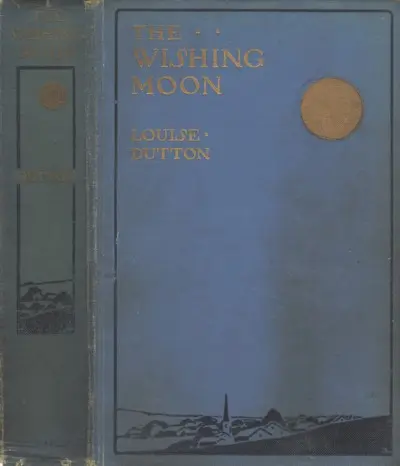
"The Wishing Moon" by Louise Elizabeth Dutton is a novel written in the early 20th century. The story introduces readers to a young girl, Judith Devereux Randall, who navigates the complexities of childhood, social expectations, and her desire for adventure in a small town named Green River. With a backdrop of a magical May night, the narrative explores themes of friendship, identity, and the interplay between childhood innocence and the expectations of growing up. The opening of the book sets a whimsical tone as Judith, a unique eleven-year-old girl, prepares for a night of excitement with her friends. The narrative captures her feelings of happiness and anticipation while hinting at her struggles with identity and fitting in. As she plans to hang May-baskets with her friends, Judith reflects on her distinctions from other children, pointedly noting that she's been labeled different due to her upbringing and social status. Her adventure begins as she interacts with her best friend Willard, who teases her but is also part of the group preparing for a night filled with daring escapades. The chapter intricately weaves Judith’s thoughts, dreams, and the thrilling essence of youth while foreshadowing a deeper journey of self-discovery.
Introduction adapted from the source catalogue; source summaries may be automatically generated.
Free to read · English · 69,444 words · No account needed
MAKE TIME FOR A GOOD BOOK
On by default. Untick to stop anonymous reading totals. Each page counts after 10 seconds in view. How this works.
Anonymous counting is on unless you have switched it off.
"There's talk enough of it, and there'll be more. The whole town will be
asking soon."
"The town asks a lot of questions it don't dare hear the answers to," said Neil softly, unregarded. His mother returned to her grievance:
"You to be likening yourself to Charlie."
"When Charlie was twenty-five," Neil began slowly, "he was where I will be then, or better. The Judge was a friend to him, too, and the Judge was a better friend then to have. Charlie was setting up for himself, well thought of. My own father trusted him. When I was a boy and not grown, Charlie was a son to him, and more. He was a better spoken lawyer than I'll ever make, quick and smooth with his tongue, and he was fine appearing, and put up a better front than I do. I've gone part of the road that Charlie went. What will stop me from going the whole road? What's beat Charlie is strong enough to beat me.... Don't look so scared, mother. I don't want to scare you. I only want you to be fair to Charlie."
"His heart's broke," she conceded, melting. "He's nothing with Maggie
gone."
"His heart's broke, but that's not what beat him," her son stated with authority. "He was beat before."
"When?"
"He was beat," Neil stated deliberately, "when Everard moved to Green
River."
This was a sweeping statement, but Neil did not qualify it. He dropped the subject and stood silent, turning absent eyes upon the green expanse of marshy field that had been the starting-place of all his dreams when he was a dream-struck, gazing boy. His mother's eyes followed his, growing cloudier and soft as if even now she could read them there.
"Rests your eyes," Neil said, after a minute; "looks pretty, too, in the sun. It's a pretty green. We'll drain it, perhaps, by the time I'm mayor or governor. It might pay. I'll be going now."
"Neil, when did you see her last?" asked his mother suddenly.
"See who?" he muttered, and then flushed, and straightened himself, and
met her eyes bravely.
"I saw Judith yesterday," he said, "on Main Street, and--she cut me."
"Did she walk past you?"
"No, she wouldn't do that. She pretended not to see me, but she saw me, all right. She passed me in an automobile."
"Whose?"
"One of Everard's."
"Was he with her?"
"Yes."
"Neil," his mother began a little breathlessly, "I want to tell you something. I've said hard things to you, and they weren't deserved. I know it now, and I'm sorry. I want to take them all back. I've said hard things about Judith Randall."
Your reading position is saved on this browser. Take it to another device with a library code. Reading pages adapt to text, rather than matching a printed edition.
BEHIND THE BOOK
This eBook is for the use of anyone anywhere in the United States and most other parts of the world at no cost and with almost no restrictions whatsoever. You may copy it, give it away or re-use it under the terms of the Project Gutenberg License included with this eBook or online at www.gutenberg.org. If you are not located in the United States, you will have to check the laws of the country where you are located before using this eBook. Read the source licence.
The original source file, including credits and licence, is retained by this library. Request an original-format copy at no charge. Please include the book title and Project Gutenberg identifier #31057.
KEEP YOUR CURIOSITY GOING
Coulson Kernahan

Maurice Baring
Frances Wright
Cécile Tormay

Frederic Jesup Stimson

W. H. P. (William Henry Pope) Jarvis