THE CLASSIC COLLECTION✦A dead man’s diaryCLASSIC FREE BOOKS
A dead man’s diary
Coulson Kernahan
THE CLASSIC COLLECTION · 1916
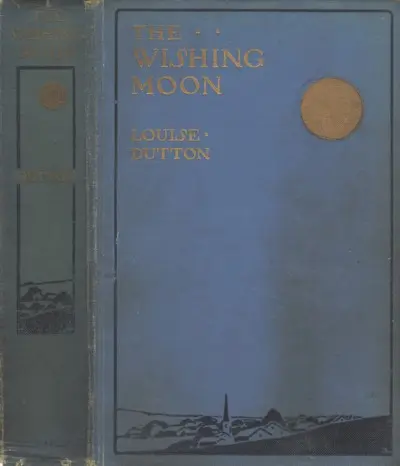
"The Wishing Moon" by Louise Elizabeth Dutton is a novel written in the early 20th century. The story introduces readers to a young girl, Judith Devereux Randall, who navigates the complexities of childhood, social expectations, and her desire for adventure in a small town named Green River. With a backdrop of a magical May night, the narrative explores themes of friendship, identity, and the interplay between childhood innocence and the expectations of growing up. The opening of the book sets a whimsical tone as Judith, a unique eleven-year-old girl, prepares for a night of excitement with her friends. The narrative captures her feelings of happiness and anticipation while hinting at her struggles with identity and fitting in. As she plans to hang May-baskets with her friends, Judith reflects on her distinctions from other children, pointedly noting that she's been labeled different due to her upbringing and social status. Her adventure begins as she interacts with her best friend Willard, who teases her but is also part of the group preparing for a night filled with daring escapades. The chapter intricately weaves Judith’s thoughts, dreams, and the thrilling essence of youth while foreshadowing a deeper journey of self-discovery.
Introduction adapted from the source catalogue; source summaries may be automatically generated.
Free to read · English · 69,444 words · No account needed
MAKE TIME FOR A GOOD BOOK
On by default. Untick to stop anonymous reading totals. Each page counts after 10 seconds in view. How this works.
Anonymous counting is on unless you have switched it off.
It was a curious thing to see, in the heart of the great man's admiring circle, at the climax of his most successful party of the year. It did not last long. The two struggling figures broke away from each other, and the boy staggered backward and stood with the revolver still in his hand. He was a little sobered by the struggle, and a little weakened by it, pale and dangerous, with a fanatic light in his eyes. Some one who had an eye for danger signals, if the Colonel had not, had made his unobtrusive way forward, and joined him now. He was not the most formidable looking of allies, but he stood beside them as if he had a right to be there, and the Colonel turned to him as if he recognized it.
"Hugh, you heard what he said?" he appealed; "you heard?"
"Judge, you keep out of this," Brady called, "keep out, sir."
Judge Saxon, keeping a casual hand on his most prominent client's arm, stood regarding Mr. Brady with mild and friendly blue eyes. He had quite his usual air of being detached from his surroundings, but benevolently interested in them.
"Charlie," he said, as if he were recognizing Mr. Brady for the first time at this critical moment, and deriving pleasure from it. "Why, Charlie," his voice became gently reproachful, but remained friendly, too. "Everard, this boy don't mean a word he says," he went on, with conviction, "he's excited and you're excited, too. This is a pretty poor time for you to get excited, Everard."
"You're right, Hugh," muttered the Judge's most prominent client thickly; "you're right. Get him away. Get him home."
"He's a good boy," pronounced the Judge.
It was not the obvious description of Mr. Brady just at that moment. There was only friendly amusement in the Judge's drawling voice and shrewd eyes, but back of it, unmistakably there, was something that made every careless word worth listening to. Mr. Brady was resisting it. His face worked pitifully.
"Judge, I told you to keep out. I don't want to hurt you."
"Thanks, Charlie."
"Every word I say is God's truth, Judge."
The Judge did not contradict this sweeping statement. He was studying Mr. Brady's weapon with some interest. "Your uncle's," he commented, pleased. "Why, I didn't know you still owned that thing, Charlie."
"I want Maggie. I want----"
"I'll tell you what you want," offered the Judge, amicably, "you want to hand that thing to me, and go home."
Your reading position is saved on this browser. Take it to another device with a library code. Reading pages adapt to text, rather than matching a printed edition.
BEHIND THE BOOK
This eBook is for the use of anyone anywhere in the United States and most other parts of the world at no cost and with almost no restrictions whatsoever. You may copy it, give it away or re-use it under the terms of the Project Gutenberg License included with this eBook or online at www.gutenberg.org. If you are not located in the United States, you will have to check the laws of the country where you are located before using this eBook. Read the source licence.
The original source file, including credits and licence, is retained by this library. Request an original-format copy at no charge. Please include the book title and Project Gutenberg identifier #31057.
KEEP YOUR CURIOSITY GOING
Coulson Kernahan

Maurice Baring
Frances Wright
Cécile Tormay

Frederic Jesup Stimson

W. H. P. (William Henry Pope) Jarvis