THE CLASSIC COLLECTION✦CorduroyCLASSIC FREE BOOKS
Corduroy
Ruth Comfort Mitchell
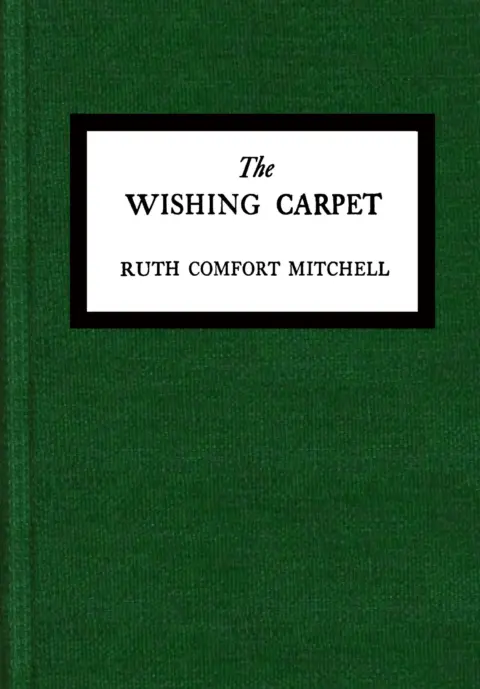
THE CLASSIC COLLECTION · 1926
"The Wishing Carpet" by Ruth Comfort Mitchell is a novel written in the early 20th century. The story centers around Glenwood Darrow, a young girl with a striking appearance and a complex relationship with her parents, particularly with her ailing mother, Effie. The novel explores themes of social class, identity, and the transformative power of dreams represented by a beautiful Persian rug that inspires wishes and aspirations. At the start of the narrative, we are introduced to Glen Darrow, who, at six years old, questions whether a lovely Oriental rug in her home is indeed a "Wishing Carpet." This moment serves as a poignant metaphor for her family's struggles and aspirations. Glen's mother views the rug as a symbol of her longings unfulfilled by life, while Glen's innocence prompts her to believe in the possibility of wishing for a better future. The opening chapters delve into Glen's experiences growing up amidst the complexities of her family's dynamics, her father's expectations, and her mother's invalidism, setting the stage for an unfolding tale of love, ambition, and the clashing of social classes. As Glen matures, her distinctive traits and her father's unwavering love set the tone for an evolving narrative around identity and belonging.
Introduction adapted from the source catalogue; source summaries may be automatically generated.
Free to read · English · 59,390 words · No account needed
MAKE TIME FOR A GOOD BOOK
On by default. Untick to stop anonymous reading totals. Each page counts after 10 seconds in view. How this works.
Anonymous counting is on unless you have switched it off.
“And the old woman was great, too,” said the doctor, out of a long meditation. “Like an old tribal priestess! They tell me, for a fact, she’s a hundred and three! Can’t write her name, never seen a town or a railroad train, but she wants her ‘son’s son’s son fotched on!’ Well, we’ll look out for him, won’t we?”
“I guess he can look out for himself,” said Glen, soberly. “I expect he’d kill any one who looked crosswise at him.”
“Oh, he’ll key down when he gets away from that feud stuff! It’s out of date, now, even in the mountains. The Manders family is the last to carry on, I understand. He’s got a head on him, that boy; he’ll learn--learn fast!”
She had never seen him so alertly interested. It became an obsession with him in the weeks which followed; they took toilsome trips far out of their way to find Luke Manders, and they made little progress in confidence or friendship, but this merely added a fillip to their determination. It became a sort of golden legend with them, gilding their dull days. “Well, Glen, I saw him!”
“Oh, did you, Dad?” (One of the rare times when she had not been with him.) “What did he say?”
“I don’t use such language in the presence of ladies,” her father grinned enjoyingly. “Oh, yes--he yelled back at me--‘Where’s the red-head?’ His poor old granny’s pretty discouraged, but I tell her she needn’t be. Wild things are slow to tame.”
Glen told Miss Ada Tenafee about him, but the delicate teacher who kindled pinkly to romance and adventure on the printed page shook her head disparagingly. “I’m sure it’s very kind of your father, but I believe he’ll have his trouble for his pains, dear. I have heard my own dear father say and my Cousin Amos Tenafee as well, that the mountaineers were a lawless lot.” Miss Ada had two oracles, her father, who had been the mildly black sheep of a fine old family, and Amos Tenafee, the silver-headed, gallant old chief of the Tenafee clan. Hector Tenafee had married beneath the Tenafees, perhaps, but decidedly above himself--a pretty, amiable, capable girl whose father ran the livery stable which furnished him with mounts, and who had died when his daughter was a little child. When Glen Darrow was old enough to weigh and balance and catch shadings of feeling she realized that Miss Ada was entirely resigned to her mother’s early demise; it was, she clearly considered, the act of a wise Providence ... the best possible thing for an impossible connection to do was to quietly slip away.... It was interesting to see how wholly Tenafee, how not at all Simpson, Miss Ada considered herself. She said, “My father,” or “my own dear father,” if other sires or personages were under discussion, with a lifted chin, an intake of breath, a gleam in her pale eye, but she said, when absolutely necessary, “My little mother,” or “My poor little mother who left me when I was a tiny child.” Once she described her--“My little mother, who was a sweetly pretty young creature, innately refined.” Pride of blood burned brightly in the faded spinster; she was the flower of chivalry, withered and pale, a flower pressed carefully in a precious old book. It was a great pity that she was obliged to teach in the public schools at forty-four, after her father’s death which came as a climax to a lingering, querulous illness, but Miss Josephine’s select school was full and running over with high-born and reduced maiden ladies whose fathers had not married beneath them, so she became “Miz-zada” to the proletariat, living in a small housekeeping room which was situated as far as possible from the stable now conducted by her Simpson uncles.
Your reading position is saved on this browser. Take it to another device with a library code. Reading pages adapt to text, rather than matching a printed edition.
Ruth Comfort Mitchell
Ruth Comfort Mitchell
Ruth Comfort Mitchell
BEHIND THE BOOK
This eBook is for the use of anyone anywhere in the United States and most other parts of the world at no cost and with almost no restrictions whatsoever. You may copy it, give it away or re-use it under the terms of the Project Gutenberg License included with this eBook or online at www.gutenberg.org. If you are not located in the United States, you will have to check the laws of the country where you are located before using this eBook. Read the source licence.
The original source file, including credits and licence, is retained by this library. Request an original-format copy at no charge. Please include the book title and Project Gutenberg identifier #71301.
KEEP YOUR CURIOSITY GOING
Coulson Kernahan

Maurice Baring
Frances Wright
Cécile Tormay

Frederic Jesup Stimson

W. H. P. (William Henry Pope) Jarvis