THE CLASSIC COLLECTION✦CorduroyCLASSIC FREE BOOKS
Corduroy
Ruth Comfort Mitchell
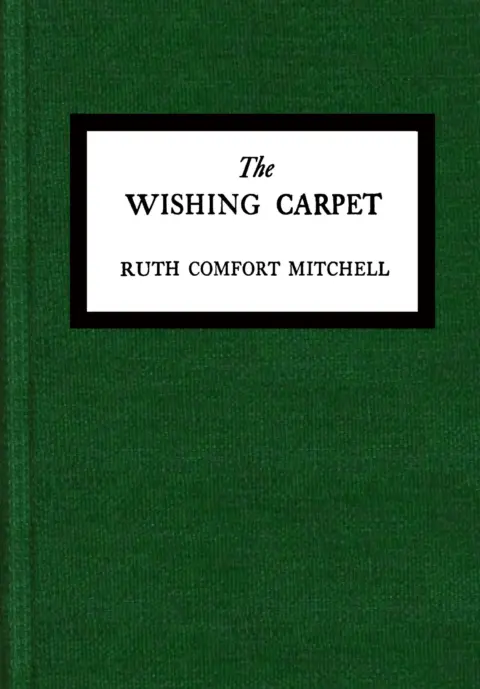
THE CLASSIC COLLECTION · 1926
"The Wishing Carpet" by Ruth Comfort Mitchell is a novel written in the early 20th century. The story centers around Glenwood Darrow, a young girl with a striking appearance and a complex relationship with her parents, particularly with her ailing mother, Effie. The novel explores themes of social class, identity, and the transformative power of dreams represented by a beautiful Persian rug that inspires wishes and aspirations. At the start of the narrative, we are introduced to Glen Darrow, who, at six years old, questions whether a lovely Oriental rug in her home is indeed a "Wishing Carpet." This moment serves as a poignant metaphor for her family's struggles and aspirations. Glen's mother views the rug as a symbol of her longings unfulfilled by life, while Glen's innocence prompts her to believe in the possibility of wishing for a better future. The opening chapters delve into Glen's experiences growing up amidst the complexities of her family's dynamics, her father's expectations, and her mother's invalidism, setting the stage for an unfolding tale of love, ambition, and the clashing of social classes. As Glen matures, her distinctive traits and her father's unwavering love set the tone for an evolving narrative around identity and belonging.
Introduction adapted from the source catalogue; source summaries may be automatically generated.
Free to read · English · 59,390 words · No account needed
MAKE TIME FOR A GOOD BOOK
On by default. Untick to stop anonymous reading totals. Each page counts after 10 seconds in view. How this works.
Anonymous counting is on unless you have switched it off.
“This mawnin’,” said Pap Tolliver, hanging his head.
“Oh, well, it probably isn’t so important,” she was opening it.
“Not Rip Van Winkle,” Janice Jennings whispered, “but a nice, mild old billygoat. Perfect! His beards part in the middle when he speaks! I’d adore to watch him eat!”
Glen Darrow was staring at the paper in her hand. “Who gave this note
to you, Pap?”
“Why--” he scratched his head--“I disremember ’zackly who ’twas, Glen! One o’ them furrin’ fellers ... all pretty much of a muchness, they are.”
She leaned nearer to him, put a hand on his shoulder, gave him a slight shake. “Pap! You must remember! Was it--Black Orlo?”
He grinned delightedly. “Yes, me’um! That’s hit! That’s jes’ who hit were! Or leastways,” his face clouded over, “one o’ them furrin’ fellers....” He grasped the handles of his accordion and shuffled away, and his inevitable tune came back to them furtively and faintly, in little wheezing gasps.
Glen had kept her eyes resolutely away from Peter Parker, but he was watching her intently, and it seemed to him that she had paled. He stepped forward quickly.
“What is it?”
She shook her head. “I don’t know--I must see Luke!” She turned and ran toward the office, her employer at her heels, his mother and the two girls following after.
“Why the mob scene?” he asked, looking back at them, but they pressed forward, and presently they were all in the dingy room where Luke Manders held despotic sway.
The superintendent was at his desk, and rose at sight of them.
“Luke,” said his assistant, “I think we had better dismiss the hands! I have a note here--some one gave it to Pap Tolliver--” She smoothed out the crumpled, soiled half sheet of cheap notepaper and read the message aloud----
“You keep away from mill at nights.”
“Well, what of it?” Manders demanded truculently. “Some sore-headed Slavonian--” He dismissed it with a gesture.
“But, Luke, you know you posted a notice that we wouldn’t work night shifts this week, and----”
“What of it?” The mountaineer was trying hard to be civil, Mrs. Parker considered, but without marked success.
“Luke, I’m frightened! You know there have been threats. And this week, when--as they supposed--the hands would not be here at night--would be the time they would choose for--for wrecking the mill! Luke, please send them all home!”
He shook his head. “Can’t do it, Glen! Up to our eyes in a rush order, you know that as well as I do! We can’t----”
“I think we’ll dismiss the hands immediately, Manders,” said Peter
Parker quietly.
Your reading position is saved on this browser. Take it to another device with a library code. Reading pages adapt to text, rather than matching a printed edition.
Ruth Comfort Mitchell
Ruth Comfort Mitchell
Ruth Comfort Mitchell
BEHIND THE BOOK
This eBook is for the use of anyone anywhere in the United States and most other parts of the world at no cost and with almost no restrictions whatsoever. You may copy it, give it away or re-use it under the terms of the Project Gutenberg License included with this eBook or online at www.gutenberg.org. If you are not located in the United States, you will have to check the laws of the country where you are located before using this eBook. Read the source licence.
The original source file, including credits and licence, is retained by this library. Request an original-format copy at no charge. Please include the book title and Project Gutenberg identifier #71301.
KEEP YOUR CURIOSITY GOING
Coulson Kernahan

Maurice Baring
Frances Wright
Cécile Tormay

Frederic Jesup Stimson

W. H. P. (William Henry Pope) Jarvis