THE CLASSIC COLLECTION✦A dead man’s diaryCLASSIC FREE BOOKS
A dead man’s diary
Coulson Kernahan
THE CLASSIC COLLECTION · 1900
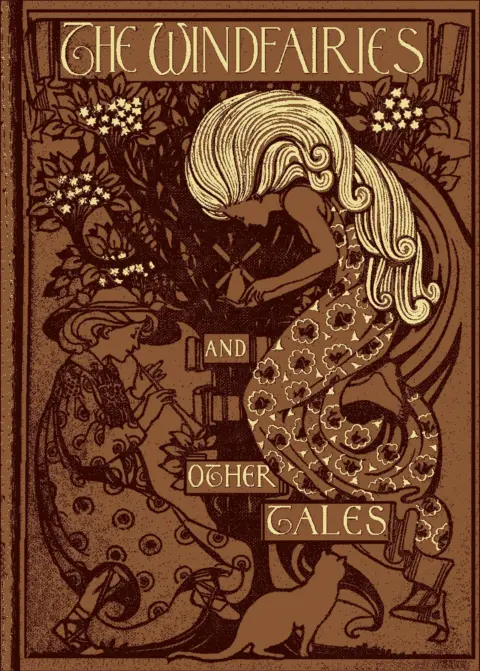
"The Windfairies and Other Tales" by Mary De Morgan is a collection of enchanting children's stories written in the late 19th century. The book features whimsical tales that explore themes of love, loyalty, and the magical connection between human beings and fairies, as exemplified by the main character, Lucilla, who dances with windfairies throughout her life. The stories are richly illustrated and designed to capture the imagination of young readers. At the start of the book, we meet Lucilla, a lonely girl living with her father, the miller, near the sea. She discovers windfairies at her windmill, and after a magical encounter, they teach her to dance. Years pass, and she becomes a beautiful dancer, eventually marrying a sailor. However, as life presents challenges, Lucilla’s loyalty to the windfairies is tested, calling forth magic and consequences that shape her destiny. This opening sets the stage for a tale filled with wonder and moral lessons, emphasizing the importance of trust and the impact of one's choices.
Introduction adapted from the source catalogue; source summaries may be automatically generated.
Free to read · English · 46,921 words · No account needed
MAKE TIME FOR A GOOD BOOK
On by default. Untick to stop anonymous reading totals. Each page counts after 10 seconds in view. How this works.
Anonymous counting is on unless you have switched it off.
All the day Nanina wandered about and cried, but no sheep were to be found. At last, when she was quite weary, she sat down beneath a beech tree near the palace, and leaned her head against its trunk sobbing. Then she saw that someone had torn down the lowest branches of the tree and they were hanging down broken. She raised them and tied them up, so that they would grow together, and as she did so she heard a shadowy voice whisper, “Thank you, Nanina; Nanina, don’t dance.” She looked about but there was nobody there, and again she heard a whisper, “Nanina, don’t dance.” The voice came from the beech tree, and among the leaves she saw a small twisted face looking at her. “Thank you, Nanina, for saving my bough,” said the tree, “and if you mind me, you shall get all your sheep back again.”
“My sheep,” cried Nanina. “Only tell me, and I will do anything.”
“Then you must not dance. Every time you refuse to dance with the fairy, one of your flock will be returned.”
“But how can I refuse to dance?” cried Nanina, “for as I hear the pipe beginning, my feet begin to move of themselves, it is no use my trying,” and she cried aloud.
“Bury your feet in the earth like my roots,” whispered back the voice. “Dig a hole deep down, and I will hold your feet so that you shall not move them, only you must bear the pain, and not mind if you walk lame afterwards, for I shall hold them very tight, and it will hurt you.”
“Hurt me as you please,” cried Nanina, “and I shan’t mind. If only I can get back my sheep I will bear any pain.” So she knelt beneath the tree, and dug a deep hole in the ground among its roots, and then she placed her feet among the loose earth, and she felt something moving near them which tightened around and drew them far down into the ground, and held them as if they were bound with cords. She saw the lights in the windows of the palace, and the door opened. “Hold me, hold me fast,” she cried, “for when I hear the music I shall begin to dance.” The tree said nothing, but she felt its roots tightening so that she could not move. The door of the palace opened as before, and the beautiful shepherd, followed by his goats and her sheep, came out, and she heard once more the sound of the wonderful pipe, and he danced straight up to the tree beneath which she stood, and held out his hand to her. Nanina felt as if her feet were beginning to move under the earth, but the roots of the tree held them so firmly that she could not stir one inch. Still the shepherd danced before her, and as she saw him springing in front, with the flocks behind him following him, she grew quite wild to dance, and tried her hardest to break her feet free from the roots which held them, but in vain, though she almost screamed with the pain they cost her. For hours the shepherd danced in front of her, till, as before, the pipe sounded forth one long note, and he disappeared, but this time not all the flock went with him, for beside her was left one of her own little lambs, and when she saw it she cried for joy. She felt the roots releasing their hold of her feet, and she drew them out of the earth, and they were all blue and bruised where they had been held. She drove home the lamb and fastened it into the sheep-pen, but her feet were so stiff and swelled that she limped as she walked. Next night she went back to the beech tree, and again slipped her feet into its roots, and felt them twist around them; but this time the poor feet were so sore that she cried when they touched them. Again the fairy appeared, and again she heard the pipe, and her longing to dance was worse than ever, but the roots clutched her and would not let her stir. When the pipe ceased and the fairy disappeared, another of her lambs was left with her, and she drove it home as she had done the first, but she had to go very slowly on account of her crushed feet.
Your reading position is saved on this browser. Take it to another device with a library code. Reading pages adapt to text, rather than matching a printed edition.
BEHIND THE BOOK
This eBook is for the use of anyone anywhere in the United States and most other parts of the world at no cost and with almost no restrictions whatsoever. You may copy it, give it away or re-use it under the terms of the Project Gutenberg License included with this eBook or online at www.gutenberg.org. If you are not located in the United States, you will have to check the laws of the country where you are located before using this eBook. Read the source licence.
The original source file, including credits and licence, is retained by this library. Request an original-format copy at no charge. Please include the book title and Project Gutenberg identifier #69875.
KEEP YOUR CURIOSITY GOING
Coulson Kernahan

Maurice Baring
Frances Wright
Cécile Tormay
Francis Greenleaf Allinson & Anne C. E. (Anne Crosby Emery) Allinson

Frederic Jesup Stimson