THE CLASSIC COLLECTION✦A dead man’s diaryCLASSIC FREE BOOKS
A dead man’s diary
Coulson Kernahan
THE CLASSIC COLLECTION · 1881
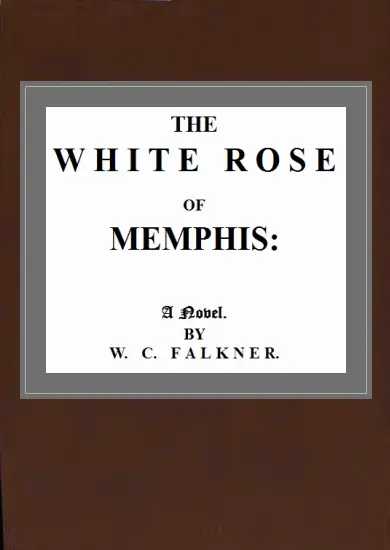
"The White Rose of Memphis" by William C. Falkner is a novel written in the late 19th century. The story centers around Captain Oliver Quitman and Samuel Brazzleman, two steamboat operators in Memphis, as they prepare for a grand inaugural trip of their newly chartered boat, the "White Rose of Memphis." The narrative elegantly unfolds the themes of adventure, romance, and the vibrant social scene of the time, promising an entertaining exploration of life on the Mississippi River." "The opening of the novel sets the stage for an exciting journey as Captain Quitman and Brazzleman discuss their plans for the steamboat's first voyage to New Orleans. They plan to make a splash with a masquerade ball aboard the boat to attract attention and fill the passenger list. As the festivities begin, the atmosphere is electric with anticipation, and various characters, all masked and adorned in splendid costumes, gather to celebrate. Amidst the excitement, a mysterious queen, who captures the interest of many attendees, piques the curiosity of the male maskers. The narrative hints at playful intrigue, romantic pursuits, and the social dynamics of the guests, leaving readers eager to discover how the festivities will unfold aboard the "White Rose."
Introduction adapted from the source catalogue; source summaries may be automatically generated.
Free to read · English · 207,018 words · No account needed
MAKE TIME FOR A GOOD BOOK
On by default. Untick to stop anonymous reading totals. Each page counts after 10 seconds in view. How this works.
Anonymous counting is on unless you have switched it off.
As the doctor passed out the lady in the black domino was seen running as fast as she could from her own to Lottie’s room, holding a large phial of liquid in each hand.
“Stop, madame!” exclaimed Doctor Plaxico as he placed his back against the door of Lottie’s room; “you must not go in there.”
“By what authority do you forbid it?”
“I am the attending physician, which confers the authority on me to protect my patient from intruders.”
“I heard you say just now that you had abandoned all hopes of saving
your patient’s life.”
“I do not deny it.”
“Then I will save her.”
“You!”
“Madame, did you know that suspicion was pointing at you as the
murderess?”
“No; nor do I care where suspicion may choose to point. This is no time to discuss suspicions, when the purest, the best and noblest lady on earth is in great peril. Stand aside, sir, and let me go in!”
“What stuff is contained in those two bottles? More poison, I dare say.”
“That which I hold in my left hand, sir, is an antidote for vegetable poison, and this is a certain cure for the most deadly mineral poison. Now let me go in, and since you have given your patient up, you cannot deny me a chance to save her.”
“Demar, this woman is crazy beyond all question; and if you let her administer any drug to your wife, I want you to distinctly understand that you do it against my advice or consent.”
Demar, whose mind was overflowed with sorrow, gazed wildly at the
mysterious woman before him.
“Madame,” he groaned, “why do you wish to murder such a sweet angel as
Lottie?”
“You are all murderers who stand here caviling about nonsense, while your victim is dying! I can and will save Lottie’s life, if you will only let me do it.”
“Did you place the poison in the bouquet?”
“No, but I know who did; and if you will let me, I will save Lottie’s life and then show you the poisoner.”
“How am I to know that the drug you propose to give my wife is not
poison?”
“Give me a spoon and see me drink the same quantity that I shall offer
to your wife.”
“Your request is reasonable, and I will take the risk.”
A spoon was brought, when the strange woman took the phial and with a steady hand measured out exactly ten drops of the liquid and instantly swallowed it. Then pouring out ten more drops, she said:
“Shall I administer it to your wife, or will you do it?”
Your reading position is saved on this browser. Take it to another device with a library code. Reading pages adapt to text, rather than matching a printed edition.
BEHIND THE BOOK
This eBook is for the use of anyone anywhere in the United States and most other parts of the world at no cost and with almost no restrictions whatsoever. You may copy it, give it away or re-use it under the terms of the Project Gutenberg License included with this eBook or online at www.gutenberg.org. If you are not located in the United States, you will have to check the laws of the country where you are located before using this eBook. Read the source licence.
The original source file, including credits and licence, is retained by this library. Request an original-format copy at no charge. Please include the book title and Project Gutenberg identifier #41134.
KEEP YOUR CURIOSITY GOING
Coulson Kernahan

Maurice Baring
Frances Wright
Cécile Tormay

Frederic Jesup Stimson

W. H. P. (William Henry Pope) Jarvis