THE CLASSIC COLLECTION✦A dead man’s diaryCLASSIC FREE BOOKS
A dead man’s diary
Coulson Kernahan
THE CLASSIC COLLECTION · 1881
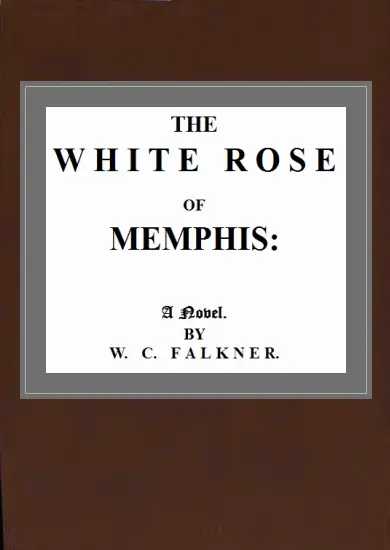
"The White Rose of Memphis" by William C. Falkner is a novel written in the late 19th century. The story centers around Captain Oliver Quitman and Samuel Brazzleman, two steamboat operators in Memphis, as they prepare for a grand inaugural trip of their newly chartered boat, the "White Rose of Memphis." The narrative elegantly unfolds the themes of adventure, romance, and the vibrant social scene of the time, promising an entertaining exploration of life on the Mississippi River." "The opening of the novel sets the stage for an exciting journey as Captain Quitman and Brazzleman discuss their plans for the steamboat's first voyage to New Orleans. They plan to make a splash with a masquerade ball aboard the boat to attract attention and fill the passenger list. As the festivities begin, the atmosphere is electric with anticipation, and various characters, all masked and adorned in splendid costumes, gather to celebrate. Amidst the excitement, a mysterious queen, who captures the interest of many attendees, piques the curiosity of the male maskers. The narrative hints at playful intrigue, romantic pursuits, and the social dynamics of the guests, leaving readers eager to discover how the festivities will unfold aboard the "White Rose."
Introduction adapted from the source catalogue; source summaries may be automatically generated.
Free to read · English · 207,018 words · No account needed
MAKE TIME FOR A GOOD BOOK
On by default. Untick to stop anonymous reading totals. Each page counts after 10 seconds in view. How this works.
Anonymous counting is on unless you have switched it off.
“‘I believe it would have come to my husband.’
“‘Don’t you know it would?’
“‘Yes, I suppose I do.’
“‘Then your husband would have been the possessor of a very large fortune, if those two children had died childless?’
“‘Yes, I suppose that is the way of it.’
“‘But you did not want those two children to die, and leave your husband to be bothered with the management of such a large fortune?’
“‘I do not know that I ever gave a thought to that subject.’
“‘Well, were you not frequently in need of money?’
“‘I don’t know that I was frequently in need of money, though I did sometimes borrow a little from my niece.’
“‘Why did you not get money from your husband when you stood in need of it, instead of borrowing it from Miss Bramlett?’
“‘My husband was not in a condition to let me have money.’
“‘Then how did you expect to pay the money back that you borrowed of
Miss Bramlett?’
“‘I do not know that I ever gave a thought to that subject.’
“‘Were you ever in a gambling house on Canal street, New Orleans?’
“‘No, I was not; and I should like to know why you ask such absurd
questions of me?’
“Be patient, madame, and it will all be very plain to you in a short time. What number shoe do you wear?’
“‘Number four.’
“Lottie then opened a little portmanteau which the coachman had brought in that morning, and placing it on the floor near her, took out a pretty little number three lady’s boot, and handed it to Mrs. Ragland.
“‘Please examine that boot and tell me whether or not you ever saw it
before?’
“‘La, yes, indeed, I have seen it before! it is mine--it was stolen from my boudoir, and I should like very much to know the thief.’
“‘You shall see the thief before you leave the stand; but tell us what is the number of that boot?’
“‘It is a number three, I believe; I know it is too small for me--I could not wear it, for that very reason.’
“‘Have you not very often worn this boot, along with its mate?’
“‘No, I don’t think I have, because they hurt my feet so that I could
not wear them.’
“‘Then will you be so good as to explain how this heel came to be so
much whetted off?’
“‘I cannot tell, unless it was done by Miss Bramlett, as she very frequently wore them, because her foot is smaller than mine, and a number three exactly fits it.’
“‘Are you not wearing a number three shoe now?’
Your reading position is saved on this browser. Take it to another device with a library code. Reading pages adapt to text, rather than matching a printed edition.
BEHIND THE BOOK
This eBook is for the use of anyone anywhere in the United States and most other parts of the world at no cost and with almost no restrictions whatsoever. You may copy it, give it away or re-use it under the terms of the Project Gutenberg License included with this eBook or online at www.gutenberg.org. If you are not located in the United States, you will have to check the laws of the country where you are located before using this eBook. Read the source licence.
The original source file, including credits and licence, is retained by this library. Request an original-format copy at no charge. Please include the book title and Project Gutenberg identifier #41134.
KEEP YOUR CURIOSITY GOING
Coulson Kernahan

Maurice Baring
Frances Wright
Cécile Tormay

Frederic Jesup Stimson

W. H. P. (William Henry Pope) Jarvis