THE CLASSIC COLLECTION✦A dead man’s diaryCLASSIC FREE BOOKS
A dead man’s diary
Coulson Kernahan
THE CLASSIC COLLECTION · 1881
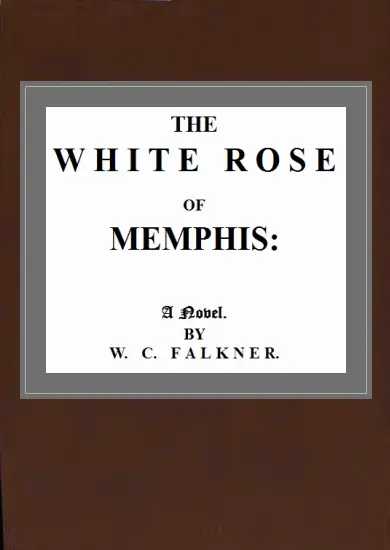
"The White Rose of Memphis" by William C. Falkner is a novel written in the late 19th century. The story centers around Captain Oliver Quitman and Samuel Brazzleman, two steamboat operators in Memphis, as they prepare for a grand inaugural trip of their newly chartered boat, the "White Rose of Memphis." The narrative elegantly unfolds the themes of adventure, romance, and the vibrant social scene of the time, promising an entertaining exploration of life on the Mississippi River." "The opening of the novel sets the stage for an exciting journey as Captain Quitman and Brazzleman discuss their plans for the steamboat's first voyage to New Orleans. They plan to make a splash with a masquerade ball aboard the boat to attract attention and fill the passenger list. As the festivities begin, the atmosphere is electric with anticipation, and various characters, all masked and adorned in splendid costumes, gather to celebrate. Amidst the excitement, a mysterious queen, who captures the interest of many attendees, piques the curiosity of the male maskers. The narrative hints at playful intrigue, romantic pursuits, and the social dynamics of the guests, leaving readers eager to discover how the festivities will unfold aboard the "White Rose."
Introduction adapted from the source catalogue; source summaries may be automatically generated.
Free to read · English · 207,018 words · No account needed
MAKE TIME FOR A GOOD BOOK
On by default. Untick to stop anonymous reading totals. Each page counts after 10 seconds in view. How this works.
Anonymous counting is on unless you have switched it off.
“‘Get up, brother sluggard, breakfast is ready,’ said she, as she pointed toward the smoking ham which she proceeded to place on the table.
“‘How did you rest last night, Lottie?’
“‘O, very well, indeed; thanks for the nice, comfortable bed you made
for me.’
“‘Did you not get cold during the night?’
“‘No, I don’t think I did, for I slept very soundly, and probably should have been sleeping yet, but brother Harry called me at daylight to help him get breakfast. I feel so much refreshed that I shall be able to walk a long way to-day.’
“We arranged ourselves round the table, and soon dispatched our breakfast, and began to prepare for a renewal of our journey. Harry and I carried all the household and kitchen furniture in the two little sacks which swung on our shoulders; while Lottie was not permitted to carry anything but her little satchel. The road we traveled on the second day of our journey traversed a part of the country that was thickly inhabited by thrifty farmers; rich green clover fields spread out on our left, while large numbers of fat cattle were grazing on the rich pasturage. Many beautiful residences, with well-cultivated gardens in front of them, appeared on each side of the road. Happy children frolicked on the green turf, honey bees sucked the sweet clover blossoms, busily collecting their winter store of food. Hundreds of little birds made charming music among the green trees that lined the roadside. The scenery was altogether delightful, but we stopped not to enjoy it, but moved steadily on, with minds bent on the accomplishment of the task before us. I marched as usual by Lottie, Harry moving steadily in the lead. I would occasionally drop behind, for no other purpose than to watch Lottie’s pretty little feet as they rose and fell with fairy-like tread, making such nice little tracks in the dust. Notwithstanding the many eventful years that have passed since then, I remember well how I almost worshipped the dust that kissed her feet. Toward noon I noticed from her movements that she was becoming very tired, but in answer to my questions on that subject, she tried to make me believe differently. I whispered to Harry, calling his attention to the fact, and suggested that we had better stop to let her rest. We halted near a running stream, and selecting a cool shady spot, we threw ourselves on the grass. We had traveled about eight miles, and I began to feel somewhat fatigued myself, and when I was comfortably stretched on the ground I soon fell asleep. We rested about three hours, eating a cold snack of bread and ham, and then resumed our journey, moving steadily on until the sun went down, when we halted, having marched about fifteen miles in all that day. And I was deeply pained to see that Lottie began to limp with her left foot, which I learned was caused by a painful blister which appeared on her instep. I took my knife and cut a little hole in the shoe, so that the blister would not be rubbed by the leather, and the grateful look that she cast on me would have been compensation for any amount of trouble. A description of our second encampment is unnecessary, as it was nearly similar to the first, the only difference being the lack of cold spring water, which we of course regretted; but we managed to make out with the water from a clear running brook near by. Having finished our frugal repast, I set about preparing Lottie’s sleeping apartment, which I soon completed, pretty much on the same plan as the one I had made for her the night before, though I think I made a much better job of it this time. We had finished our preparations for the night, and were seated near the fire, when a strange, hungry-looking dog came up, deliberately seating himself by Lottie, and began to whine and lick her hand. He would in all probability have wagged his tail, but he had none; and it seemed that his misfortunes had not stopped with the loss of his tail, for he had only one eye and one and a half ears, the half of his left ear being painfully missing. Lottie was a little startled and perhaps frightened at first, but when she saw how anxious the poor dog was to make friends with her, she held out her hand and patted his back. The mournful expression of his countenance, and the dilapidated condition of his body, at once enlisted her sympathies, and she gathered up all the scraps of bread and meat and gave them to him, which he devoured quickly, and like Oliver Twist, ‘wanted more.’ When Lottie went to bed the poor tailless old dog laid himself down at her feet with dignity and composure, doubtless thinking that he had found a friend at last. I watched the dignified movements of the strange animal with some degree of interest. He paid no attention to Harry and me, but appeared to consider it his duty to guard Lottie. It was a clear case to my mind of love at first sight. How could the poor dog help loving her? Birds, dogs and men all loved her. The fact is, it seemed that she was made to be worshipped by men, animals and birds. I suppose that with his one eye the old dog could see her kind, beautiful face, and that he knew she was good. Judging from appearances, one might safely conclude that the dog had been an inhabitant of the earth for a great number of years, and that he could form a correct opinion as to the character of those whom he chose to serve. When we started on our journey next morning old Bob (as we had named the dog--the name being suggested to our minds by his lack of a tail) began to walk with strange dignity by the side of Lottie. He was the first dog I ever saw that couldn’t trot; but his principal gait was a walk, though he could strike a gallop when occasion required, and was often seen pacing. Trouble began to crowd on us the third day of our journey--our little stock of provisions was exhausted. Lottie, though she would not complain, was beginning to fail; her feet were covered with blisters, and it was distressing to see her struggling to conceal her sufferings. She took off her shoes and attempted to walk barefooted, but the road was covered with innumerable flinty rocks, the sharp points lacerating her tender feet in a shocking manner. It made my heart ache to see the stones stained with the blood from the wounds on her feet, and I told Harry that we would be forced to stop, as it was cruel to keep her on the road in the condition that she was. I saw the tears trembling in his eyes when he examined his sister’s feet. We came to a little creek, and I took Lottie down to the water’s edge and bathed her feet in the cold water, and wiped them with my handkerchief. I then procured some slippery-elm bark, and made a kind of soft plaster of it and covered her feet with it, then bound cloth over the salve, and was gratified to hear her say that the pain was greatly relieved. It was but a few moments after I had completed my doctoring operations, when a farmer came along the road driving a team of four horses; he invited us to get in his wagon, as he was going on our road as much as ten miles. This invitation was of course gladly accepted, and we were soon seated in the wagon, moving on leisurely, but much faster than we had been in the habit of traveling. I enjoyed the ride more on Lottie’s account than on any other, knowing as I did that it was giving her a chance to rest.”
Your reading position is saved on this browser. Take it to another device with a library code. Reading pages adapt to text, rather than matching a printed edition.
BEHIND THE BOOK
This eBook is for the use of anyone anywhere in the United States and most other parts of the world at no cost and with almost no restrictions whatsoever. You may copy it, give it away or re-use it under the terms of the Project Gutenberg License included with this eBook or online at www.gutenberg.org. If you are not located in the United States, you will have to check the laws of the country where you are located before using this eBook. Read the source licence.
The original source file, including credits and licence, is retained by this library. Request an original-format copy at no charge. Please include the book title and Project Gutenberg identifier #41134.
KEEP YOUR CURIOSITY GOING
Coulson Kernahan

Maurice Baring
Frances Wright
Cécile Tormay

Frederic Jesup Stimson

W. H. P. (William Henry Pope) Jarvis