THE CLASSIC COLLECTION✦A dead man’s diaryCLASSIC FREE BOOKS
A dead man’s diary
Coulson Kernahan
THE CLASSIC COLLECTION · 1881
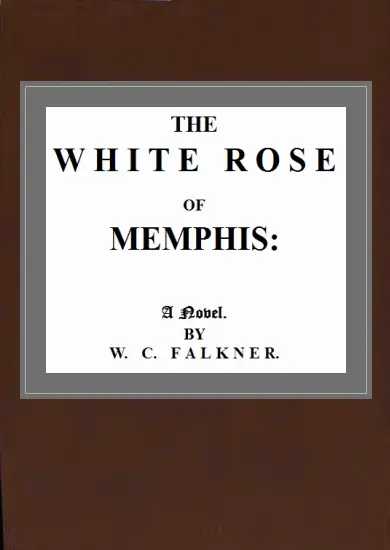
"The White Rose of Memphis" by William C. Falkner is a novel written in the late 19th century. The story centers around Captain Oliver Quitman and Samuel Brazzleman, two steamboat operators in Memphis, as they prepare for a grand inaugural trip of their newly chartered boat, the "White Rose of Memphis." The narrative elegantly unfolds the themes of adventure, romance, and the vibrant social scene of the time, promising an entertaining exploration of life on the Mississippi River." "The opening of the novel sets the stage for an exciting journey as Captain Quitman and Brazzleman discuss their plans for the steamboat's first voyage to New Orleans. They plan to make a splash with a masquerade ball aboard the boat to attract attention and fill the passenger list. As the festivities begin, the atmosphere is electric with anticipation, and various characters, all masked and adorned in splendid costumes, gather to celebrate. Amidst the excitement, a mysterious queen, who captures the interest of many attendees, piques the curiosity of the male maskers. The narrative hints at playful intrigue, romantic pursuits, and the social dynamics of the guests, leaving readers eager to discover how the festivities will unfold aboard the "White Rose."
Introduction adapted from the source catalogue; source summaries may be automatically generated.
Free to read · English · 207,018 words · No account needed
MAKE TIME FOR A GOOD BOOK
On by default. Untick to stop anonymous reading totals. Each page counts after 10 seconds in view. How this works.
Anonymous counting is on unless you have switched it off.
“Mr. Ingomar, or Demar, or whoever you are, we arrest you in the name of the State of Mississippi, under a warrant we have here now. You will consider yourself as our prisoner.”
Then taking a pair of handcuffs from his pocket, he made a move as if to fasten them on Ingomar’s wrists.
“Look to the queen,” cried Scottie; “she is falling!”
Ingomar caught her in time to prevent the fall, and carried her down to her state-room. He then returned to the deck, where the officers were, and addressed them:
“Now, sir, I am ready to settle this little matter with you. In the first place, you will oblige me by tossing those handcuffs into the river; and you had better be quick about it, else I shall put you in along with them.”
The officer was a very small man. Ingomar looked like a huge Colossus as his tall, handsome person towered above the little officer, who began to tremble with fear as he cast an imploring look up into his face.
“My dear sir,” began the officer in a tremulous voice, “you don’t mean to defy the law, I hope? We are nothing but humble representatives of the law, modestly attempting to discharge a simple duty.”
“Will you throw those handcuffs into the river? or would you prefer to go in yourself? I give you two seconds to decide.”
The little man threw the irons into the river instantly.
“Now, sir,” said Ingomar, “you may consider me your prisoner, if you wish it, and I will accompany you anywhere you may want me to go; but if you have any more irons about you, I advise you to send them after the others without delay.”
Mr. Peniwinkle then took another pair of handcuffs from his pocket and
tossed them overboard.
“Now, gentlemen, you may take seats here, if you like, and listen to the remainder of a little story which I have been relating for the amusement of my friends. I can finish it by the time we reach Vicksburg; then I will be pleased to go with you to Jackson, Mississippi, to answer any demands which the law may require of me.”
Then turning to Ivanhoe, he said:
“Be so kind as to go down and escort the queen up, and inform her that her friends are anxiously awaiting her presence, so that our amusements may be resumed.”
Ivanhoe returned in a few moments, with the queen leaning on his arm. She was weeping bitterly, and it was plain to see that the shock had considerably shaken her nerves. Ivanhoe handed her to a seat, when Ingomar said:
Your reading position is saved on this browser. Take it to another device with a library code. Reading pages adapt to text, rather than matching a printed edition.
BEHIND THE BOOK
This eBook is for the use of anyone anywhere in the United States and most other parts of the world at no cost and with almost no restrictions whatsoever. You may copy it, give it away or re-use it under the terms of the Project Gutenberg License included with this eBook or online at www.gutenberg.org. If you are not located in the United States, you will have to check the laws of the country where you are located before using this eBook. Read the source licence.
The original source file, including credits and licence, is retained by this library. Request an original-format copy at no charge. Please include the book title and Project Gutenberg identifier #41134.
KEEP YOUR CURIOSITY GOING
Coulson Kernahan

Maurice Baring
Frances Wright
Cécile Tormay

Frederic Jesup Stimson

W. H. P. (William Henry Pope) Jarvis